BA writes requirements. QA verifies requirements. If these two roles do not work closely together, "wrong profession" bugs will appear a lot.
Business errors are usually not because of weak Dev or lack of QA testing. The root is usually:
- Acceptance criteria are not clear enough.
- Business rules are in the heads of stakeholders.
- Edge case not stated.
- QA is not allowed to participate in refinement.
- Defect triage only looks at technique, not business impact.
1. When should BA and QA coordinate?
From refinement, not end of sprint.
QA should be invited when:
- Story has complex business rules.
- There are many roles/permissions.
- Has integration/API.
- Has data migration.
- Have UAT or compliance.
- Has significant NFR.
If QA only sees requirements when the build is finished, they can only detect errors late.
2. From AC to test scenarios
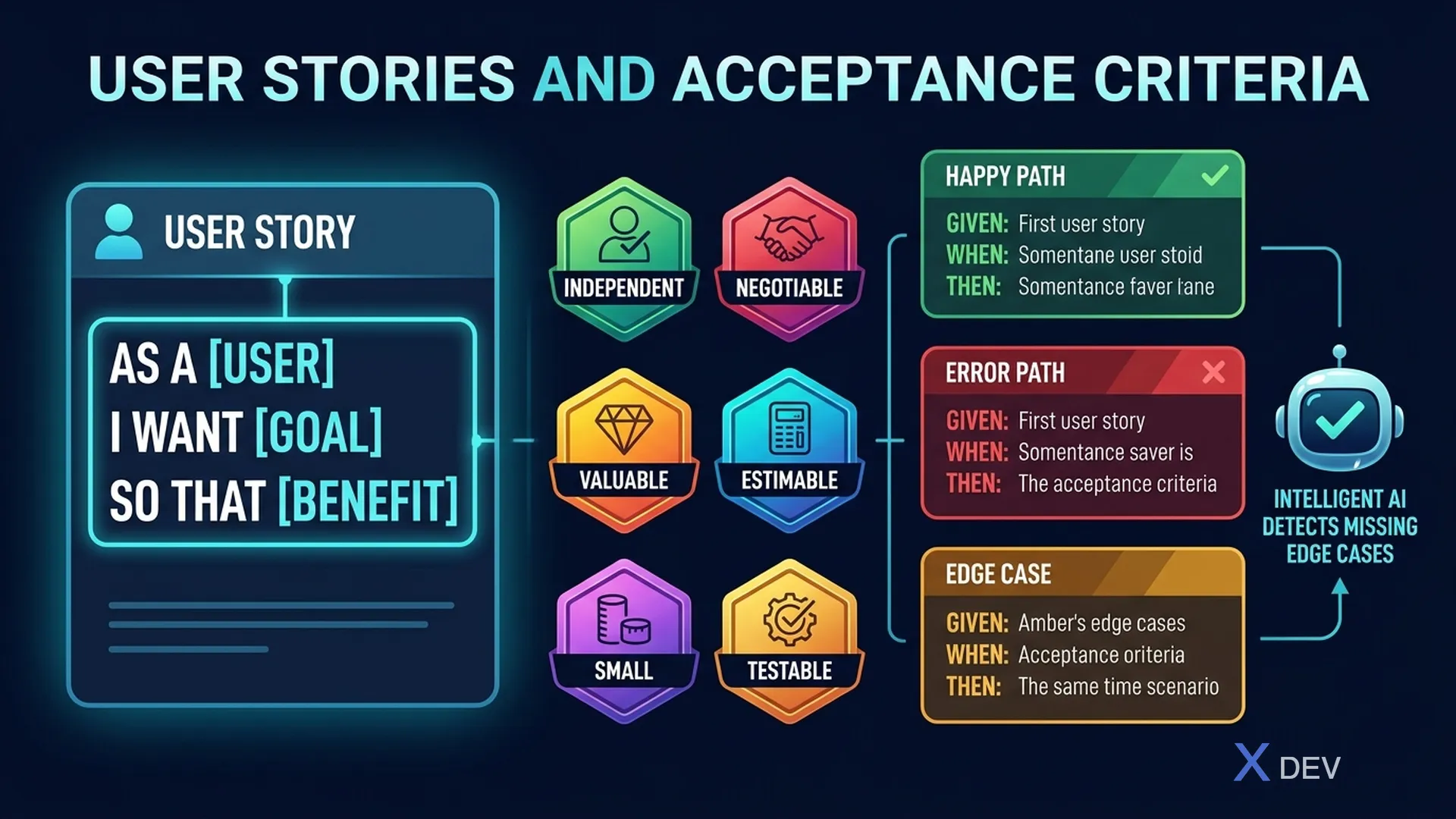
Good acceptance criteria are the input for test scenarios.
Story:
As a customer, I want to cancel my appointment so that I can free the slot when I cannot attend.
AC:
Given khách có lịch hẹn Confirmed
When khách hủy trước giờ hẹn ít nhất 4 tiếng
Then hệ thống cập nhật trạng thái thành Cancelled
And slot được mở lại cho khách khác đặt
And khách nhận email xác nhận hủy
Test scenarios:
| ID | Scenario | Expected |
|---|---|---|
| TC-001 | Cancel 4 hours in advance | Cancelled, slot reopened, email sent |
| TC-002 | Cancel in under 4 hours | Do not allow cancellation, show policy |
| TC-003 | Cancel scheduled Cancelled | No cancellation allowed |
| TC-004 | Email service error | Booking still canceled, email retry/log |
| TC-005 | Another user cancels the appointment | 403 or no permissions |
QA helps BA see cases that BA often misses.
3. Severity vs Priority
These two concepts are often confused.
- Severity: severity of system/functional error.
- Priority: level of urgent need to fix based on business/release context.
For example:
| Bugs | Severity | Priorities | Why |
|---|---|---|---|
| Payment is charged twice | Critical | P0 | Impact on money and trust |
| Logo offset 2px in internal admin | Low | P3 | Low impact |
| Wrong date format on invoice | Medium | P1 | Possible legal/accounting implications |
| Export CSV is missing an optional | column Medium | P2 | There are workarounds |
BA needs to participate in priority because BA understands business impact.
4. Defective triage meeting
Agenda 30 minutes:
1. Review bug mới theo severity
2. Xác định business impact
3. Xác định workaround
4. Quyết định fix now / fix later / won't fix
5. Update release risk
6. Assign owner và deadline
Each defect should have:
- Steps to reproduce.
- Actual results.
- Expected results.
- Environment.
- Evidence screenshot/log.
- Related Requirement/AC.
- Impact.
- Severity.
- Priorities.
- Owner.
5. Defect triage matrix
| Impact | Workaround | Decision |
|---|---|---|
| High | No workarounds | Fix before release |
| High | Has workaround | Product/BA decides risk |
| Medium | No workarounds | Fix if capacity |
| Medium | Has workaround | Can defer |
| Low | Has workaround | Backlog |
Decisions should not be based on feelings. The reason must be clearly stated.
6. Regression scope
When requirements change, QA needs to know what to retest.
BA should write:
- Requirement changes.
- What business rules have changed?
- Which API/data is affected?
- Which role is affected?
- Which reports/dashboards are affected?
- Which UAT scenarios need updating?
For example:
Change: Cho phép hủy lịch trước 2 tiếng thay vì 4 tiếng.

Regression scope:
- Cancel appointment flow
- Slot availability recalculation
- Email template
- Admin booking history
- UAT scenario UAT-03
7. How should BA read bugs?
When QA logs bugs, BA doesn't just ask "is the spec correct?" Ask:
- Is the Spec ambiguous?
- Does AC cover this case?
- Does the business rule have a source?
- Is this a bug or a change request?
- If not fixed, what is the business impact?
- Is there a workaround?
- Do I need to update SRS/RTM/test cases?
If a bug appears because of a missing requirement, the BA should take responsibility for improving the requirement, not just push it to the Dev.
8. UAT defects
Defects in UAT usually fall into 3 categories:
| Type | How to handle |
|---|---|
| Real bugs | Fix by severity/priority |
| Requirement gap | Change request or scope update |
| Training/process issue | Update guide, training, communication |
BA needs to differentiate clearly. Not every UAT response is a bug.
9. Full defect triage example
Feature: reschedule online consultation.
| Bugs | Description | Severity | Priorities | BA analysis | Decision |
|---|---|---|---|---|---|
| BUG-101 | Customers who reschedule for less than 4 hours are still successful. | High | P0 | Violation of BR-003, directly affecting consultant operations. | Fix before release, add regression test cutoff. |
| BUG-102 | Confirmation email sent twice when double clicked. | Medium | P1 | It could be due to lack of idempotency or the UI not disabling the button. | Fix in sprint, add test duplicate submit. |
| BUG-103 | The error message says "2 hours" instead of "4 hours". | Low | P0 | Severity is low but priority is high because it causes wrong policies for customers. | Fix copy before UAT sign-off. |
| BUG-104 | Consultant dashboard loads 5 seconds. | Medium | P2 | Not blocking release if below NFR threshold? Need to compare with NFR-PERF. | Engineer measures p95, if > NFR then fix. |
| BUG-105 | Customer service does not know how to change the customer's schedule. | Not bugs | P2 | This is a training/SOP issue, not a software defect. | Update SOP and training notes. |
BA should ask during triage:
- Which requirement/rule does this bug violate?
- Is there a workaround?
- Does it affect legal/compliance/customer trust?
- Do I need to update AC/test cases?
- Is this a bug, requirement gap or change request?
Good triage results must leave clear decisions: fix now, fix later, reject, convert to change request, or training issue.
10. Common errors
Error 1: QA is not allowed to participate in refinement
When QA comes in late, edge cases are discovered late.
Error 2: BA did not update requirements after the bug
If the bug specifies a new rule, the SRS/AC/test case must be updated. Otherwise, the same bug will return.
Error 3: Prioritize bugs according to who shouts the loudest
Priority must be based on impact, urgency, workaround and release risk.
Practice exercises
Choose a story you once wrote. Create table:
- AC
- Test scenarios
- Expected results
- Data needed
- Role needed
- Edge cases
Then ask yourself: Can QA test without asking you again?
Reference source
- Scrum Guide 2020: https://scrumguides.org/scrum-guide.html
- IIBA BABOK Guide: https://www.iiba.org/standards-and-resources/babok/
Conclusion
BA and QA protect quality from two perspectives: BA protects business significance, QA protects verifiability. When the two roles work early and structured, the team reduces bugs, reduces rework, and makes UAT much lighter.