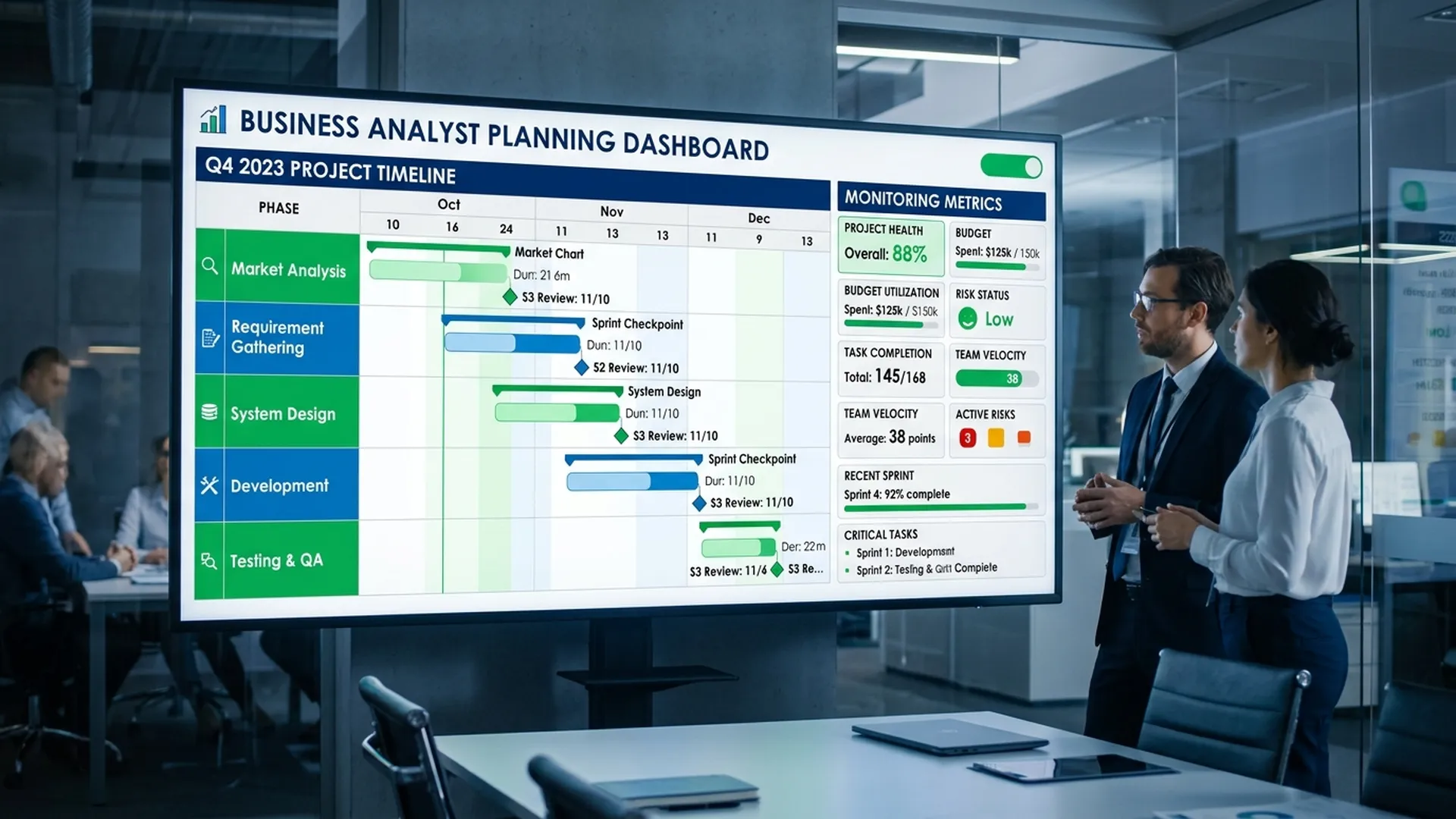
AI 專案中的 BA Planning 與傳統專案有一個核心差異:需求是靜態的,但 AI 輸出是機率性的。這表示你的計畫需要驗證迴圈,而不只是線性里程碑。
1. AI 專案的 BA Planning Framework
1.1 帶有 AI 邊界的 Scope Definition
在規劃之前,BA 必須明確定義:
| 組件 | 要回答的問題 | 範例 |
|---|---|---|
| AI Scope | AI 處理流程的哪一段? | 「AI 自動分類 70% ticket」 |
| Human Scope | 哪些案例由人員審核? | 「ticket confidence < 0.8 -> escalate」 |
| Data Dependency | AI 正確運作需要哪些資料? | 「6 個月已標註 ticket 歷史」 |
| Acceptance Threshold | 何時判定 AI 功能為「done」? | 「test set Accuracy >= 85%」 |
1.2 AI 功能的 WBS
AI 功能的 Work Breakdown Structure 可分 5 大工作群:
AI Feature: [Feature Name]
├── 1. Data & Requirements
│   ├── 1.1 Data audit (schema, volume, quality)
│   ├── 1.2 與 stakeholder 進行 Elicitation
│   └── 1.3 撰寫 Acceptance criteria
├── 2. Design & Modeling
│   ├── 2.1 Flow diagram (happy + fallback path)
│   ├── 2.2 Prompt/model design review
│   └── 2.3 HITL escalation design
├── 3. Development Checkpoint
│   ├── 3.1 Prototype review (BA + Dev)
│   └── 3.2 Edge case identification
├── 4. Testing & Validation
│   ├── 4.1 UAT script writing
│   ├── 4.2 Bias & fairness check
│   └── 4.3 Performance baseline
└── 5. Go-live & Monitoring
    ├── 5.1 Go-live criteria sign-off
    └── 5.2 Post-launch tracking setup
2. Iterative Checkpoint,不是 Waterfall
AI 專案通常採用 Agile/Sprint。BA 需要把檢查點嵌入每個 sprint:
Sprint Planning Checklist(BA 視角)
- 本 sprint 的資料是否已就緒?(不是「將會就緒」)
- Acceptance criteria 是否用 Given/When/Then 格式?
- 是否已與 Dev 檢視 fallback path?
- threshold 與上個 sprint 相比是否有變更?
Mid-Sprint Check(第 5-7 天)
- AI output 是否達到預期 threshold?
- 是否出現新的 edge case?
- 哪些假設需要更新到 ADR(Architecture Decision Record)?
3. BA Monitoring:AI 上線後的追蹤
很多 BA 認為 go-live 就結束了。這是錯的。對 AI 功能而言,BA 需要建立 monitoring framework:
3.1 需要追蹤的 Metrics
| Metric 類型 | 具體指標 | 警示門檻 |
|---|---|---|
| Quality | Accuracy / F1 / Precision | 相較 baseline 下降 > 5% |
| Business | Human override rate | 相較第一週增加 > 20% |
| Volume | 每日 request 數 | 突增 > 3x |
| Feedback | User complaint rate | > 總 request 的 2% |
3.2 Drift Detection
AI model 可能發生 concept drift:世界已改變,但 model 還在依舊資料模式運作。BA 應該:
- 在 go-live 前最後一個 sprint 定義 baseline
- 設定重新評估 trigger(每月,或當 metric 下滑)
- 明確 owner:AI drift 時誰負責?(RACI)
4. 實用 BA Planning Template
## BA Plan: [Feature Name]
**Version:** 1.0 | **Date:** YYYY-MM-DD | **Owner:** [BA Name]

### Scope Summary
- AI handles: [簡短描述]
- Human handles: [簡短描述]
- Out of scope: [明確列出]

### Data Dependencies
| Data | Source | Owner | Status |
|------|--------|-------|--------|
| [data1] | [system] | [team] | ✅/❌ |

### Acceptance Criteria (top-level)
- [ ] AI accuracy >= [X]% on [Y] test cases
- [ ] Edge case coverage: [list] handled
- [ ] Human override rate <= [Z]%

### Monitoring Setup
- Dashboard: [link]
- Alert owner: [name]
- Review cadence: [weekly/monthly]
5. AI 專案 BA Planning 常見錯誤
錯誤 1:只寫「Accuracy」,未定義哪個資料集
-> 修正:明確寫出「來自 [source]、[time range] 的 test set accuracy」
錯誤 2:沒有追蹤 assumption
-> 修正:每個 assumption 必須有 ID、owner、review date
錯誤 3:把 AI feature 當一般功能,done 就結束
-> 修正:在 Definition of Done 加上「Post-launch monitoring period: 4 weeks」
結論
AI 功能的 BA Planning 並非更複雜,而是需要 機率思維而非二元思維。好的計畫要有 assumption 驗證迴圈、明確數值門檻,以及 go-live 後的 monitoring。
**下一步:**閱讀 Strategy Analysis,先做好規劃前的情境分析。