前言
閘道是穩定運作本地 AI 技術棧最重要的層。取代客戶端直接呼叫模型執行環境,為團隊提供品質與安全控制。
1. 最小 API 範本
from fastapi import FastAPI
from pydantic import BaseModel
import requests

app = FastAPI()

class ChatReq(BaseModel):
    prompt: str
    model: str = "gemma4"

@app.post("/chat")
def chat(req: ChatReq):
    r = requests.post(
        "http://127.0.0.1:11434/api/generate",
        json={"model": req.model, "prompt": req.prompt, "stream": False},
        timeout=90,
    )
    r.raise_for_status()
    data = r.json()
    return {"answer": data.get("response", ""), "model": req.model}
2. 必要的閘道策略
- 每個端點的硬性逾時
- 暫時性錯誤的有限重試
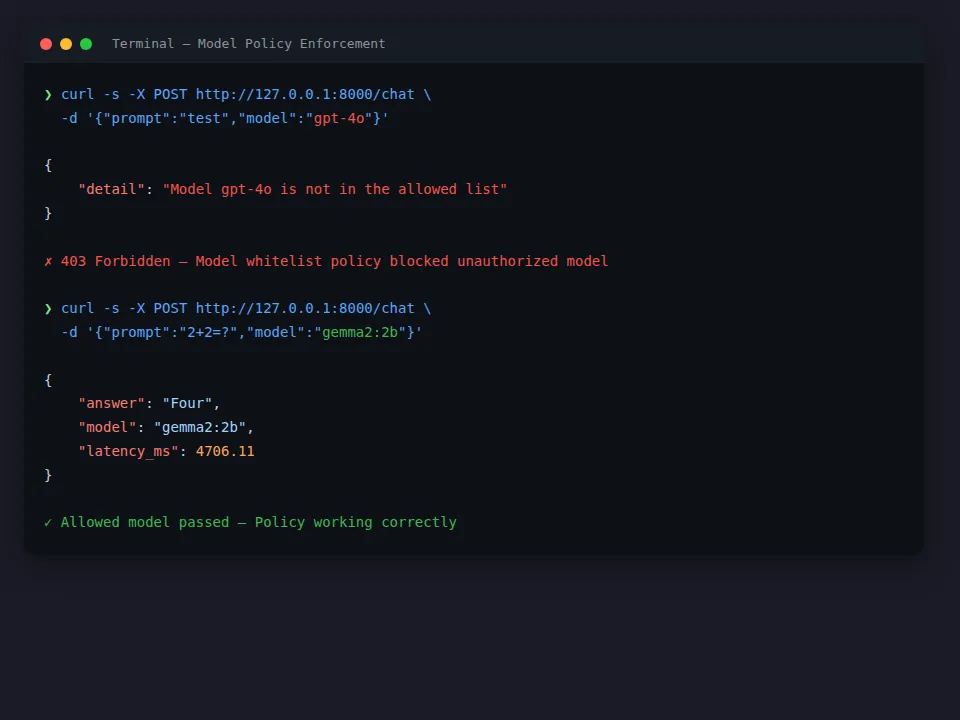
- 允許模型的白名單
- 防止濫用的 prompt 大小限制
3. 結構化輸出
當應用程式需要 JSON 時,在閘道強制 contract:
- 明確的 prompt contract
- 回傳給客戶端前驗證 schema
- Schema 失敗時以特定代碼返回錯誤
4. 內部認證
最低限度實作:
- 每個服務的 API key
- 每個 key 的速率限制
- 按租戶/團隊的日誌記錄
企業級使用時,在閘道層而非模型層接入 SSO。
5. 日誌與追蹤
每個請求應記錄:
request_idendpointmodellatency_msprompt_tokens_eststatus
含有 PII 時,不要記錄原始機密資料。
6. 備援模型策略
設計備援以避免系統硬性崩潰:
- 主要模型逾時
- 自動切換至輕量模型
- 以
degraded_mode=true標記回應
Demo 程式碼
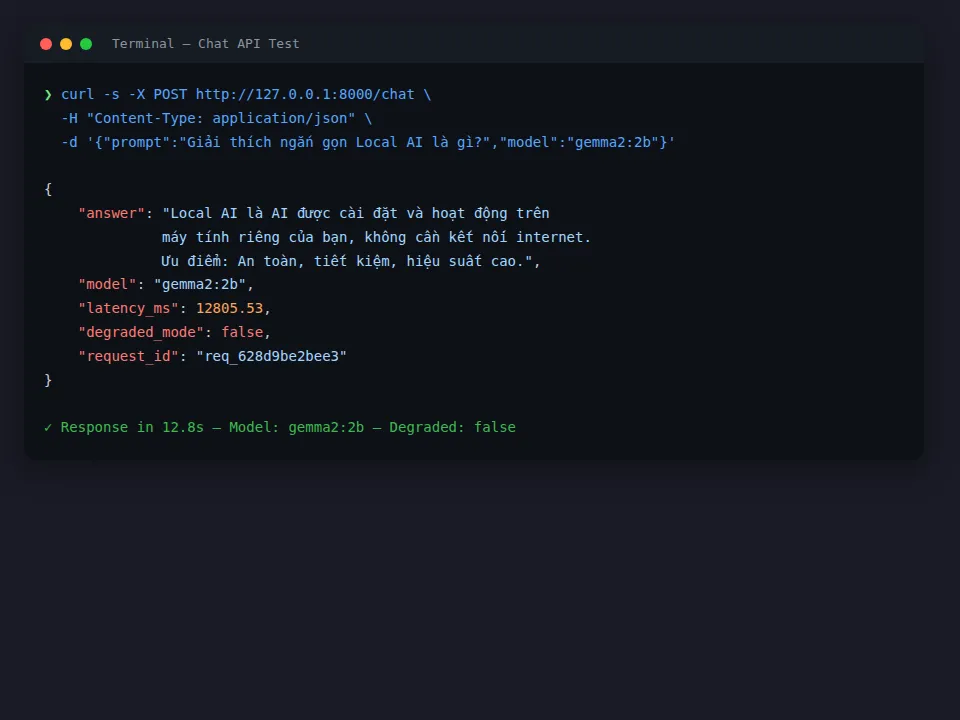
透過閘道的聊天 API 回應:
模型策略強制——阻擋未授權的模型:
原始碼:02-api-gateway