簡介
本文總結了前28篇文章的所有知識,應用於實際的電子商務平台。從架構決策→實作→部署→監控。
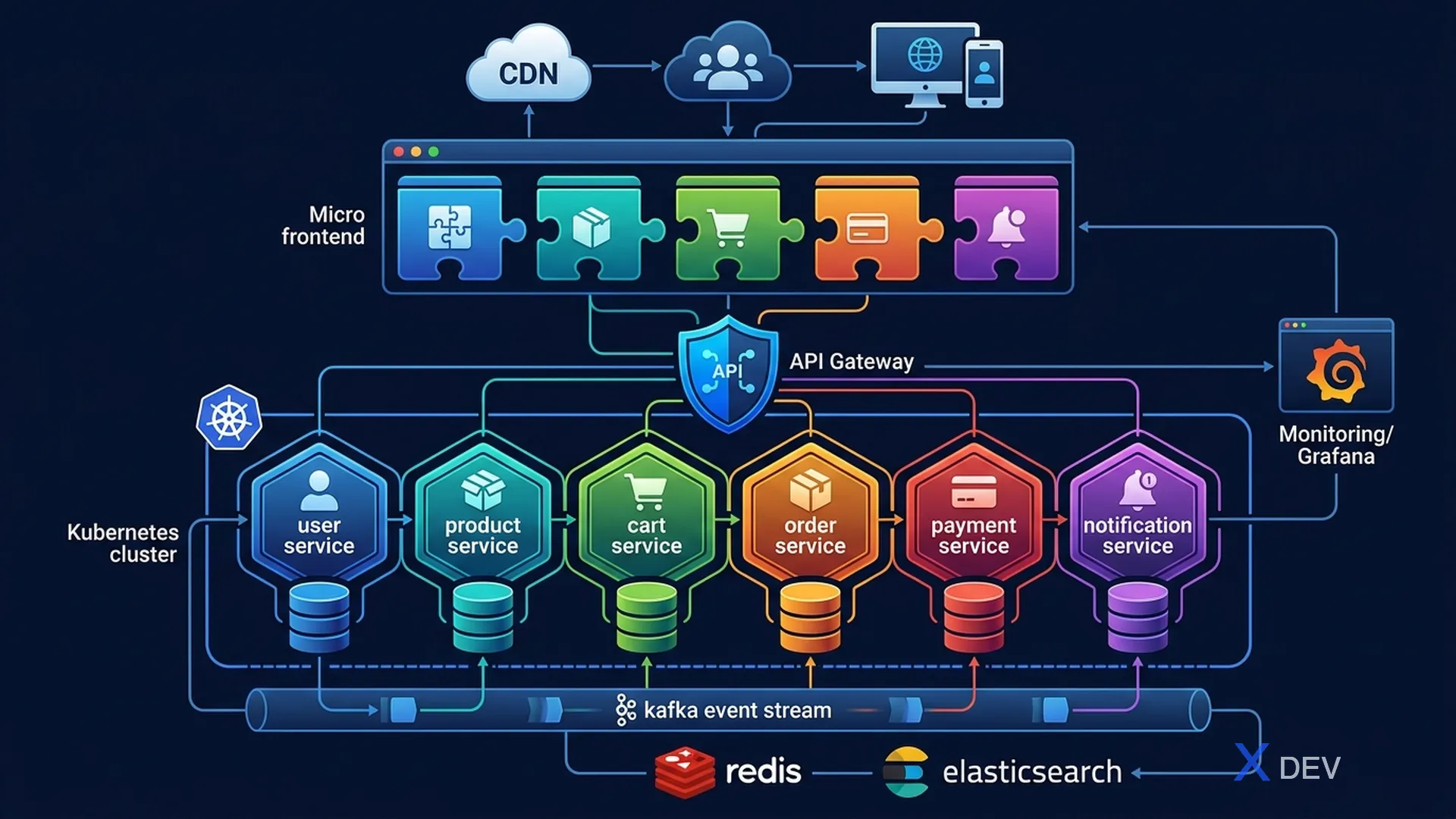
1. 系統需求
1.1 業務需求
ShopX E-Commerce Platform:
├── Product catalog: 100K+ products
├── Users: 500K registered, 50K DAU
├── Orders: 5K orders/day, peak 500 orders/hour
├── Teams: 5 feature teams + 1 platform team
├── SLA: 99.9% uptime, p95 < 500ms
└── Growth: 3x yearly
1.2 架構決策記錄(ADR)
ADR-001: Microservices Architecture
- Status: Accepted
- Context: Monolith đã quá lớn (500K LOC), 5 teams conflict
- Decision: Decompose thành Microservices theo DDD
- Consequences: Distributed complexity, cần invest vào infra

ADR-002: Micro Frontend with Module Federation
- Status: Accepted
- Context: Frontend monolith (React, 300+ components)
- Decision: Module Federation, 1 MFE per team
- Consequences: Shared UI library cần, performance budget enforce

ADR-003: Event-Driven Architecture (Kafka)
- Status: Accepted
- Context: Cần loose coupling, event replay, audit trail
- Decision: Apache Kafka cho domain events
- Consequences: Eventual consistency, team cần learn async patterns
2. 服務設計(基於DDD)
Bounded Contexts → Services:

┌─────────────────────────────────────────────────┐
│ Core Domain                                     │
│ ├── Product Service (Catalog, Search, Review)   │
│ │   DB: PostgreSQL + Elasticsearch              │
│ │   Team: Product Team (4 devs)                │
│ │                                               │
│ └── Order Service (Checkout, Tracking, History) │
│     DB: PostgreSQL (Event Sourcing)             │
│     Team: Order Team (4 devs)                  │
├─────────────────────────────────────────────────┤
│ Supporting Domain                               │
│ ├── User Service (Auth, Profile, Address)       │
│ │   DB: PostgreSQL                              │
│ ├── Cart Service (Cart, Wishlist)               │
│ │   DB: Redis                                   │
│ ├── Inventory Service (Stock, Warehouse)        │
│ │   DB: PostgreSQL                              │
│ └── Notification Service (Email, Push, SMS)     │
│     DB: PostgreSQL                              │
├─────────────────────────────────────────────────┤
│ Generic Domain                                  │
│ ├── Payment Service → Stripe/VNPay integration  │
│ └── Auth → Keycloak (off-the-shelf)            │
└─────────────────────────────────────────────────┘
3.微前端分解
Shell App (Platform Team):
├── Global Header, Footer, Sidebar
├── Routing orchestration
├── Auth integration (Keycloak)
└── Design System (@shopx/ui)

Product MFE (Product Team):
├── Product List / Grid
├── Product Detail
├── Search & Filters
├── Reviews
└── Route: /products/*

Cart MFE (Cart Team):
├── Cart Page
├── Mini Cart (header widget)
├── Wishlist
└── Route: /cart/*, globally: MiniCart component

Order MFE (Order Team):
├── Checkout flow
├── Order History
├── Order Tracking
└── Route: /orders/*, /checkout/*

Account MFE (User Team):
├── Profile, Addresses
├── Payment Methods
├── Preferences
└── Route: /account/*
4.基礎架構架構
AWS Architecture:

┌─────────────────────────────────────────────┐
│ CloudFront CDN                              │
│ (MFE static assets, caching)               │
├─────────────────────────────────────────────┤
│ ALB (Application Load Balancer)             │
├─────────────────────────────────────────────┤
│ EKS Cluster (Kubernetes)                    │
│                                             │
│ ┌─────────┐ ┌─────────┐ ┌─────────┐       │
│ │ Kong    │ │ Web BFF │ │ Services│       │
│ │ Gateway │→│ (Node)  │→│ (pods)  │       │
│ └─────────┘ └─────────┘ └─────────┘       │
│                                             │
│ ┌─────────┐ ┌─────────┐ ┌─────────┐       │
│ │ Kafka   │ │ Redis    │ │ OTEL    │       │
│ │ (MSK)   │ │(Elasti-  │ │Collector│       │
│ │         │ │ Cache)   │ │         │       │
│ └─────────┘ └─────────┘ └─────────┘       │
├─────────────────────────────────────────────┤
│ RDS PostgreSQL (Multi-AZ)                  │
│ ElastiCache Redis                          │
│ Amazon MSK (Kafka)                         │
│ Amazon Elasticsearch                       │
└─────────────────────────────────────────────┘
5. 關鍵技術決策
| 決定 | 選擇 | 理由 |
|---|---|---|
| 前端框架 | React + 模組聯盟 | 團隊專業知識、MFE 支援 |
| 後端執行時期 | Node.js(Fastify) | 與 FE 相同的語言,快速 I/O |
| API風格 | GraphQL (BFF) + gRPC(內部) | 靈活查詢+快速內部 |
| 資料庫 | PostgreSQL + Redis + ES | 多語言、經過驗證、可擴充 |
| 訊息代理 | 阿帕契卡夫卡 | 事件溯源、重播、持久性 |
| 授權 | 鑰匙斗篷 | 開源、OIDC、RBAC |
| 持續整合/持續交付 | GitHub 作業 + ArgoCD | GitOps、K8s 原生 |
| 監控 | Grafana + Prometheus + Loki + Tempo | 完整的可觀測性堆疊 |
| 部署 | Canary(Argo 推出) | 漸進式自動分析 |
6. 經驗教訓
1. Start with 3-4 services, not 15
   → Quá nhiều services ban đầu = quá nhiều complexity

2. Design System trước khi build MFE
   → UX inconsistency rất khó fix sau

3. Contract Testing saves production
   → Đầu tư vào Pact sớm, ROI rất cao

4. Observability từ Day 1
   → Không phải "thêm sau được" — cần tracing từ đầu

5. Feature Flags cho mọi feature mới
   → Decouple deploy from release

6. Event Sourcing chỉ cho Order Service
   → CQRS cho Product (search), CRUD cho User/Cart
   → Đừng over-engineer

7. Mono-repo (Turborepo) cho giai đoạn đầu
   → Cross-cutting changes dễ, shared code seamless
   → Evaluate multi-repo khi team > 50
總結
此案例研究表明,當將正確的模式應用於正確的用例時,架構可以是實用和生產就緒。並非每個服務都需要事件溯源,並非每個前端都需要微前端。