Introduction
This is the final lesson of the series. The goal is to finalize the mandatory components before rolling out a local AI stack for a team or enterprise.
1. Security Baseline
Minimum checklist:
- Periodic API key rotation
- RBAC by user group
- Separate admin and regular user permissions
- Immutable audit logs
2. Protecting Sensitive Data
Deploy guardrails:
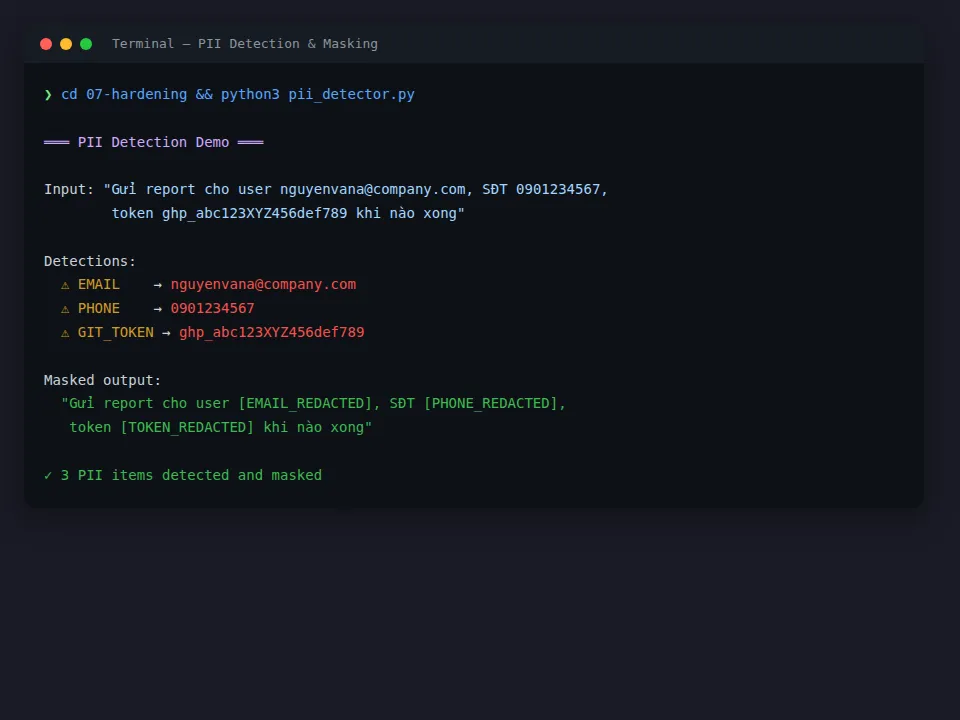
- PII detector before sending prompts to the model
- Data masking in logs
- Clear retention policies
For highly sensitive data, add a default mode that doesn't save chat history.
3. Backup and Disaster Recovery
Components that need backup:
- Gateway configuration
- Prompt templates and versions
- Vector DB snapshots
- Feedback/eval datasets
Run periodic recovery drills to ensure backups don't exist only on paper.
4. Release and Change Management
Each change should go through a pipeline:
- Unit test + schema test
- Regression eval
- Internal canary rollout
- Expand scope based on error budget
Don't roll out broadly without canary data.
5. Go-Live Checklist
- SLOs and dashboard are operational
- Prompts/versions are clearly managed
- Fallback model has been tested
- Incident runbook has an owner
- Onboarding documentation is complete
6. Post-Rollout Roadmap
After stabilizing the baseline, you can expand to:
- Domain-specific tool calling
- Multi-model router by difficulty
- Agent workflows with human-in-the-loop
Demo Code
PII detection & masking demo — detecting and hiding sensitive information:
Source code: 07-hardening