Lesson Objectives
After this lesson, you will:
- Understand why High Availability (HA) is important for database systems_
- Master HA implementation methods for PostgreSQL_
- Compare the advantages and disadvantages of Patroni, Repmgr and Pacemaker
- Understand the overall architecture of the PostgreSQL system HA
1. Why do we need High Availability?
1.1. Problem with Single Point of Failure (SPOF)
In a traditional database system with single server:
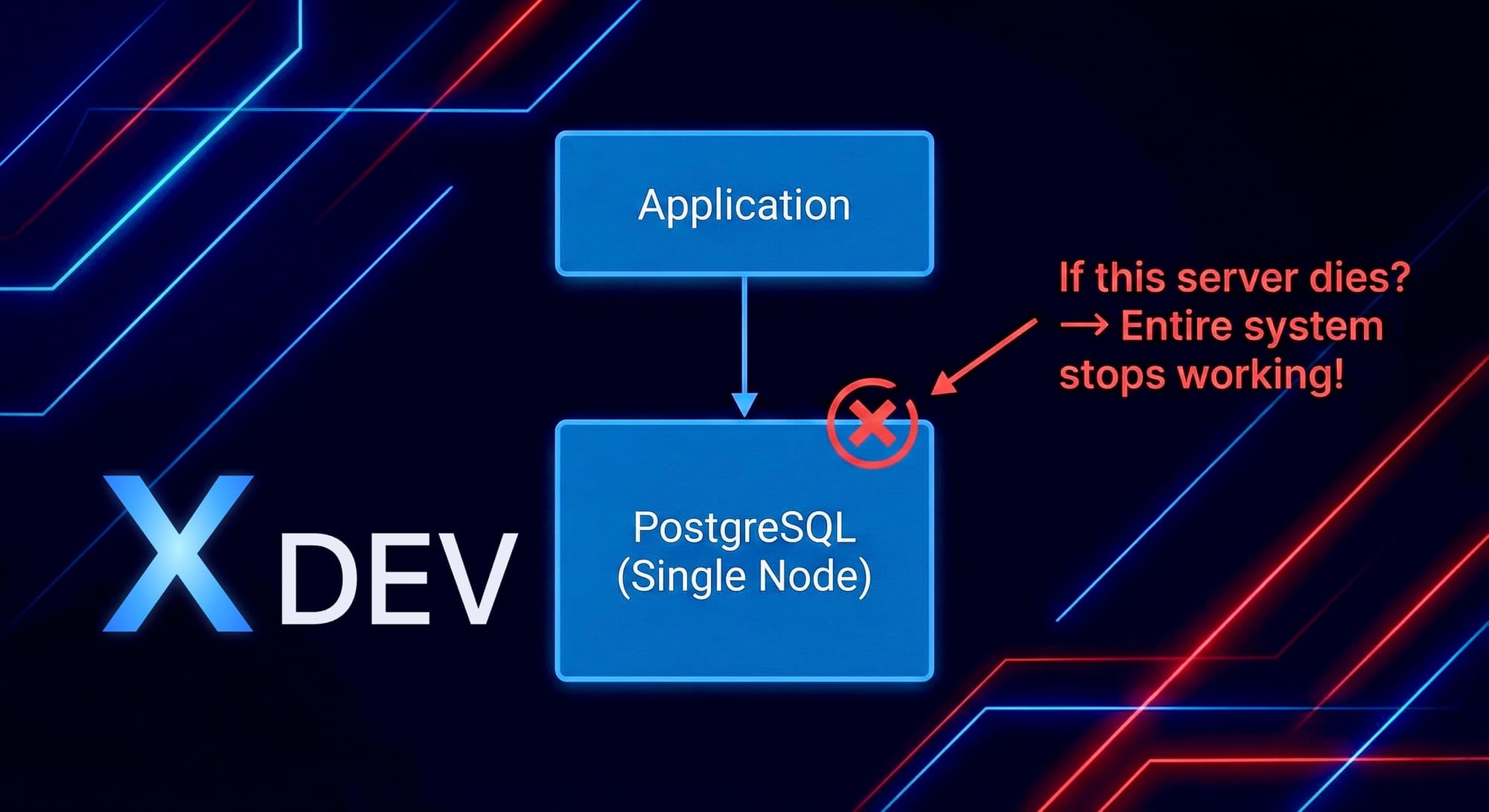
Consequences when the database server crashes error:
- Downtime: Application cannot access data
- Revenue loss: Every possible minute of downtime costs millions of dong
- Loss of reputation: Users cannot use the service
- Data loss: If there is no timely backup time
1.2. Common causes of downtime
| Cause__HTMLTAG_57___ | Rate | Impact |
|---|---|---|
| Hardware error (disk, RAM, CPU) | 30% | High |
| Network error | 20% | Average |
| Software errors/bug__HTMLTAG_83___ | 25% | High |
| Maintenance has a plan__HTMLTAG_91___ | 15% | Controllable |
| Human error__HTMLTAG_99___ | 10% | High |
1.3. What is High Availability?
High Availability (HA) is the ability of a system to maintain continuous operation even when one or more components fail.
Measurement indicators HA:
| Availability | Downtime/year | Downtime/month | Level |
|---|---|---|---|
| 99% (2 nines) | 3.65 days | 7.2 hours | Low |
| 99.9% (3 nines) | 8.76 hours | 43.2 minutes | Average |
| 99.99% (4 nines) | 52.56 minutes__HTMLTAG_157___ | 4.32 minutes__HTMLTAG_159___ | High |
| 99.999% (5 nines) | 5.26 minutes | 25.9 seconds | Very high |
1.4. Benefits of HA
Business Benefits:
- Minimize downtime and lost revenue_
- Increase system reliability system_
- Improve user experience_
- Meet SLA (Service Level Agreement)_
Technical Benefits:_
- Automatic failover when the primary server has a problem__HTMLTAG_198___
- _Zero-downtime maintenance_
- _Load for read queries
- Disaster recovery
- Data protection
2. HA methods for PostgreSQL
2.1. Log-Shipping (WAL Shipping)_
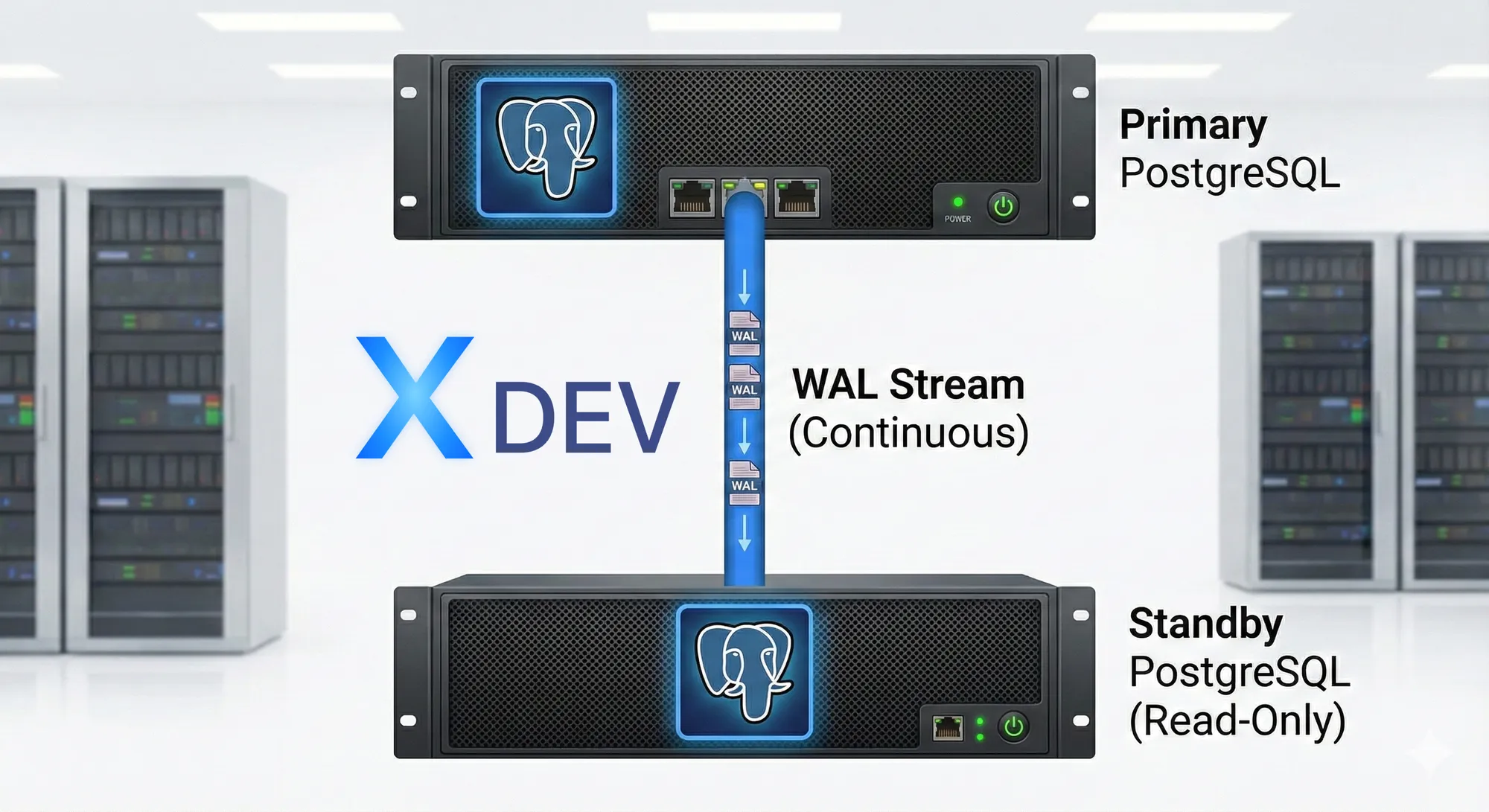
How it works:
- Primary server writes WAL (Write-Ahead Log) files
- WAL files are copied to the standby server
- Standby server replays WAL to synchronize data
Advantages Points:
- Simple, easy to set up
- Less resource consuming original
Disadvantages:
- Recovery Time Objective (RTO) high (minutes → hour)
- No automatic failover
- Data loss may occur__HTMLTAG_252___
- Standby cannot be queried (warm standby)
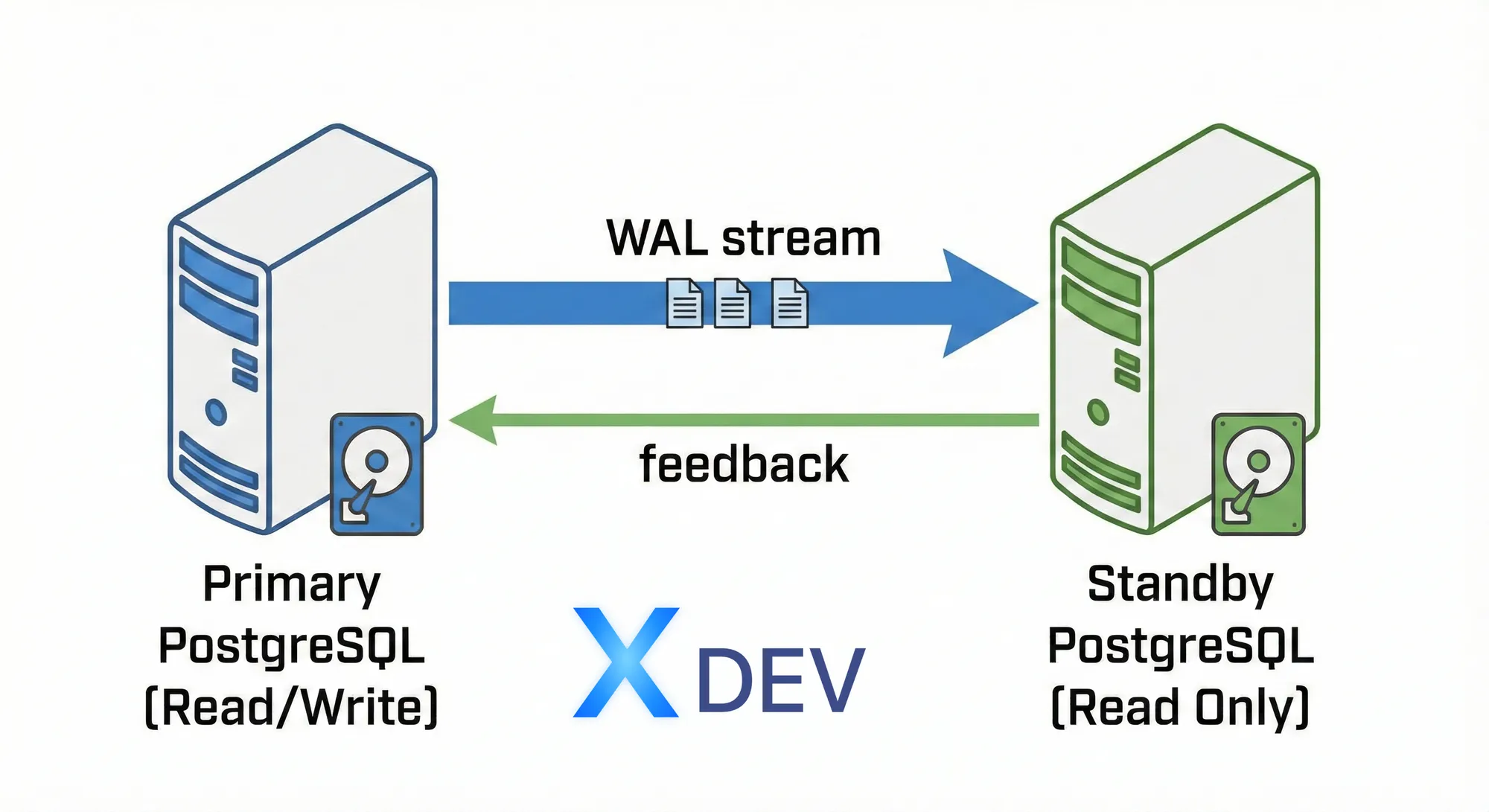
2.2. Streaming Replication
How it works:
- Primary stream WAL records realtime to standby_
- Standby apply changes immediately
- Standby can serve read queries (hot standby)
Advantages:
- Low Latency (< 1 second)_
- Hot standby can serve read queries
- Synchronous mode reduces data loss__HTMLTAG_287___
_Disadvantages point:_
- Still need manual failover_
- Need external tool for automation_
2.3. Logical Replication
How it works:
- Replicate at logical level (tables, rows)
- Enable selective replication data
- Publisher → Subscriber model
Pros point:
- Replication between different PostgreSQL versions
- _Selective replication (some tables only)_
- _Multi-master possible (with BDR)
Disadvantages:_
- Higher overhead than physical replication
- None Main HA solution (usually used for data distribution)
2.4. Shared Storage (SAN)
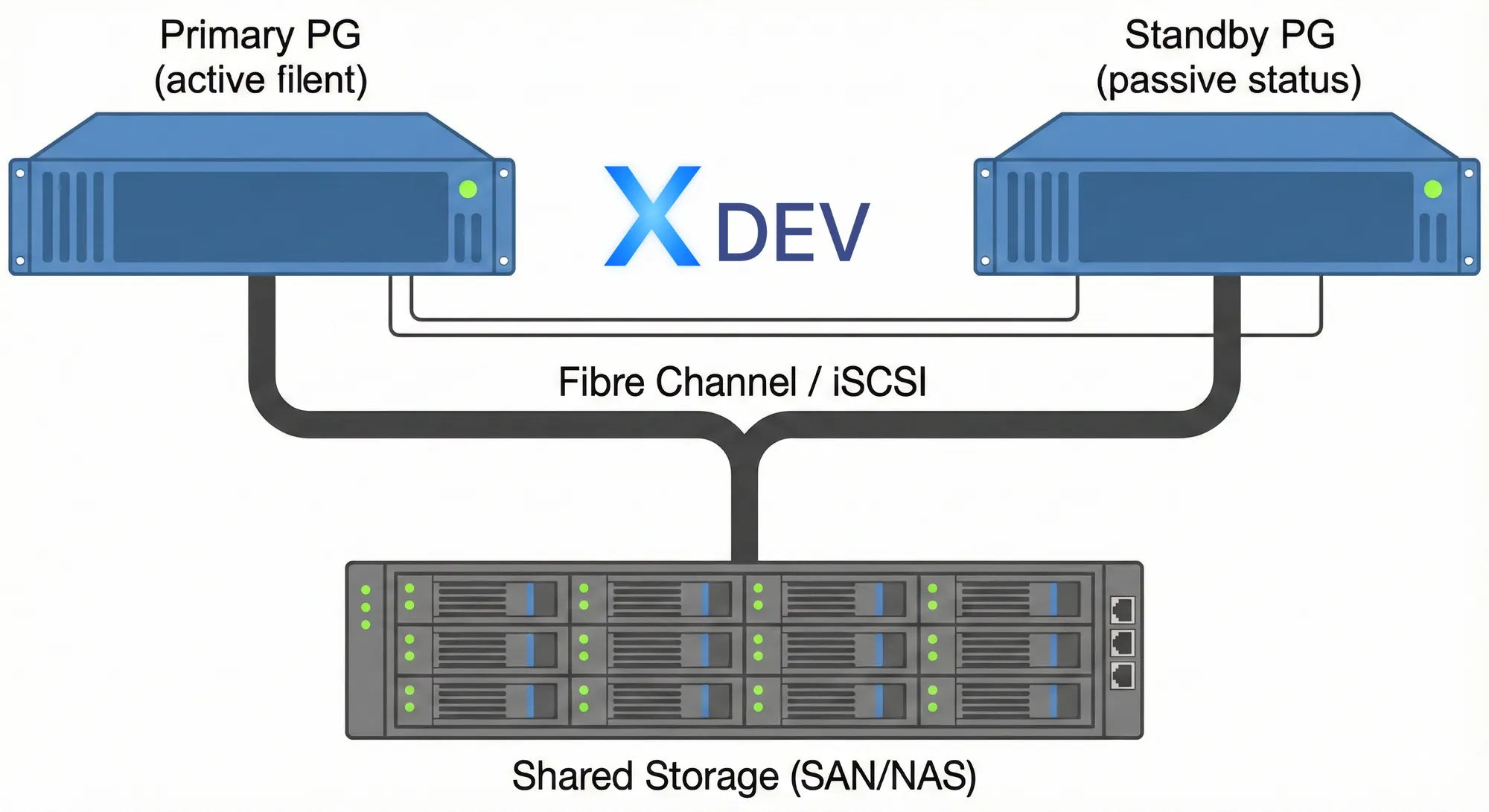
Advantages:
- Failover is fast (just start PostgreSQL)_
- No data loss_
Disadvantages:
- Expensive (needs SAN infrastructure)
- SAN becomes single point of failure
- Complicated to maintain
3. Comparison: Patroni vs Repmgr vs Pacemaker
3.1. Patroni_
Features:_
- _Python-based_
- Using DCS (etcd, Consul, ZooKeeper) to save cluster state_
- REST API for management
- Automatic smart failover_
- Template-based configuration
Advantages:
- ✅ Easy to install and configure image
- ✅ Powerful REST API
- ✅ Good integration with Kubernetes_
- ✅ Active development, large community__HTMLTAG_399___
- ✅ Automatic leader election
- ✅ Rolling restart, zero-downtime updates
Disadvantages points:
- ❌ Depends on DCS (add component)
- ❌ Need to learn DCS (etcd/Consul)
Use suitable cases:
- Cloud-native applications
- Kubernetes deployments
- Microservices architecture
- Need high automation
3.2. Repmgr
Features:
- Open-source tool from 2ndQuadrant (EnterpriseDB)
- Standalone tool, no need for DCS
- Witness node for quorum voting_
- Command-line based management
Advantages:
- ✅ No need for external DCS addition
- ✅ Simpler than Patroni
- ✅ Good Documentation
- ✅ Mature and stable
Disadvantages:
- ❌ Fewer automation features Patroni
- ❌ No REST API
- ❌ Smaller community
- ❌ Complex failover more
Use suitable cases:
- Traditional infrastructure
- Single Simple, few nodes
- Don't want to add DCS
3.3. Pacemaker + Corosync_
Features:_
- High Availability cluster framework (Linux-HA)
- Management many types of resources, not just PostgreSQL
- Voting quorum mechanism
- Fencing/STONITH to avoid split-brain_
Pros score:
- ✅ Mature, production-proven (20+ years)
- ✅ Manage many services (PostgreSQL, web server, etc.)
- ✅ Powerful Fencing mechanism
- ✅ Supports shared storage
Disadvantages Points:_
- ❌ Very complicated to setup and maintain_
- ❌ High learning curve_
- ❌ Difficult XML configuration read
- ❌ Debugging is difficult
Use cases are suitable Case:
- Enterprise environment_
- Need to manage many services
- Has shared storage (SAN)
- Team has experience with Pacemaker
3.4. Overview comparison table
| Criteria | Patroni | Repmgr | Pacemaker |
|---|---|---|---|
| Complexity | Average | Low | High |
| Learning curve | Average | Low | Very high |
| Setup time | Nhanh | Nhanh | Slow |
| Automatic failover | ✅ Excellent | ✅ Good | ✅ Excellent |
| REST API | ✅ Yes | ❌ No | ❌ No |
| Kubernetes support | ✅ Excellent | ⚠️ Limited | ❌ No |
| Community | ⭐⭐⭐⭐⭐ | ⭐⭐⭐ | ⭐⭐⭐⭐ |
| Documentation | ⭐⭐⭐⭐⭐ | ⭐⭐⭐⭐ | ⭐⭐⭐ |
| Dependencies_ | DCS (etcd/Consul) | None | None |
| Best for | Modern/Cloud | Simple setups | Enterprise/Complex |
3.5. Recommended
Choose Patroni if:
- Deploy on cloud or Kubernetes_
- Need automation and REST API
- Team has experience with modern DevOps tools
- ✅ This is the most popular option currently nay
_Select Repmgr if:
- Simple setup, few nodes (2-3)
- Don't want to depend on DCS
- Team is familiar with PostgreSQL traditional tools_
Choose Pacemaker if:
- Complicated enterprise environment
- Pacemaker infrastructure already available
- Need to manage many services at the same time_
- Shared storage available (SAN)
4. System overview architecture Patroni + etcd
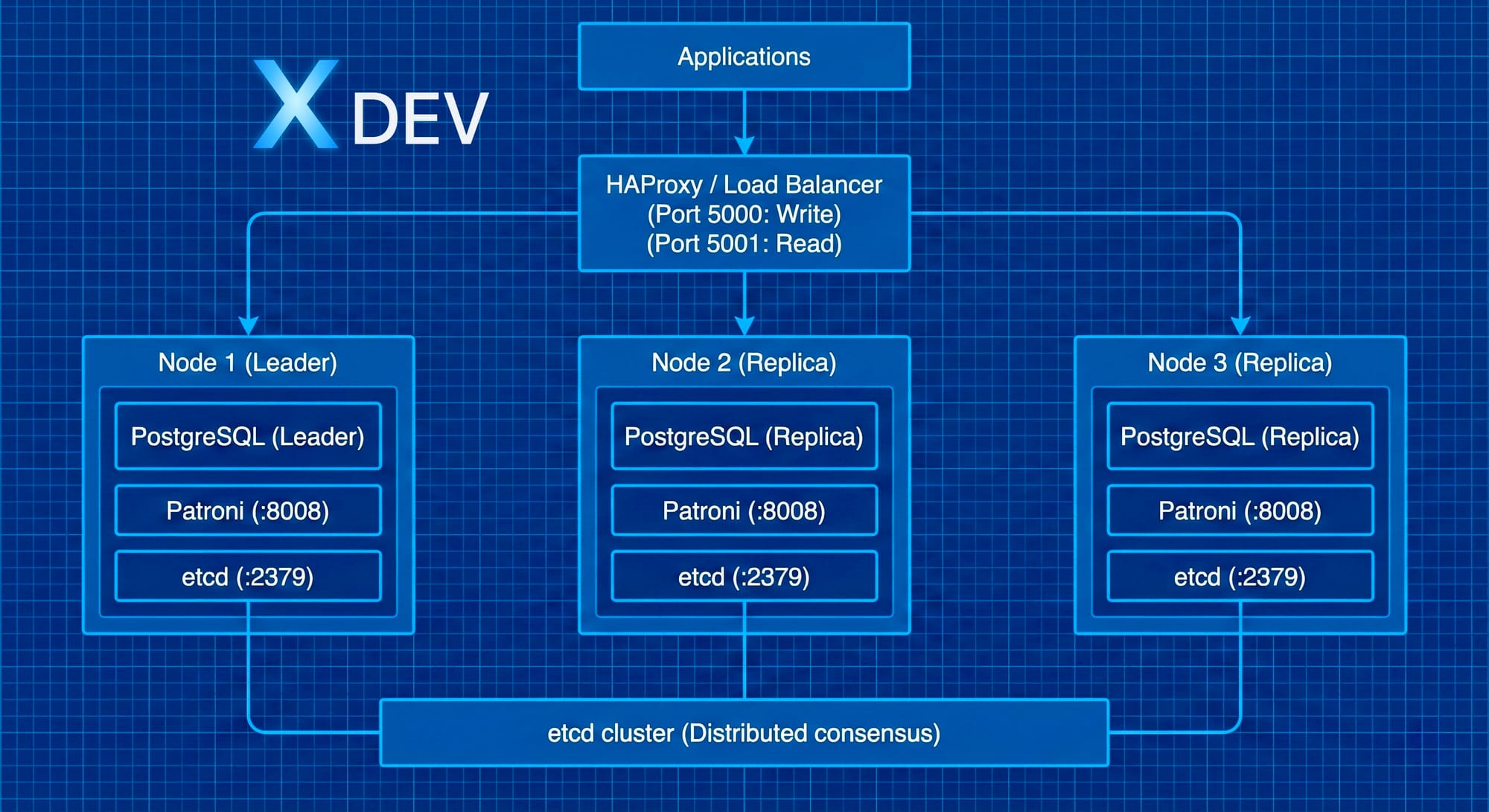
4.1. 3-node cluster architecture
4.2. Main components_
PostgreSQL
- Database main engine_
- One node is the Leader (read/write)
- Other nodes are Replica (read-only)
- Use Streaming Replication to sync set
Patroni
- PostgreSQL lifecycle management_
- _Monitor health of nodes_
- Perform automatic failover_
- Expose REST API (:8008) to query cluster state_
- Read/write configuration to DCS
etcd (DCS - Distributed Configuration Store)
- Storing cluster state and configuration
- Leader election (decide which node is the Leader)
- Distributed lock mechanism
- 3 nodes etcd form the quorum (majority voting)_
HAProxy (optional but recommended)_
- _Load balancer
- Route write traffic → Leader
- Route read traffic → Replicas (round-robin)
- Health check and automatically route when failover
4.3. Activity flow
1. Normal Operations
1. Application gửi query → HAProxy
2. HAProxy kiểm tra health check
3. Route write → Leader, read → Replicas
4. Patroni trên mỗi node:
   - Gửi heartbeat vào etcd mỗi 10s
   - Update health status
   - Maintain leader lease
2. Leader Failure Detection
1. Node 1 (Leader) gặp sự cố → stop heartbeat
2. etcd phát hiện: leader lease expired (30s)
3. Patroni trên Node 2 và Node 3 nhận ra
4. Leader election được trigger
3. Automatic Failover Process
Timeline: 0s  ──────────► 30s ──────► 45s ──────► 60s
          │              │           │            │
      Leader dies    etcd detects  New leader  Applications
                     lease expire   elected     reconnect
                                   (Node 2)
Node 1:   LEADER ──────► DOWN ──────────────────► STANDBY (sau khi recover)
Node 2:   REPLICA ─────────────────► LEADER ────► LEADER
Node 3:   REPLICA ──────────────────────────────► REPLICA
4. After Failover
- Node 2 trở thành Leader mới
- Node 3 vẫn là Replica, đổi replication source sang Node 2
- HAProxy tự động detect và route traffic sang Node 2
Node 1 (khi recover) sẽ join lại như Replica
4.4. Important scenarios
Scenario 1: Planned Switchover
# Admin muốn maintenance Node 1 (Leader) $ patronictl switchover postgres-clusterPatroni sẽ:
- Tạm dừng ghi vào Leader hiện tại
- Đợi Replica sync hoàn toàn (zero lag)
- Promote Replica → Leader
- Demote Leader cũ → Replica
Zero data loss, downtime < 5s
Scenario 2: Split-brain Prevention_
Tình huống: Network partition giữa nodesetcd quorum (3 nodes):
- Partition A: Node 1, Node 2 (2 nodes = majority)
- Partition B: Node 3 (1 node = minority)
Kết quả: ✅ Partition A: Tiếp tục hoạt động, có thể elect leader ❌ Partition B: Không thể elect leader (không đủ quorum)
→ Tránh được 2 leaders cùng tồn tại!
Scenario 3: Node Recovery
Node 1 recover sau khi die:
- Patroni start và đọc cluster state từ etcd
- Nhận ra Node 2 đang là Leader
- Tự động rejoin như Replica
- Sử dụng pg_rewind để sync data nếu có divergence
Bắt đầu streaming replication từ Node 2
4.5. Timeline configuration (important parameters)
# patroni.yml
bootstrap:
dcs:
ttl: 30                    # Leader lease time (30s)
loop_wait: 10              # Check interval (10s)
retry_timeout: 10          # Retry time
maximum_lag_on_failover: 1048576  # Max lag for failover candidate (1MB)
Explanation:
ttl: 30: Leader must renewlease every 30 seconds, otherwise it will be considered deadloop_wait: 10: Patroni checks health every 10s- Failover trigger: when (ttl - loop_wait) ends → ~20-30s
5. Summary_
Key Takeaways_
- High Availability is mandatory__HTMLTAG_857___ for production systems to reduce downtime and data loss whether
- Streaming Replication + Automatic Failover is the most popular HA method for PostgreSQL_
- Patroni is the best choice__HTMLTAG_865___ for most use cases out there modern:
- Easy to setup and maintain
- Automatic smart failover__HTMLTAG_870__
- REST powerful API__HTMLTAG_872__
- Good integration with cloud/K8s
- 3-node architecture with Patroni + etcd provides:
- Automatic failover (RTO < 30s)
- Zero data loss with sync replication
- Split-brain prevention
- Scalability for read workloads
Homework
- Calculate downtime for your system with different availability levels (99%, 99.9%, 99.99%)
- Draw the HA architecture for your specific use case (number of nodes, data centers, RTO/RPO requirements)
- Compare the costs between using HA and accepting downtime for your business you
Preparing for the next lesson
Lesson 2 will delve into Streaming Replication - the foundation of PostgreSQL HA:
- Detailed operating mechanism of WAL
- Synchronous vs Asynchronous replication
- Replication slots_
- Lab: Manual replication setup_