1. エージェント抽象化 — LLM + Memory + Tools + Planning
1.1. エージェントとは?
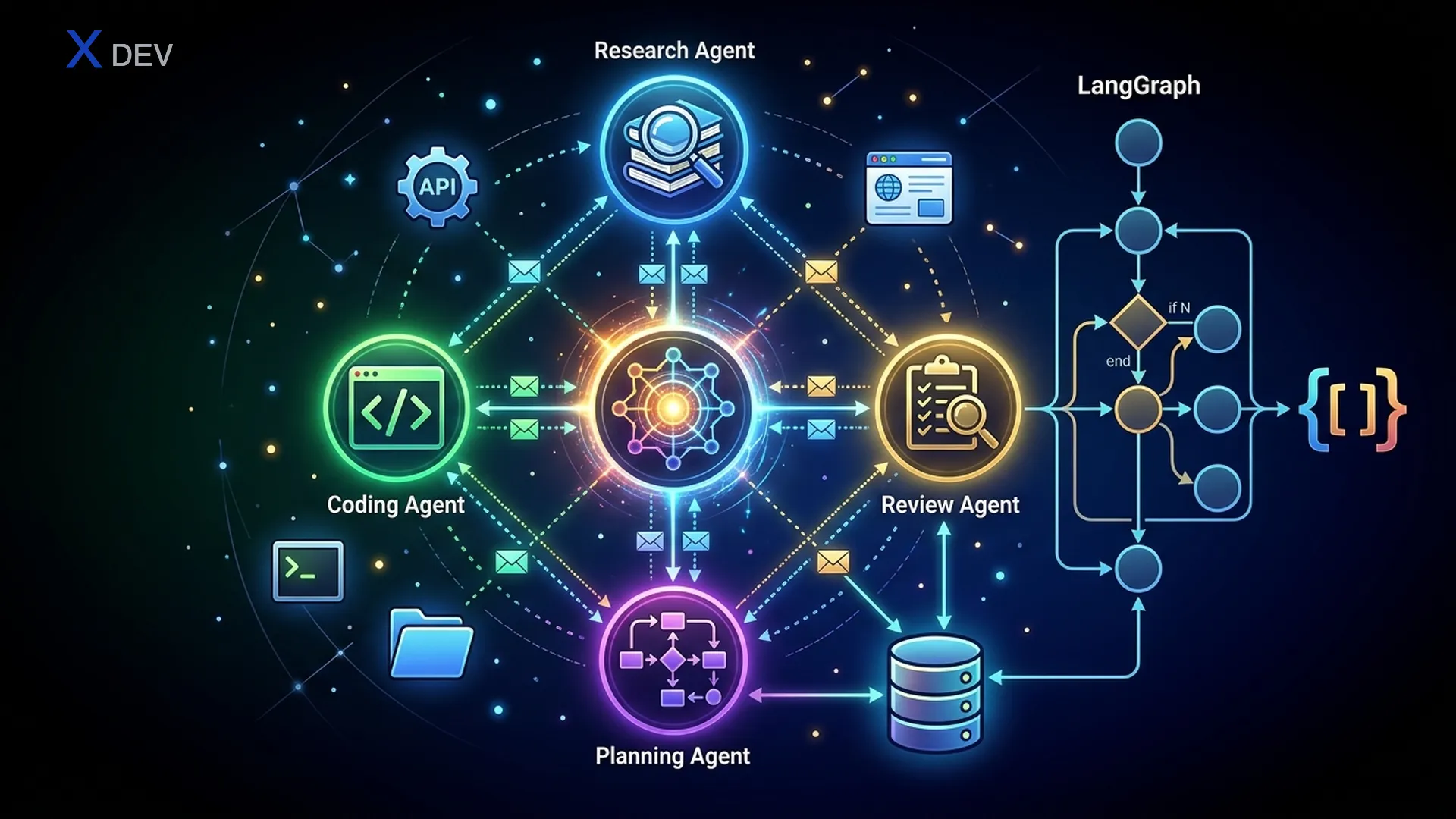
第8課ではシンプルなReActエージェント——ツールを選択して回答するLLM——を紹介しました。第9課ではAgentic AIに拡張します:LLMが中心的な頭脳として機能し、自律的に計画を立て、ツールを選択し、結果に対応し、他のエージェントと連携するシステムです。
エージェントは4つのコアコンポーネントで構成されます:
- LLM(頭脳) — 推論、意思決定、テキスト生成
- Memory — 短期記憶(会話バッファ)と長期記憶(ベクトルストア、データベース)
- Tools — エージェントが呼び出せる関数:検索、計算、API、コード実行
- Planning — 計画の作成、タスクの分解、エラー発生時の振り返り
Agent Abstraction — Core Components
══════════════════════════════════════════════════════════════

                    ┌──────────────────────┐
                    │       USER           │
                    │   (Task / Query)     │
                    └──────────┬───────────┘
                               │
                               ▼
  ┌────────────────────────────────────────────────────────┐
  │                      AGENT                             │
  │  ┌──────────┐  ┌───────────┐  ┌──────────────────┐    │
  │  │ Planning │  │  LLM Core │  │     Memory       │    │
  │  │          │◄─┤  (Brain)  ├─►│ Short-term: chat │    │
  │  │ Decompose│  │ Reasoning │  │ Long-term: VDB   │    │
  │  │ Reflect  │  │ Decisions │  │ Episodic: logs   │    │
  │  └──────────┘  └─────┬─────┘  └──────────────────┘    │
  │                       │                                │
  │              ┌────────┼────────┐                       │
  │              ▼        ▼        ▼                       │
  │         ┌────────┐┌───────┐┌────────┐                  │
  │         │Search  ││ Code  ││  API   │  ◄── Tools      │
  │         │Engine  ││ Exec  ││ Calls  │                  │
  │         └────────┘└───────┘└────────┘                  │
  └────────────────────────────────────────────────────────┘
1.2. 知覚 → 推論 → 行動 → 観察ループ
すべてのエージェントは基本的なループで動作します:
- 知覚(Perception) — 入力を受け取る(ユーザーのクエリ、ツールの出力、環境からのフィードバック)
- 推論(Reasoning) — LLMが推論する:「次に何をすべきか?どのツールを使うか?十分な情報があるか?」
- 行動(Action) — アクションを実行する:ツールの呼び出し、テキスト生成、ユーザーへの回答
- 観察(Observation) — アクションの結果を受け取り、知覚にフィードバック → 繰り返す
Agent Loop — Perception → Reasoning → Action → Observation
═══════════════════════════════════════════════════════════

  ┌──────────────┐     ┌───────────────┐     ┌──────────────┐
  │  PERCEPTION  │────►│   REASONING   │────►│    ACTION     │
  │              │     │               │     │               │
  │ User query   │     │ "Which tool?" │     │ Call tool     │
  │ Tool output  │     │ "Enough info?"│     │ Generate text │
  │ Error msg    │     │ "Need retry?" │     │ Return answer │
  └──────┬───────┘     └───────────────┘     └───────┬───────┘
         ▲                                           │
         │           ┌───────────────┐               │
         └───────────│  OBSERVATION  │◄──────────────┘
                     │               │
                     │ Tool result   │
                     │ Error / OK    │
                     └───────────────┘
         Final Answerが出るまでループが継続
1.3. エージェンシーのレベル
すべてのLLMアプリケーションに完全なエージェントが必要なわけではありません。NVIDIA DLIではエージェンシーのレベルを以下のように区別しています:
| レベル | パターン | LLMの役割 | 例 |
|---|---|---|---|
| L0 — エージェンシーなし | 単純なプロンプト→応答 | テキスト生成器 | FAQチャットボット |
| L1 — ツール使用 | LLMが1つのツールを選択 | ルーター | Function calling API |
| L2 — シングルエージェント | ReActループ、マルチステップ | プランナー+実行者 | RAG Agent(第8課) |
| L3 — マルチエージェント | 複数のエージェントが連携 | コーディネーター | Supervisor + Workers |
| L4 — 自律型 | 自己改善、長時間実行 | 自律システム | AI Scientist、Devin |
試験のヒント:「LLMが自律的にタスクを分解し、複数のツールを呼び出し、必要に応じてリトライする」→ Agent(L2以上)。「複数のLLMが連携し、それぞれが1つのタスクを専門とする」→ Multi-Agent(L3)。DLI試験でよく出る問題:「エージェントとチェーンの違いは?」→ エージェントは動的な制御フロー(LLMが次のステップを決定)、チェーンは固定の制御フローです。
2. LLMエージェントの認知アーキテクチャ
2.1. ReAct — Reasoning + Acting
ReAct(第8課で紹介)はThought(推論)とAction(行動)を交互に実行します。強み:シンプルで透明性が高い。弱み:長期的な計画がない——エージェントは次のステップのみを考え、全体像を見ません。
2.2. Plan-and-Execute
Plan-and-Executeは2つのフェーズを明確に分離します:(1) Planner LLMが事前に完全な計画を作成、(2) Executor LLMが各ステップを実行。各ステップ後にPlannerは再計画(計画の調整)が可能です。
Plan-and-Execute Architecture
══════════════════════════════════════════════════════════

  User: "Q3の売上を分析し、Q2と比較し、レポートを作成して"
       │
       ▼
  ┌─────────────────────────────────────────────┐
  │  PLANNER LLM                                │
  │  Plan:                                      │
  │    Step 1: Q3の売上データを取得              │
  │    Step 2: Q2の売上データを取得              │
  │    Step 3: Q2→Q3の変化を計算                │
  │    Step 4: 比較レポートを作成                │
  └─────────────────────┬───────────────────────┘
                        │
          ┌─────────────┼─────────────┐
          ▼             ▼             ▼
     Execute S1    Execute S2    Execute S3 ...
     (retriever)   (retriever)   (calculator)
          │             │             │
          └─────────────┼─────────────┘
                        │
                        ▼
                ┌───────────────┐
                │ REPLAN?       │──► ステップ失敗時 → 計画を調整
                │ All done?     │──► 完了時 → Step 4: レポート
                └───────────────┘
2.3. LATS — Language Agent Tree Search
LATSはモンテカルロ木探索(MCTS)とLLM推論を組み合わせます。単一パスを辿る(ReAct)代わりに、LATSは複数の解法分岐を探索し、LLMを使って各分岐を評価し、最良のものを選択します。LLMがチェスをプレイするように——数手先を読みます。
2.4. Reflexion — 失敗から学ぶ
Reflexionは自己振り返りステップを追加します:タスク完了後、エージェントが結果を自己評価 → 誤りがあれば「学んだ教訓」をメモリに書き込み → 前回の経験を活かしてリトライします。これはセルフフィードバックによるインコンテキスト学習の一形態です。
2.5. 認知アーキテクチャの比較
| アーキテクチャ | 計画 | 実行 | 強み | 弱み |
|---|---|---|---|---|
| ReAct | ステップごと(近視眼的) | 思考+行動を交互に | シンプル、透明性が高い | 全体計画なし、ループの可能性 |
| Plan-and-Execute | 事前に完全な計画 | 順次実行 | 全体把握、LLM呼び出し回数が少ない | ステップ実行後に計画が陳腐化する可能性 |
| LATS | 木探索(探索型) | 最良優先探索 | 代替案を探索、堅牢 | 非常に高コスト(多数のLLM呼び出し) |
| Reflexion | 試行錯誤+メモリ | 実行→振り返り→リトライ | 失敗から学習 | 収束が遅い、評価器が必要 |
試験のヒント:「エージェントが実行前に計画全体を考え抜く必要がある」→ Plan-and-Execute。「エージェントが複数の解法パスを試し、最良のものを選ぶ」→ LATS。「エージェントが結果を自己評価し改善する」→ Reflexion。「エージェントが思考と行動を交互に行う」→ ReAct。DLI試験では通常、最も広く使われている2つのアーキテクチャとしてReActとPlan-and-Executeが重点的に出題されます。
3. LangGraph — ステートフルなグラフベースのエージェントオーケストレーション
3.1. なぜLangGraphなのか?
LangChainのAgentExecutor(第8課)は「ブラックボックス」——制御フローのカスタマイズが困難です。LangGraphはLangChainのライブラリで、エージェントを有向グラフとして構築できます:各ノードは処理ステップ、エッジはフローを定義し、条件付きエッジは状態に基づいた分岐を可能にします。
| 機能 | AgentExecutor | LangGraph |
|---|---|---|
| 制御フロー | 固定のReActループ | カスタムグラフ——フローを自由に設計 |
| 状態管理 | 隠蔽された内部状態 | 明示的なTypedDict状態 |
| マルチエージェント | ネイティブサポートなし | ファーストクラス:各エージェント=サブグラフ |
| Human-in-the-loop | 限定的 | 組み込み:interrupt、approve、edit |
| 永続化 | 組み込みなし | Checkpointer:状態の保存/復元 |
| ストリーミング | 基本的 | イベントごとのストリーミング |
| デバッグ | LangSmithでトレース | グラフ可視化+LangSmith |
3.2. コアコンセプト — StateGraph、Nodes、Edges
LangGraphは3つのコンセプトで構成されています:
- State — ノード間で渡されるすべてのデータを保持するTypedDict。各ノードが状態を読み書きします。
- Nodes — Python関数。入力:state → 出力:部分的な状態更新(更新が必要なフィールドのみ)。
- Edges — ノード間の接続。
add_edge(A, B)= 常にA→B。add_conditional_edges(A, func)= funcが行き先を決定。
LangGraph Concepts
══════════════════════════════════════════════════════════

  State = TypedDict(messages, plan, results, ...)
  ────────────────────────────────────────────────

  START ──► [Node: agent]  ──conditional──► [Node: tools]
                 │                              │
                 │  (if done)                   │ (tool result)
                 ▼                              │
               END ◄───────────────────────────┘

  Nodes: 状態を読み書きするPython関数
  Edges: 静的(常時)または条件付き(関数が決定)
3.3. コード:基本的なLangGraphエージェント
from typing import TypedDict, Annotated, Sequence
from langchain_core.messages import BaseMessage, HumanMessage, AIMessage
from langchain_nvidia_ai_endpoints import ChatNVIDIA
from langchain_core.tools import tool
from langgraph.graph import StateGraph, END
from langgraph.prebuilt import ToolNode
import operator

# === 1. Stateの定義 ===
class AgentState(TypedDict):
    messages: Annotated[Sequence[BaseMessage], operator.add]

# === 2. Toolsの定義 ===
@tool
def search_docs(query: str) -> str:
    """Search internal documents for company information."""
    # 検索をシミュレート
    docs = {
        "leave": "Employees get 12 days annual leave per year.",
        "refund": "Refund within 30 days with original receipt.",
    }
    for key, val in docs.items():
        if key in query.lower():
            return val
    return "No relevant documents found."

@tool
def calculator(expression: str) -> str:
    """Calculate mathematical expressions."""
    try:
        return str(eval(expression))  # 本番環境ではsafe evalを使用
    except Exception as e:
        return f"Error: {e}"

tools = [search_docs, calculator]

# === 3. ツール付きLLMの定義 ===
llm = ChatNVIDIA(
    model="meta/llama-3.1-70b-instruct",
    temperature=0.1
).bind_tools(tools)

# === 4. Nodesの定義 ===
def agent_node(state: AgentState) -> dict:
    """LLMが判断:ツールを呼ぶか、応答するか。"""
    response = llm.invoke(state["messages"])
    return {"messages": [response]}

tool_node = ToolNode(tools)

# === 5. ルーティングの定義 ===
def should_continue(state: AgentState) -> str:
    last_message = state["messages"][-1]
    if last_message.tool_calls:
        return "tools"    # LLMがツールを呼びたい
    return "end"          # LLM完了、回答を返す

# === 6. グラフの構築 ===
graph = StateGraph(AgentState)

graph.add_node("agent", agent_node)
graph.add_node("tools", tool_node)

graph.set_entry_point("agent")
graph.add_conditional_edges("agent", should_continue, {
    "tools": "tools",
    "end": END,
})
graph.add_edge("tools", "agent")  # ツール実行後 → エージェントに戻る

app = graph.compile()

# === 7. 実行 ===
result = app.invoke({
    "messages": [HumanMessage(content="What is the leave policy?")]
})
print(result["messages"][-1].content)
3.4. Human-in-the-Loop
LangGraphは危険なアクションを実行する前にinterruptをサポートしています——例えばメール送信、データ削除、コード実行など。エージェントは一時停止し、ユーザーの承認を待ってから続行します。
from langgraph.checkpoint.memory import MemorySaver

# 中断+再開のためにcheckpointer付きでコンパイル
checkpointer = MemorySaver()
app = graph.compile(
    checkpointer=checkpointer,
    interrupt_before=["tools"]   # "tools"ノード実行前に一時停止
)

# 実行 — "tools"ノードの前で一時停止
config = {"configurable": {"thread_id": "user-123"}}
result = app.invoke(
    {"messages": [HumanMessage(content="Delete file report.pdf")]},
    config=config,
)

# 保留中のツール呼び出しを確認
pending = result["messages"][-1].tool_calls
print(f"Agent wants to: {pending}")
# → Agent wants to: [{'name': 'delete_file', 'args': {'path': 'report.pdf'}}]

# ユーザーが承認 → 続行
final = app.invoke(None, config=config)  # チェックポイントから再開
3.5. Checkpointing — 状態の保存と復元
Checkpointerは各ノード後に状態を保存し、以下を可能にします:
- 復元 — エージェントが実行中にクラッシュ → チェックポイントを読み込み → 続行
- タイムトラベル — 任意のチェックポイントに戻る → 異なる入力でリトライ
- Human-in-the-loop — 一時停止、ユーザー待機、再開(上記の通り)
- マルチターン — 複数ターンにわたる会話履歴の維持
試験のヒント:「カスタム制御フロー、条件分岐を持つエージェントを構築」→ LangGraph(AgentExecutorではない)。「人間の承認のためにエージェント実行を一時停止」→ interrupt_before + checkpointer。「エージェントの状態を保存し、後で再開」→ LangGraph checkpointing。DLI C-FX-25でよく出る問題:「なぜAgentExecutorではなくLangGraphを使うのか?」→ カスタムフロー、マルチエージェント、永続化、Human-in-the-loop。
4. マルチエージェントパターン
4.1. なぜマルチエージェントなのか?
20以上のツールを持つ単一エージェントは問題に直面します:ツール選択の混乱(ツールが多すぎてLLMが間違ったものを選ぶ)、プロンプトが長すぎる(すべての指示を含む必要がある)、デバッグが困難(エージェントがどこで失敗したか不明確)。マルチエージェントは分解によってこれを解決します:各エージェントが少数のツールで1つのタスクを専門とします。
4.2. Supervisorパターン
Supervisorエージェント(LLM)がユーザーからタスクを受け取り、Workerエージェントに委任し、結果を収集し、最終回答を統合します。
Supervisor Pattern
══════════════════════════════════════════════════════════

                    ┌──────────────┐
                    │     USER     │
                    └──────┬───────┘
                           │
                           ▼
              ┌────────────────────────┐
              │   SUPERVISOR AGENT     │
              │   (Orchestrator LLM)   │
              │                        │
              │   判断:               │
              │   • 次はどのWorker?   │
              │   • すべて完了?       │
              │   • ルート変更必要?   │
              └────┬──────┬──────┬─────┘
                   │      │      │
          ┌────────┘      │      └────────┐
          ▼               ▼               ▼
   ┌─────────────┐┌─────────────┐┌─────────────┐
   │ Researcher  ││   Coder     ││  Reporter   │
   │ Agent       ││   Agent     ││  Agent      │
   │             ││             ││             │
   │ Tools:      ││ Tools:      ││ Tools:      │
   │ • web_search││ • python    ││ • write_doc │
   │ • doc_search││ • shell     ││ • format    │
   └─────────────┘└─────────────┘└─────────────┘
4.3. 階層型パターン
階層型はSupervisorを拡張します:各Workerがそれ自体サブWorkerのSupervisorになることができます。複雑な組織に適しています——例えばCEOエージェント → マネージャーエージェント → スペシャリストエージェント。
Hierarchical Multi-Agent
══════════════════════════════════════════════════════════

              ┌──────────────────────┐
              │   TOP SUPERVISOR     │
              │   (Project Manager)  │
              └───┬─────────────┬────┘
                  │             │
         ┌────────┘             └────────┐
         ▼                               ▼
  ┌──────────────┐                ┌──────────────┐
  │ RESEARCH     │                │ ENGINEERING  │
  │ SUPERVISOR   │                │ SUPERVISOR   │
  └──┬───────┬───┘                └──┬───────┬───┘
     │       │                       │       │
     ▼       ▼                       ▼       ▼
  [Web    [Paper                 [Backend [Frontend
  Searcher] Analyzer]             Dev]     Dev]
4.4. Swarmパターン
Swarm(OpenAI Swarmのコンセプト)——Supervisorなし。エージェントはコンテキストに基づいて互いにハンドオフします。エージェントAが「このタスクはエージェントBの専門領域だ」と判断 → 自動的にハンドオフします。
4.5. Debateパターン
Debate ——2つ以上のエージェントが質問について議論します。各エージェントが自分の見解を提示し、相手に反論します。最後にJudgeエージェントが最良の結論を選択します。このパターンは複雑な質問に対する推論品質を向上させます。
4.6. マルチエージェントパターンの比較
| パターン | 制御フロー | コミュニケーション | 最適な用途 |
|---|---|---|---|
| Supervisor | 集中型——Supervisorがルーティング | ハブ&スポーク | 明確なタスク委任、中程度の複雑さ |
| 階層型 | 多段階の監督 | ツリー構造 | 複雑な組織、多くの専門サブチーム |
| Swarm | 分散型——エージェントがハンドオフ | ピアツーピア | カスタマーサービス、ルーティング、柔軟なフロー |
| Debate | ラウンドロビンの議論 | ブロードキャスト+Judge | 複雑な推論、事実検証 |
試験のヒント:「1つのLLMが専門エージェントにタスクをルーティング」→ Supervisor。「エージェントが中央制御なしに互いにハンドオフ」→ Swarm。「複数のエージェントが議論し、Judgeが決定」→ Debate。「サブチームを管理するネストされたSupervisor」→ 階層型。DLI試験では、本番環境で最も一般的なSupervisorパターンが重点的に出題されます。
4.7. コード:LangGraphによるSupervisorマルチエージェント
from typing import TypedDict, Annotated, Literal, Sequence
from langchain_core.messages import BaseMessage, HumanMessage, SystemMessage
from langchain_nvidia_ai_endpoints import ChatNVIDIA
from langchain_core.tools import tool
from langgraph.graph import StateGraph, END
from langgraph.prebuilt import ToolNode
import operator

# === State ===
class MultiAgentState(TypedDict):
    messages: Annotated[Sequence[BaseMessage], operator.add]
    next_agent: str

# === Worker Tools ===
@tool
def web_search(query: str) -> str:
    """Search the web for current information."""
    return f"[Web Result] Top findings for '{query}': ..."

@tool
def run_python(code: str) -> str:
    """Execute Python code and return output."""
    try:
        exec_globals = {}
        exec(code, exec_globals)
        return str(exec_globals.get("result", "Code executed successfully."))
    except Exception as e:
        return f"Error: {e}"

@tool
def write_report(content: str) -> str:
    """Format content into a professional report."""
    return f"=== REPORT ===\n{content}\n=== END ==="

# === Worker Agents ===
researcher_llm = ChatNVIDIA(
    model="meta/llama-3.1-70b-instruct", temperature=0.1
).bind_tools([web_search])

coder_llm = ChatNVIDIA(
    model="meta/llama-3.1-70b-instruct", temperature=0.0
).bind_tools([run_python])

reporter_llm = ChatNVIDIA(
    model="meta/llama-3.1-70b-instruct", temperature=0.3
).bind_tools([write_report])

# === Supervisor ===
supervisor_llm = ChatNVIDIA(
    model="meta/llama-3.1-70b-instruct", temperature=0.0
)

WORKERS = ["researcher", "coder", "reporter"]

def supervisor_node(state: MultiAgentState) -> dict:
    """Supervisorが次にどのWorkerにルーティングするか判断。"""
    system_prompt = f"""You are a supervisor managing these workers: {WORKERS}.
Given the conversation, decide which worker should act next,
or if the task is complete respond with FINISH.
Respond with ONLY the worker name or FINISH."""

    messages = [SystemMessage(content=system_prompt)] + state["messages"]
    response = supervisor_llm.invoke(messages)
    next_agent = response.content.strip().lower()

    if next_agent not in WORKERS:
        next_agent = "FINISH"
    return {"next_agent": next_agent}

def researcher_node(state: MultiAgentState) -> dict:
    system = SystemMessage(content="You are a research specialist. "
        "Use web_search to find information. Be thorough.")
    response = researcher_llm.invoke([system] + state["messages"])
    return {"messages": [response]}

def coder_node(state: MultiAgentState) -> dict:
    system = SystemMessage(content="You are a Python coding specialist. "
        "Use run_python to execute code for analysis and calculations.")
    response = coder_llm.invoke([system] + state["messages"])
    return {"messages": [response]}

def reporter_node(state: MultiAgentState) -> dict:
    system = SystemMessage(content="You are a report writer. "
        "Use write_report to create formatted reports from gathered info.")
    response = reporter_llm.invoke([system] + state["messages"])
    return {"messages": [response]}

# === ルーティング ===
def route_supervisor(state: MultiAgentState) -> str:
    next_agent = state.get("next_agent", "FINISH")
    if next_agent == "FINISH":
        return "end"
    return next_agent

# === グラフの構築 ===
graph = StateGraph(MultiAgentState)

graph.add_node("supervisor", supervisor_node)
graph.add_node("researcher", researcher_node)
graph.add_node("coder", coder_node)
graph.add_node("reporter", reporter_node)
graph.add_node("researcher_tools", ToolNode([web_search]))
graph.add_node("coder_tools", ToolNode([run_python]))
graph.add_node("reporter_tools", ToolNode([write_report]))

graph.set_entry_point("supervisor")

# SupervisorがWorkerにルーティング
graph.add_conditional_edges("supervisor", route_supervisor, {
    "researcher": "researcher",
    "coder": "coder",
    "reporter": "reporter",
    "end": END,
})

# Workers → ツールノード → Supervisorに戻る
for worker in WORKERS:
    def make_router(w):
        def router(state):
            last = state["messages"][-1]
            if hasattr(last, "tool_calls") and last.tool_calls:
                return f"{w}_tools"
            return "supervisor"
        return router
    graph.add_conditional_edges(worker, make_router(worker), {
        f"{worker}_tools": f"{worker}_tools",
        "supervisor": "supervisor",
    })
    graph.add_edge(f"{worker}_tools", worker)

app = graph.compile()

# === 実行 ===
result = app.invoke({
    "messages": [HumanMessage(
        content="Research NVIDIA H100 GPU specs, calculate price-performance "
                "ratio vs A100, and write a comparison report."
    )],
    "next_agent": "",
})

for msg in result["messages"]:
    print(f"[{msg.type}] {msg.content[:200]}...")
5. 本番環境対応のマルチエージェントアプリの構築
5.1. Research Assistant — 完全な例
3つのエージェントを持つ完全なResearch Assistantを構築します:Researcher(情報検索)、Coder(データ分析)、Reporter(レポート作成)。エラーハンドリング、リトライロジック、構造化出力を含みます。
from typing import TypedDict, Annotated, Sequence, Optional
from langchain_core.messages import BaseMessage, HumanMessage, SystemMessage, AIMessage
from langchain_nvidia_ai_endpoints import ChatNVIDIA
from langchain_core.tools import tool
from langgraph.graph import StateGraph, END
from langgraph.checkpoint.memory import MemorySaver
import operator
import json

# === 拡張State ===
class ResearchState(TypedDict):
    messages: Annotated[Sequence[BaseMessage], operator.add]
    research_data: Optional[str]       # 収集した調査データ
    analysis_result: Optional[str]     # コード分析の出力
    final_report: Optional[str]        # フォーマット済みレポート
    current_agent: str
    iteration: int                     # ループ防止のためイテレーションを追跡

MAX_ITERATIONS = 10

# === Tools ===
@tool
def search_arxiv(query: str) -> str:
    """Search academic papers on arxiv for research topics."""
    return json.dumps({
        "papers": [
            {"title": f"Paper on {query}", "abstract": f"Study of {query}...",
             "year": 2025, "citations": 42},
        ]
    })

@tool
def search_web(query: str) -> str:
    """Search the web for current news, blog posts, documentation."""
    return json.dumps({
        "results": [
            {"title": f"Latest news: {query}", "snippet": f"Updated info on {query}..."},
        ]
    })

@tool
def execute_analysis(code: str) -> str:
    """Run Python code for data analysis. Variable 'result' will be returned."""
    exec_globals = {}
    try:
        exec(code, exec_globals)
        return str(exec_globals.get("result", "Executed OK, no 'result' variable."))
    except Exception as e:
        return f"Error: {e}"

@tool
def generate_report(title: str, sections: str) -> str:
    """Generate a formatted markdown report from title and section content."""
    return f"# {title}\n\n{sections}\n\n---\nGenerated by Research Assistant"

# === エージェントノード ===
base_llm = ChatNVIDIA(model="meta/llama-3.1-70b-instruct")

def researcher_node(state: ResearchState) -> dict:
    llm = base_llm.bind_tools([search_arxiv, search_web])
    system = SystemMessage(content=(
        "You are a research specialist. Search for papers and web results "
        "to gather comprehensive information. Summarize findings clearly."
    ))
    response = llm.invoke([system] + list(state["messages"]))

    # ツール呼び出しがなければ調査完了 — データを抽出
    if not response.tool_calls:
        return {
            "messages": [response],
            "research_data": response.content,
            "current_agent": "supervisor",
        }
    return {"messages": [response], "current_agent": "researcher_tools"}

def coder_node(state: ResearchState) -> dict:
    llm = base_llm.bind_tools([execute_analysis])
    context = state.get("research_data", "No research data yet.")
    system = SystemMessage(content=(
        f"You are a data analyst. Use the research data below to perform "
        f"analysis with Python code.\n\nResearch Data:\n{context}"
    ))
    response = llm.invoke([system] + list(state["messages"]))

    if not response.tool_calls:
        return {
            "messages": [response],
            "analysis_result": response.content,
            "current_agent": "supervisor",
        }
    return {"messages": [response], "current_agent": "coder_tools"}

def reporter_node(state: ResearchState) -> dict:
    llm = base_llm.bind_tools([generate_report])
    research = state.get("research_data", "N/A")
    analysis = state.get("analysis_result", "N/A")
    system = SystemMessage(content=(
        f"You are a report writer. Create a professional report.\n"
        f"Research:\n{research}\n\nAnalysis:\n{analysis}"
    ))
    response = llm.invoke([system] + list(state["messages"]))

    if not response.tool_calls:
        return {
            "messages": [response],
            "final_report": response.content,
            "current_agent": "supervisor",
        }
    return {"messages": [response], "current_agent": "reporter_tools"}

def supervisor_node(state: ResearchState) -> dict:
    iteration = state.get("iteration", 0) + 1
    if iteration > MAX_ITERATIONS:
        return {
            "messages": [AIMessage(content="Max iterations reached. Returning results.")],
            "current_agent": "FINISH",
            "iteration": iteration,
        }

    system = SystemMessage(content="""You are a project supervisor. Based on the current state:
- If no research data → route to "researcher"
- If research done but no analysis → route to "coder"
- If analysis done but no report → route to "reporter"
- If report is ready → respond "FINISH"
Respond with ONLY one of: researcher, coder, reporter, FINISH""")

    response = base_llm.invoke([system] + list(state["messages"]))
    next_agent = response.content.strip().lower()

    valid = ["researcher", "coder", "reporter", "finish"]
    if next_agent not in valid:
        next_agent = "researcher"  # デフォルトのフォールバック

    return {"current_agent": next_agent, "iteration": iteration}

# === ルーティング ===
def route_from_supervisor(state: ResearchState) -> str:
    agent = state.get("current_agent", "FINISH")
    if agent in ["researcher", "coder", "reporter"]:
        return agent
    return "end"

def route_from_worker(worker_name: str):
    def router(state: ResearchState) -> str:
        current = state.get("current_agent", "supervisor")
        if current == f"{worker_name}_tools":
            return f"{worker_name}_tools"
        return "supervisor"
    return router

# === グラフの構築 ===
from langgraph.prebuilt import ToolNode

graph = StateGraph(ResearchState)

graph.add_node("supervisor", supervisor_node)
graph.add_node("researcher", researcher_node)
graph.add_node("coder", coder_node)
graph.add_node("reporter", reporter_node)
graph.add_node("researcher_tools", ToolNode([search_arxiv, search_web]))
graph.add_node("coder_tools", ToolNode([execute_analysis]))
graph.add_node("reporter_tools", ToolNode([generate_report]))

graph.set_entry_point("supervisor")

graph.add_conditional_edges("supervisor", route_from_supervisor, {
    "researcher": "researcher",
    "coder": "coder",
    "reporter": "reporter",
    "end": END,
})

for worker in ["researcher", "coder", "reporter"]:
    graph.add_conditional_edges(worker, route_from_worker(worker), {
        f"{worker}_tools": f"{worker}_tools",
        "supervisor": "supervisor",
    })
    graph.add_edge(f"{worker}_tools", worker)

# チェックポイント付きでコンパイル
checkpointer = MemorySaver()
app = graph.compile(checkpointer=checkpointer)

# === 実行 ===
config = {"configurable": {"thread_id": "research-001"}}
result = app.invoke(
    {
        "messages": [HumanMessage(
            content="Research the latest advances in mixture-of-experts (MoE) "
                    "models, analyze their parameter efficiency compared to "
                    "dense models, and write a summary report."
        )],
        "current_agent": "",
        "iteration": 0,
    },
    config=config,
)

# 最終レポートを出力
print(result.get("final_report", result["messages"][-1].content))
5.2. 本番環境のベストプラクティス
| プラクティス | 理由 | 実装方法 |
|---|---|---|
| 最大イテレーション数 | 無限ループの防止 | 状態にiterationカウンター、Supervisorでチェック |
| エラーハンドリング | ツールの失敗でエージェントがクラッシュしない | ツール内のtry/except、エラーメッセージを返す |
| チェックポイント | クラッシュ後の復元 | MemorySaver(開発用) / SqliteSaver(本番用) |
| 構造化出力 | 信頼性の高いルーティング判断 | Supervisorの出力を有効な選択肢に制約 |
| オブザーバビリティ | マルチエージェントのデバッグは困難 | LangSmithトレース、各ノードの入出力ログ |
| ノードごとのタイムアウト | 単一ノードがブロックしない | LLM呼び出しとツール実行にタイムアウトを設定 |
| Human-in-the-loop | 重要なアクションには承認が必要 | 危険なツールノードにinterrupt_before |
試験のヒント:「エージェントの無限ループを防ぐには?」→ max_iterations + イテレーションカウンター。「マルチエージェントシステムのデバッグ方法は?」→ LangSmithトレース+ロギング。「エージェントのクラッシュリカバリは?」→ 永続ストレージによるチェックポイント。本番デプロイ → LangGraph Platform(マネージド)またはLangServe(セルフホスト)。
6. DLI C-FX-25 — Agentic AIコース概要
6.1. コース構成
コースC-FX-25:「Building Agentic AI Applications」はDLIの上級モジュールで、本番環境対応のAgentic AIシステムの構築に焦点を当てています。S-FX-15を補完し、エージェントアーキテクチャをより深く掘り下げます。
| モジュール | トピック | ハンズオン |
|---|---|---|
| モジュール1 | エージェントの基礎、ReAct、ツール呼び出し | NVIDIA NIMでシングルエージェントを構築 |
| モジュール2 | LangGraph入門、StateGraph | カスタムエージェントグラフの実装 |
| モジュール3 | マルチエージェントアーキテクチャ | Supervisorマルチエージェントシステムの構築 |
| モジュール4 | 上級:メモリ、計画、評価 | 本番デプロイの演習 |
6.2. 評価の重点領域
C-FX-25の評価はハンズオンの実装に焦点を当てています:
- LangGraph StateGraph — 状態、ノード、条件付きエッジの定義
- ツール統合 — LLMへのツールのバインド、ツール呼び出しの処理
- Supervisorルーティング — Supervisorロジックの実装、Workerへのルーティング
- チェックポイント — エージェント状態の保存/復元
- Human-in-the-loop — interrupt_before、承認、再開
6.3. 覚えておくべき主要API
| API / コンセプト | 用途 |
|---|---|
StateGraph(State) | 型付き状態でグラフを作成 |
graph.add_node(name, func) | 処理ノードを追加 |
graph.add_edge(A, B) | 常にA → Bにルーティング |
graph.add_conditional_edges(A, func, map) | 関数の出力に基づいてルーティング |
graph.set_entry_point(name) | 開始ノードを設定 |
graph.compile(checkpointer=...) | グラフをコンパイル、オプションでcheckpointer |
ToolNode(tools) | ツール呼び出しを実行するプリビルトノード |
MemorySaver() | インメモリcheckpointer(開発用のみ) |
interrupt_before=[node] | ノード実行前に一時停止 |
llm.bind_tools(tools) | Function calling用にLLMにツールをアタッチ |
試験のヒント:C-FX-25の評価ではLangGraphコードをゼロから書くことが求められます。パターンを覚えましょう:(1) State TypedDictの定義、(2) ノードを関数として定義、(3) ノード+エッジの追加、(4) コンパイル+実行。APIを暗記する必要はありませんが、フローを理解する必要があります:状態がノードを通じて流れ、条件付きエッジが動的にルーティングします。
7. チートシート
| コンセプト | 要点 |
|---|---|
| エージェントのコンポーネント | LLM + Memory + Tools + Planning |
| エージェントループ | 知覚 → 推論 → 行動 → 観察 |
| Agent vs Chain | Agent = 動的フロー(LLMが決定);Chain = 固定フロー |
| ReAct | Thought + Action + Observationを交互に。シンプル、近視眼的 |
| Plan-and-Execute | 事前に計画 → ステップ実行 → 必要に応じて再計画 |
| LATS | 推論パスの木探索。高コストだが堅牢 |
| Reflexion | 実行 → 自己振り返り → 教訓を活かしてリトライ |
| LangGraph | StateGraph:ノード+エッジ+条件付きルーティング |
| LangGraph State | すべてのノードで共有されるTypedDict |
| 条件付きエッジ | ルーター関数が次のノードを決定 |
| チェックポイント | MemorySaver(開発用)、SqliteSaver(本番用)。再開を可能にする |
| Human-in-the-loop | interrupt_before=[node] + checkpointer付きでコンパイル |
| Supervisorパターン | 中央LLMが専門Workerエージェントにルーティング |
| 階層型 | ネストされたSupervisor——エージェントのツリー |
| Swarm | 分散型ハンドオフ、中央Supervisorなし |
| Debate | エージェントが議論、Judgeが決定。推論品質向上 |
| 最大イテレーション数 | 無限のエージェントループを防ぐため必ず設定 |
| ToolNode | ツール呼び出しを実行するLangGraphプリビルトノード |
| C-FX-25の焦点 | LangGraphコーディング、マルチエージェント、チェックポイント、HITL |
8. 練習問題 — コーディング
Q1:基本的なLangGraph ReActエージェントの構築
2つのツールを持つシンプルなLangGraphエージェントを構築してください:search_docs(ドキュメント検索)とcalculator(計算実行)。完全なパイプラインを実装します:State、エージェントノード、ツールノード、条件付きエッジルーティング、コンパイルと実行。
回答Q1を表示
from typing import TypedDict, Annotated, Sequence
from langchain_core.messages import BaseMessage, HumanMessage
from langchain_nvidia_ai_endpoints import ChatNVIDIA
from langchain_core.tools import tool
from langgraph.graph import StateGraph, END
from langgraph.prebuilt import ToolNode
import operator

# 1. State
class AgentState(TypedDict):
    messages: Annotated[Sequence[BaseMessage], operator.add]

# 2. Tools
@tool
def search_docs(query: str) -> str:
    """Search internal knowledge base for relevant documents."""
    return f"Found: Documentation about {query} — key facts here."

@tool
def calculator(expression: str) -> str:
    """Calculate a mathematical expression."""
    return str(eval(expression))

tools = [search_docs, calculator]

# 3. ツール付きLLM
llm = ChatNVIDIA(model="meta/llama-3.1-70b-instruct", temperature=0.0)
llm_with_tools = llm.bind_tools(tools)

# 4. ノード
def agent_node(state: AgentState) -> dict:
    response = llm_with_tools.invoke(state["messages"])
    return {"messages": [response]}

tool_node = ToolNode(tools)

# 5. ルーター
def should_continue(state: AgentState) -> str:
    last = state["messages"][-1]
    if hasattr(last, "tool_calls") and last.tool_calls:
        return "tools"
    return "end"

# 6. グラフの構築
graph = StateGraph(AgentState)
graph.add_node("agent", agent_node)
graph.add_node("tools", tool_node)
graph.set_entry_point("agent")
graph.add_conditional_edges("agent", should_continue, {
    "tools": "tools",
    "end": END,
})
graph.add_edge("tools", "agent")

app = graph.compile()

# 7. 実行
result = app.invoke({
    "messages": [HumanMessage(content="What is 25 * 4 + 100?")]
})
print(result["messages"][-1].content)
Q2:LangGraphチェックポイントによるHuman-in-the-Loopの実装
Q1のエージェントを修正してHuman-in-the-Loopを追加してください:エージェントがツール実行前に一時停止し、ユーザーが承認または拒否できるようにします。デモ:(1) checkpointer + interrupt_before付きでコンパイル、(2) 実行してエージェントの一時停止を確認、(3) 実行を再開。
回答Q2を表示
from langgraph.checkpoint.memory import MemorySaver

# Q1のグラフを再利用、HITL付きでコンパイル
checkpointer = MemorySaver()
app_hitl = graph.compile(
    checkpointer=checkpointer,
    interrupt_before=["tools"]  # ツール実行前に一時停止
)

# 実行 — エージェントはツール呼び出し前に一時停止
config = {"configurable": {"thread_id": "hitl-demo-001"}}
result = app_hitl.invoke(
    {"messages": [HumanMessage(content="Calculate 1000 / 4")]},
    config=config,
)

# エージェントが一時停止 — 何をしようとしているか確認
last_msg = result["messages"][-1]
print("Agent wants to call:")
for tc in last_msg.tool_calls:
    print(f"  Tool: {tc['name']}, Args: {tc['args']}")

# ユーザーが承認 → 再開(チェックポイントから続行するためNoneを渡す)
final_result = app_hitl.invoke(None, config=config)
print("\nFinal answer:", final_result["messages"][-1].content)

# ユーザーが拒否する場合 → 状態を変更するか、ここで停止
# 拒否するには:invoke(None, config)を呼ばないだけ
Q3:Supervisorマルチエージェントシステムの構築
2つのWorkerを持つSupervisorパターンを実装してください:researcher(web_searchツールを使用)とwriter(write_reportツールを使用)。Supervisorがユーザーからタスクを受け取り、適切なWorkerにルーティングし、結果を収集します。条件付きエッジによるルーティングロジックを実装します。
回答Q3を表示
from typing import TypedDict, Annotated, Sequence
from langchain_core.messages import BaseMessage, HumanMessage, SystemMessage
from langchain_nvidia_ai_endpoints import ChatNVIDIA
from langchain_core.tools import tool
from langgraph.graph import StateGraph, END
from langgraph.prebuilt import ToolNode
import operator

class SupervisorState(TypedDict):
    messages: Annotated[Sequence[BaseMessage], operator.add]
    next: str

@tool
def web_search(query: str) -> str:
    """Search the internet for information."""
    return f"Search results for '{query}': ..."

@tool
def write_report(content: str) -> str:
    """Write and format a professional report."""
    return f"=== Report ===\n{content}\n=== End ==="

llm = ChatNVIDIA(model="meta/llama-3.1-70b-instruct", temperature=0.0)

def supervisor(state: SupervisorState) -> dict:
    sys = SystemMessage(content=(
        "You are a supervisor. Workers: researcher, writer. "
        "Route to appropriate worker or say FINISH if task complete. "
        "Respond with ONLY: researcher, writer, or FINISH."
    ))
    resp = llm.invoke([sys] + list(state["messages"]))
    next_val = resp.content.strip().lower()
    if next_val not in ["researcher", "writer"]:
        next_val = "FINISH"
    return {"next": next_val}

def researcher(state: SupervisorState) -> dict:
    r_llm = llm.bind_tools([web_search])
    sys = SystemMessage(content="You are a researcher. Use web_search.")
    resp = r_llm.invoke([sys] + list(state["messages"]))
    return {"messages": [resp]}

def writer(state: SupervisorState) -> dict:
    w_llm = llm.bind_tools([write_report])
    sys = SystemMessage(content="You are a report writer. Use write_report.")
    resp = w_llm.invoke([sys] + list(state["messages"]))
    return {"messages": [resp]}

def route(state: SupervisorState) -> str:
    n = state.get("next", "FINISH")
    return n if n in ["researcher", "writer"] else "end"

# 構築
g = StateGraph(SupervisorState)
g.add_node("supervisor", supervisor)
g.add_node("researcher", researcher)
g.add_node("writer", writer)
g.add_node("research_tools", ToolNode([web_search]))
g.add_node("writer_tools", ToolNode([write_report]))

g.set_entry_point("supervisor")
g.add_conditional_edges("supervisor", route, {
    "researcher": "researcher",
    "writer": "writer",
    "end": END,
})

# Researcherフロー
def route_researcher(state):
    last = state["messages"][-1]
    if hasattr(last, "tool_calls") and last.tool_calls:
        return "research_tools"
    return "supervisor"

g.add_conditional_edges("researcher", route_researcher, {
    "research_tools": "research_tools",
    "supervisor": "supervisor",
})
g.add_edge("research_tools", "researcher")

# Writerフロー
def route_writer(state):
    last = state["messages"][-1]
    if hasattr(last, "tool_calls") and last.tool_calls:
        return "writer_tools"
    return "supervisor"

g.add_conditional_edges("writer", route_writer, {
    "writer_tools": "writer_tools",
    "supervisor": "supervisor",
})
g.add_edge("writer_tools", "writer")

app = g.compile()

result = app.invoke({
    "messages": [HumanMessage(content="Research AI trends 2025 and write a report")],
    "next": "",
})
print(result["messages"][-1].content)
Q4:LangGraphエージェントにPlan-and-Executeを追加
Plan-and-Executeパターンを実装してください:(1) Plannerノードがユーザーのクエリからステップのリストを作成、(2) Executorノードが各ステップを実行、(3) Replannerノードが進捗を確認し必要に応じて計画を調整。計画を状態に保存します。
回答Q4を表示
from typing import TypedDict, Annotated, Sequence, List, Optional
from langchain_core.messages import BaseMessage, HumanMessage, SystemMessage
from langchain_nvidia_ai_endpoints import ChatNVIDIA
from langgraph.graph import StateGraph, END
import operator, json

class PlanExecState(TypedDict):
    messages: Annotated[Sequence[BaseMessage], operator.add]
    plan: List[str]          # ステップのリスト
    current_step: int        # 現在のステップのインデックス
    step_results: List[str]  # 各ステップの結果
    done: bool

llm = ChatNVIDIA(model="meta/llama-3.1-70b-instruct", temperature=0.0)

def planner_node(state: PlanExecState) -> dict:
    """ユーザーのリクエストから計画を作成。"""
    sys = SystemMessage(content=(
        "You are a planner. Break the user's request into 3-5 concrete steps. "
        "Return ONLY a JSON array of strings, e.g. [\"step1\", \"step2\"]."
    ))
    resp = llm.invoke([sys] + list(state["messages"]))
    try:
        plan = json.loads(resp.content)
    except json.JSONDecodeError:
        plan = [resp.content]
    return {"plan": plan, "current_step": 0, "step_results": []}

def executor_node(state: PlanExecState) -> dict:
    """計画の現在のステップを実行。"""
    step_idx = state["current_step"]
    plan = state["plan"]
    if step_idx >= len(plan):
        return {"done": True}

    current = plan[step_idx]
    sys = SystemMessage(content=(
        f"Execute this step: {current}\n"
        f"Previous results: {state['step_results']}\n"
        "Provide a concise result."
    ))
    resp = llm.invoke([sys] + list(state["messages"]))
    new_results = list(state["step_results"]) + [resp.content]
    return {
        "step_results": new_results,
        "current_step": step_idx + 1,
        "messages": [resp],
    }

def replanner_node(state: PlanExecState) -> dict:
    """進捗を確認し、必要に応じて計画を調整。"""
    if state["current_step"] >= len(state["plan"]):
        return {"done": True}

    sys = SystemMessage(content=(
        f"Plan: {state['plan']}\n"
        f"Completed: {state['current_step']}/{len(state['plan'])}\n"
        f"Results so far: {state['step_results']}\n"
        "Should the remaining plan continue as-is? "
        "Reply 'CONTINUE' or provide updated remaining steps as JSON array."
    ))
    resp = llm.invoke([sys])
    if "CONTINUE" in resp.content.upper():
        return {"done": False}
    try:
        remaining = json.loads(resp.content)
        new_plan = state["plan"][:state["current_step"]] + remaining
        return {"plan": new_plan, "done": False}
    except json.JSONDecodeError:
        return {"done": False}

def route_after_exec(state: PlanExecState) -> str:
    if state.get("done", False):
        return "end"
    return "replanner"

def route_after_replan(state: PlanExecState) -> str:
    if state.get("done", False):
        return "end"
    return "executor"

# グラフの構築
g = StateGraph(PlanExecState)
g.add_node("planner", planner_node)
g.add_node("executor", executor_node)
g.add_node("replanner", replanner_node)

g.set_entry_point("planner")
g.add_edge("planner", "executor")
g.add_conditional_edges("executor", route_after_exec, {
    "replanner": "replanner",
    "end": END,
})
g.add_conditional_edges("replanner", route_after_replan, {
    "executor": "executor",
    "end": END,
})

app = g.compile()

result = app.invoke({
    "messages": [HumanMessage(
        content="Analyze the pros and cons of microservices architecture "
                "and recommend when to use it vs monolith."
    )],
    "plan": [],
    "current_step": 0,
    "step_results": [],
    "done": False,
})

for i, res in enumerate(result["step_results"]):
    print(f"Step {i+1}: {res[:150]}...")
Q5:マルチエージェントシステムにエラーハンドリングとリトライロジックを実装
マルチエージェントシステムにエラーハンドリングを追加してください:(1) ツールの失敗がクラッシュの代わりにエラーメッセージを返す、(2) エージェントがエラーを受信 → 異なる戦略でリトライ(最大2回)、(3) エージェントの状態がリトライ回数を追跡。ノードラッパーパターンを実装します。
回答Q5を表示
from typing import TypedDict, Annotated, Sequence, Dict
from langchain_core.messages import BaseMessage, HumanMessage, AIMessage
from langchain_nvidia_ai_endpoints import ChatNVIDIA
from langchain_core.tools import tool
from langgraph.graph import StateGraph, END
from langgraph.prebuilt import ToolNode
import operator

class RobustState(TypedDict):
    messages: Annotated[Sequence[BaseMessage], operator.add]
    error_count: int
    max_retries: int

# エラーハンドリング組み込みのツール
@tool
def risky_api_call(endpoint: str) -> str:
    """Call an external API that might fail."""
    import random
    if random.random() < 0.5:
        raise ConnectionError(f"API {endpoint} unreachable")
    return f"API response from {endpoint}: success data"

@tool
def safe_search(query: str) -> str:
    """Search with built-in error handling."""
    return f"Results for {query}: ..."

# エラーハンドリング付きのツールラッパー
def safe_tool_node(tools):
    """エラーをキャッチしてエラーメッセージを返すToolNodeラッパー。"""
    base_node = ToolNode(tools)
    def wrapper(state: RobustState) -> dict:
        try:
            return base_node.invoke(state)
        except Exception as e:
            error_msg = AIMessage(content=f"Tool error: {str(e)}. Try different approach.")
            return {
                "messages": [error_msg],
                "error_count": state.get("error_count", 0) + 1,
            }
    return wrapper

tools = [risky_api_call, safe_search]
llm = ChatNVIDIA(model="meta/llama-3.1-70b-instruct", temperature=0.0)
llm_with_tools = llm.bind_tools(tools)

def agent_node(state: RobustState) -> dict:
    error_count = state.get("error_count", 0)
    max_retries = state.get("max_retries", 2)

    # エラーが多すぎる場合、適切に終了
    if error_count >= max_retries:
        return {"messages": [AIMessage(
            content="I encountered multiple errors. Here's what I could gather "
                    "from successful attempts: " +
                    " | ".join(m.content for m in state["messages"][-3:])
        )]}

    # エラーがあった場合、リトライコンテキストを追加
    msgs = list(state["messages"])
    if error_count > 0:
        msgs.append(HumanMessage(
            content=f"Previous attempt failed ({error_count}/{max_retries} retries). "
                    "Try a different tool or approach."
        ))

    response = llm_with_tools.invoke(msgs)
    return {"messages": [response]}

def should_continue(state: RobustState) -> str:
    last = state["messages"][-1]
    error_count = state.get("error_count", 0)
    max_retries = state.get("max_retries", 2)

    # 最大リトライを超えた場合停止
    if error_count >= max_retries and not (
        hasattr(last, "tool_calls") and last.tool_calls
    ):
        return "end"

    if hasattr(last, "tool_calls") and last.tool_calls:
        return "tools"
    return "end"

# 構築
g = StateGraph(RobustState)
g.add_node("agent", agent_node)
g.add_node("tools", safe_tool_node(tools))
g.set_entry_point("agent")
g.add_conditional_edges("agent", should_continue, {
    "tools": "tools",
    "end": END,
})
g.add_edge("tools", "agent")  # ツール結果 → エージェントに戻る

app = g.compile()

result = app.invoke({
    "messages": [HumanMessage(content="Call the user-data API endpoint")],
    "error_count": 0,
    "max_retries": 2,
})
print(result["messages"][-1].content)