1. 脅威モデリングとは何ですか?
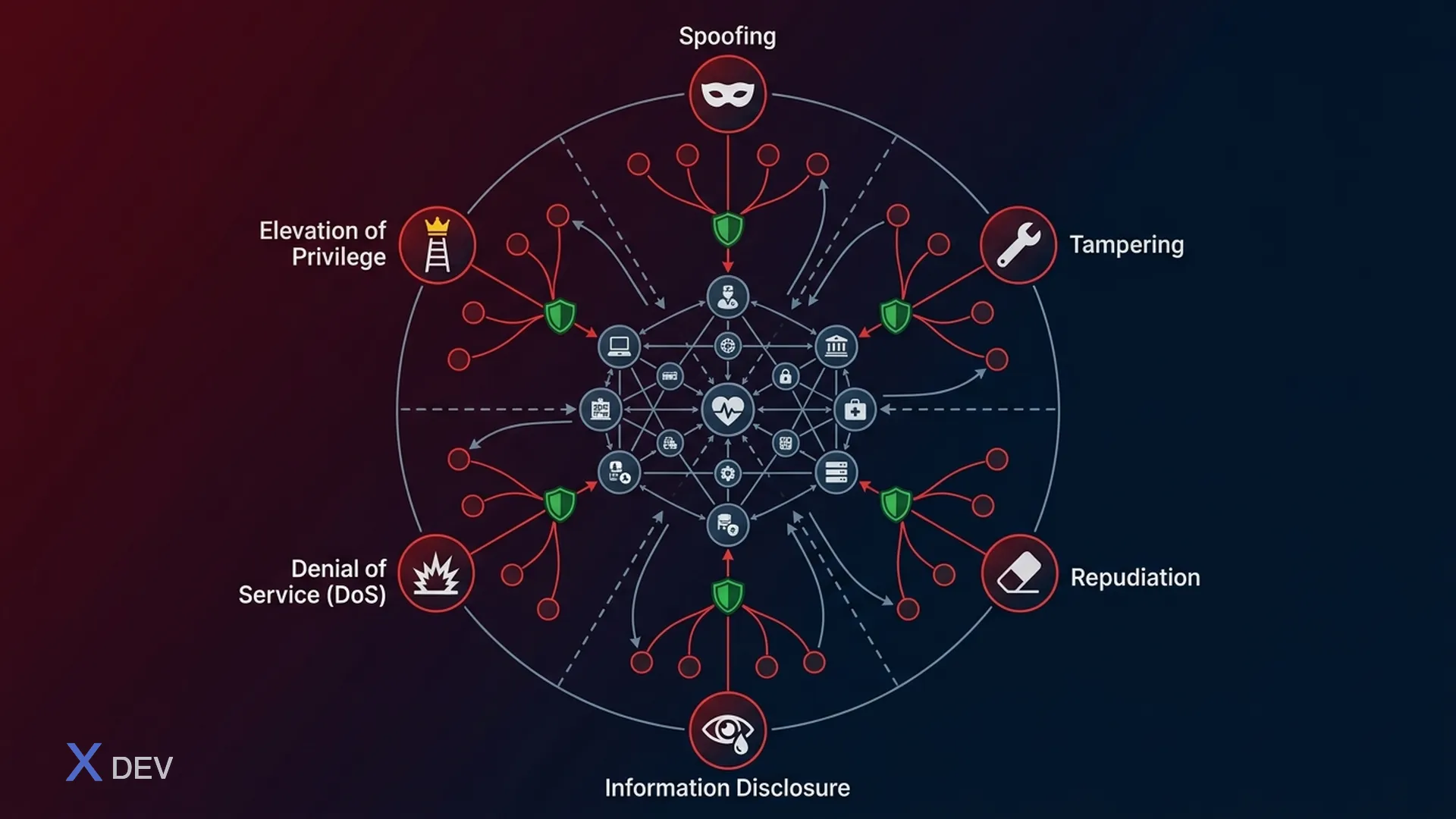
脅威モデリング は、システムに対する潜在的なセキュリティ脅威を特定、評価し、優先順位を付ける体系的なプロセスです。医療分野では、攻撃の影響はデータの損失だけではなく、患者の命に影響を及ぼす可能性があるため、脅威モデリングは特に重要です。
###1.1.脅威モデリングプロセス
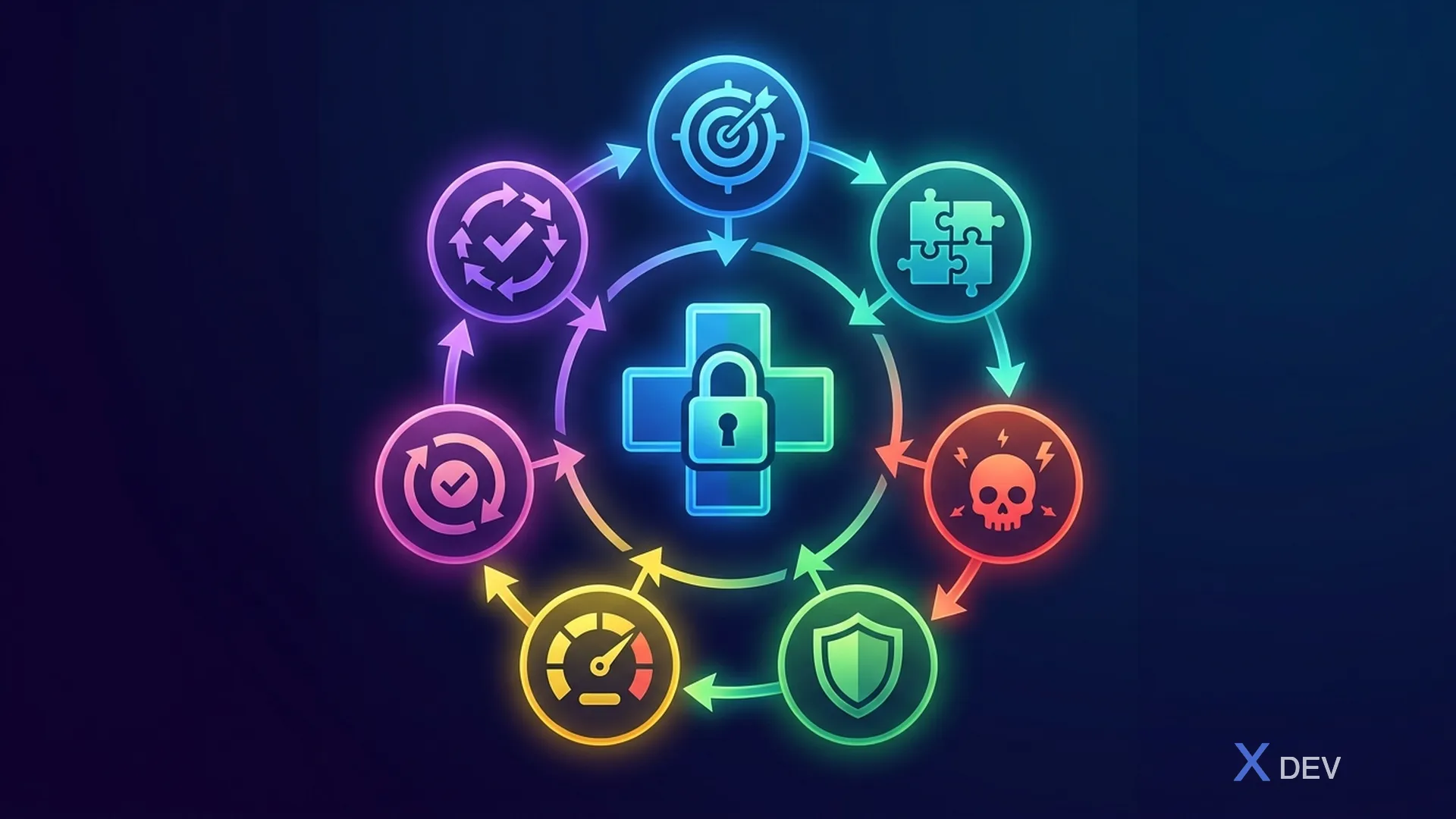
###1.2.脅威モデリングが必要になるのはどのような場合ですか?
- 新しいシステム設計 (HIS、EMR、LIS)
- 新しいマイクロサービスを既存のシステムに追加
- アーキテクチャの変更 (例: モノリスからマイクロサービスへの移行)
- 外部システム統合 (実験器具、保険 API)
- 定期レビュー (6 か月または各メジャー リリース後)
2. STRIDE 脅威モデル
###2.1.概要 ストライド
STRIDE は、Microsoft によって開発された脅威分類フレームワークです。
| 手紙 | 脅威 | プロパティの違反 | 健康における例 |
|---|---|---|---|
| S | スプーフィング | 認証 | 医師になりすまして患者記録にアクセスする |
| T | 改ざん | 誠実さ | データベース内のテスト結果を変更する |
| R | 否認 | 否認防止 | 医師は間違った薬の処方を否定 |
| 私 | 情報開示 | 機密保持 | 流出したHIV患者リスト |
| D | サービス拒否 | 可用性 | DDoS 攻撃により緊急システムが停止 |
| E | 特権の昇格 | 認可 | 看護師は管理者にアクセスできます |
###2.2.ヘルスケア マイクロサービス向けの STRIDE 分析
S - スプーフィング (ID スプーフィング)
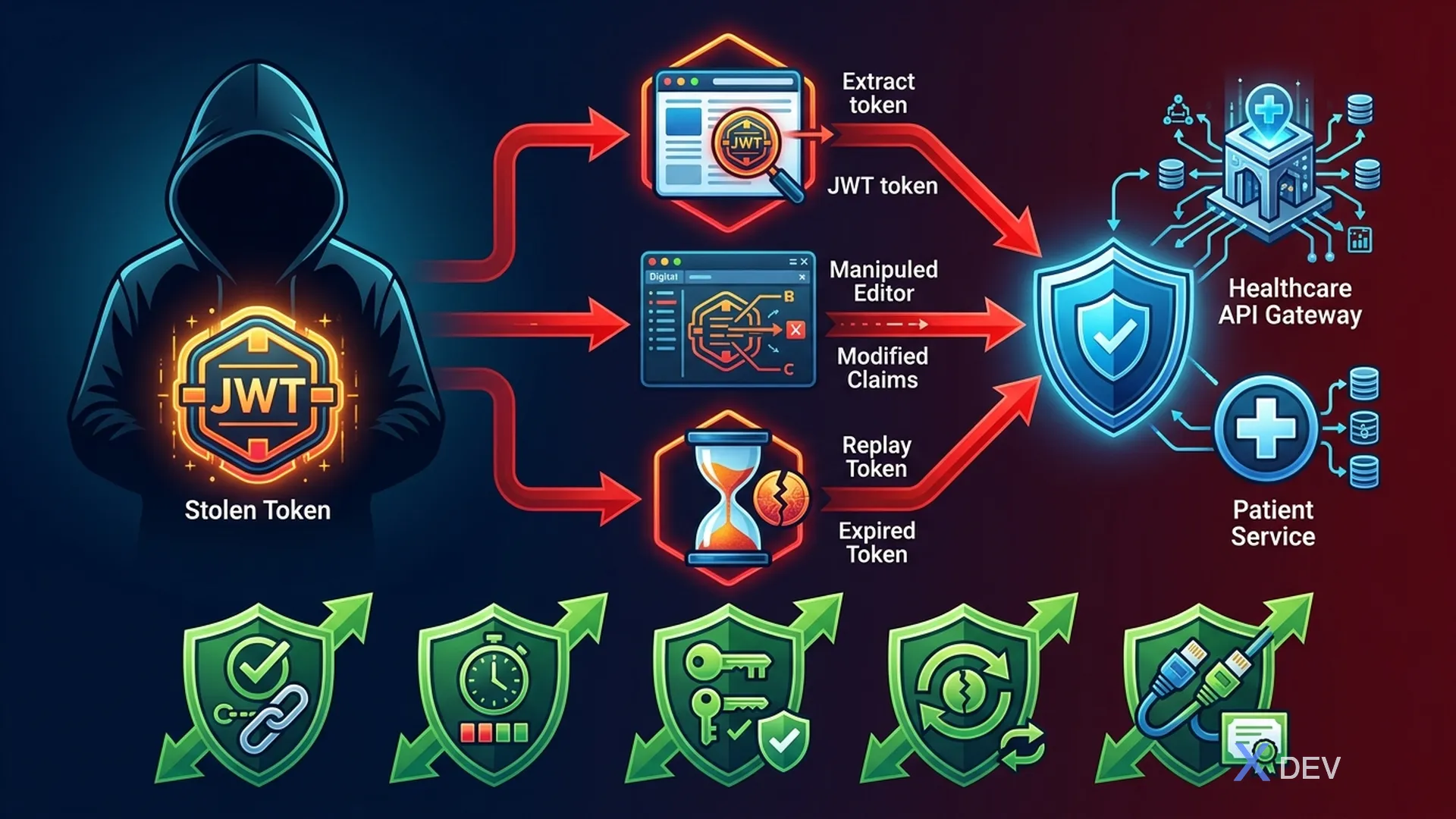
脅威: 攻撃者は JWT トークンを偽造して患者 API にアクセスします
攻撃ベクトル:
- ブラウザの localStorage から JWT を盗む
- クレームを変更して JWT を鍛造する (役割: "管理者")
- 期限切れのトークンを再生する
影響を受けるコンポーネント: API ゲートウェイ、患者サービス、臨床サービス
緩和策:
- M1: Keycloak OIDC トークンの検証 — quarkus-oidc による署名の自動検証
- M2: 有効期間の短いアクセス トークン (5 分) — トークンの盗難ウィンドウを短縮します
- M3: DPoP (所有証明) — クライアント証明書にバインドされたトークン
- M4: リフレッシュ トークンのローテーション — 1 回限りのリフレッシュ トークンを使用
- M5: サービス間の mTLS — サービス ID 検証
T - 改ざん (データ改ざん)
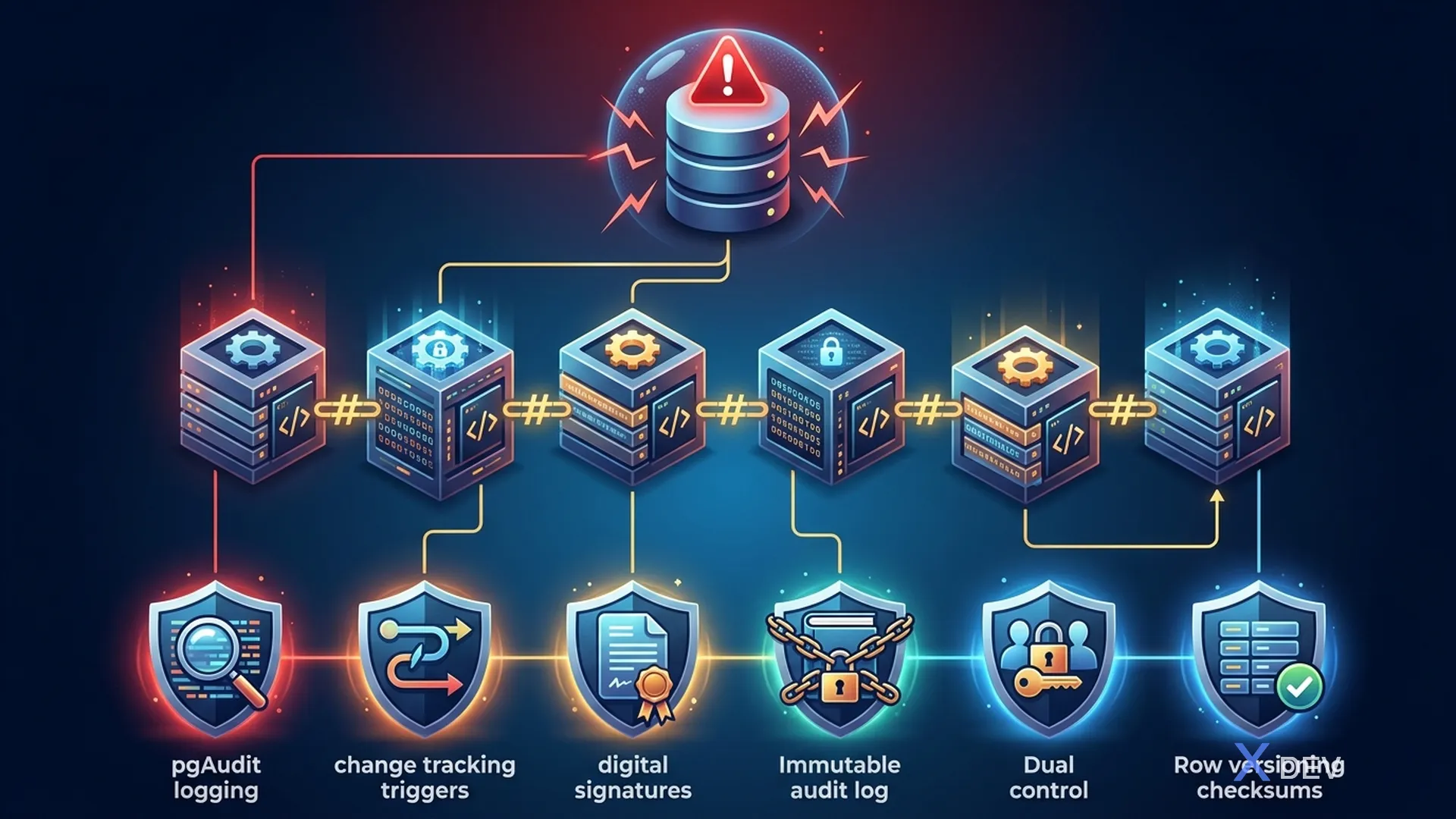
脅威: 内部関係者が lab_db のテスト結果を変更しました
攻撃ベクトル:
- DBA が lab_results テーブルを直接更新します
- SQL インジェクションを利用してデータを変更する
- API レスポンスをインターセプトして変更する
緩和策:
- M1: pgAudit ログ (すべての DML をログに記録)
- M2: 変更追跡のためのデータベース トリガー
- M3: ラボ結果のデジタル署名
- M4: 不変監査ログ (追加のみ)
- M5: 重要な変更のためのデュアルコントロール
- M6: チェックサムを使用した行のバージョン管理
-- Integrity protection: Row versioning with checksum
CREATE TABLE lab_results (
    id UUID PRIMARY KEY DEFAULT gen_random_uuid(),
    patient_id UUID NOT NULL,
    test_code VARCHAR(20) NOT NULL,
    result_value NUMERIC,
    result_unit VARCHAR(20),
    status VARCHAR(20) DEFAULT 'PRELIMINARY',
    performed_by UUID NOT NULL,
    verified_by UUID,
    -- Integrity fields
    version INTEGER NOT NULL DEFAULT 1,
    data_checksum TEXT NOT NULL,  -- HMAC-SHA256 of all data fields
    previous_checksum TEXT,      -- Chain integrity
    created_at TIMESTAMPTZ DEFAULT NOW(),
    updated_at TIMESTAMPTZ DEFAULT NOW()
);

-- Trigger to enforce integrity
CREATE OR REPLACE FUNCTION verify_lab_result_integrity()
RETURNS TRIGGER AS $$
BEGIN
    -- Verify previous record wasn't tampered
    IF TG_OP = 'UPDATE' THEN
        IF OLD.data_checksum != NEW.previous_checksum THEN
            RAISE EXCEPTION 'Integrity violation: checksum chain broken';
        END IF;
        NEW.version := OLD.version + 1;
    END IF;

    -- Calculate new checksum
    NEW.data_checksum := encode(
        hmac(
            concat(NEW.patient_id::text, NEW.test_code,
                   NEW.result_value::text, NEW.result_unit,
                   NEW.version::text),
            current_setting('app.hmac_key'),
            'sha256'
        ),
        'hex'
    );

    RETURN NEW;
END;
$$ LANGUAGE plpgsql;
I - 情報開示
Threat: PHI bị lộ qua error messages, logs, hoặc API responses
───────────────────────────────────────────────────────────
Attack Vector:
  1. Verbose error messages expose database schema
  2. Application logs contain patient names, SSN
  3. API returns more data than necessary
  4. Debug endpoints left enabled in production

Mitigations trong Quarkus:
// ❌ BAD: Verbose error response exposes internals
@ServerExceptionMapper
public Response handleException(Exception e) {
    return Response.serverError()
        .entity(Map.of("error", e.getMessage(), // May contain SQL, PHI
                       "stackTrace", Arrays.toString(e.getStackTrace())))
        .build();
}

// ✅ GOOD: Generic error response with correlation ID
@ServerExceptionMapper
public Response handleException(Exception e) {
    String correlationId = UUID.randomUUID().toString();
    log.error("Internal error [correlationId={}]", correlationId, e);

    return Response.serverError()
        .entity(Map.of(
            "error", "An internal error occurred",
            "correlationId", correlationId,
            "timestamp", Instant.now().toString()))
        .build();
}
// ❌ BAD: API returns all patient fields
@GET
@Path("/{id}")
public Patient getPatient(@PathParam("id") UUID id) {
    return patientRepository.findById(id); // Returns SSN, full address, etc.
}

// ✅ GOOD: DTO with minimal necessary fields
@GET
@Path("/{id}")
public PatientSummaryDTO getPatient(@PathParam("id") UUID id) {
    Patient patient = patientRepository.findById(id);
    return PatientSummaryDTO.from(patient); // Only name, DOB, MRN
}
D - サービス拒否攻撃
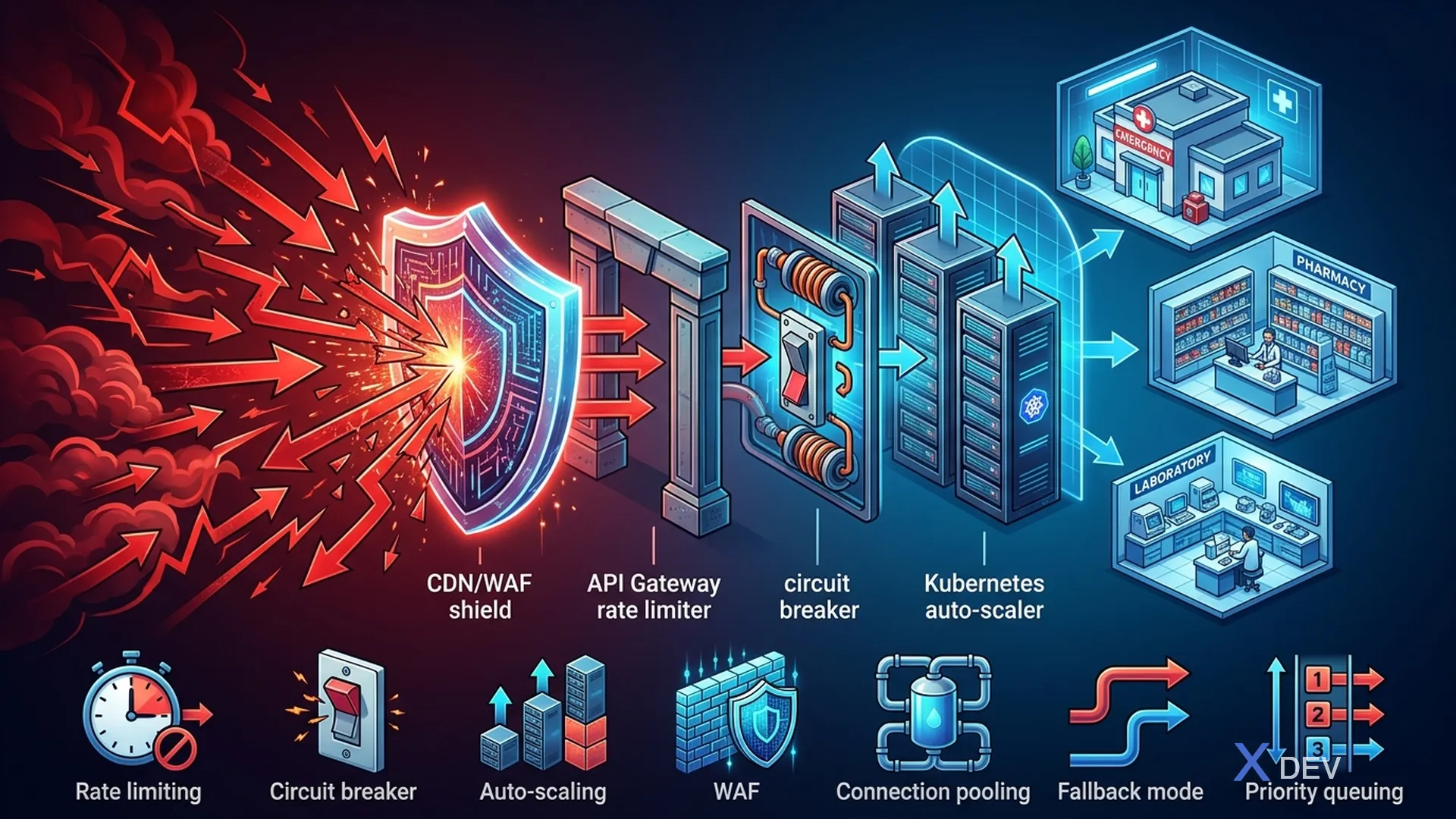
脅威: DDoS 攻撃により緊急システムが停止します
医療への影響:
- 薬のアレルギーが調べられない → 処方間違い → 危険
- 検査結果にアクセスできない → 診断が遅い
- スケジュールシステムがダウン → 患者が診察に来られない
緩和策:
- M1: API ゲートウェイでのレート制限
- M2: サーキットブレーカー (Quarkus フォールトトレランス)
- M3: 自動スケーリング Kubernetes ポッド
- M4: CDN/WAF (Cloudflare、AWS Shield)
- M5: データベース接続プーリング
- M6: フォールバック モード / オフライン機能
- M7: ER リクエストの優先キューイング
E - 特権の昇格
Threat: Y tá nâng quyền lên doctor role để kê đơn thuốc
───────────────────────────────────────────────────────────
Attack Vector:
  1. Exploit IDOR (Insecure Direct Object Reference)
  2. Modify JWT claims locally
  3. Access admin API endpoints without authorization
  4. Exploit broken function-level authorization

Mitigations trong Keycloak + Quarkus:
// Fine-grained authorization check
@Path("/api/v1/prescriptions")
@Authenticated
public class PrescriptionResource {

    @Inject
    SecurityIdentity identity;

    @Inject
    AuthorizationService authzService;

    @POST
    public Response createPrescription(PrescriptionRequest request) {
        // Check 1: Role-based - only doctors can prescribe
        if (!identity.hasRole("doctor")) {
            throw new ForbiddenException("Only doctors can create prescriptions");
        }

        // Check 2: Attribute-based - doctor must be assigned to patient
        boolean isAssigned = authzService.isDoctorAssignedToPatient(
            identity.getPrincipal().getName(),
            request.patientId()
        );
        if (!isAssigned) {
            auditService.logUnauthorizedAccess(identity, "PRESCRIPTION_CREATE",
                request.patientId());
            throw new ForbiddenException("Not assigned to this patient");
        }

        // Check 3: Department-based - only prescribe within specialty
        String doctorDepartment = identity.getAttribute("department");
        if (!authzService.canPrescribeForDepartment(doctorDepartment,
                request.medicationCategory())) {
            throw new ForbiddenException("Cannot prescribe outside specialty");
        }

        return prescriptionService.create(request);
    }
}
3. 恐怖のスコアリング
###3.1.恐怖の要因
| 係数 | 説明 | 1 (低) | 5 (中) | 10 (高) |
|---|---|---|---|---|
| ひどい被害 | 被害レベル | 小規模なデータ漏洩 | 重大なデータ損失 | 完全なシステム侵害 |
| R再現性 | 再現が簡単 | 難しい、多くの条件が必要 | 認証が必要 | 再現が簡単 |
| **悪用可能性 | 悪用しやすい | 高度な専門知識が必要 | ツールが必要 | スクリプト子供レベル |
| A影響を受けるユーザー | 影響を受けた人の数 | 一部のユーザー | 部門 | すべての患者 |
| D発見可能性 | 脆弱性を簡単に検出 | 見つけるのが難しい | 努力が必要 | 公知 |
###3.2.医療脅威に対する DREAD 分析
| 脅威 | D | R | E | あ | D | 合計 | 優先事項 |
|---|---|---|---|---|---|---|---|
| 患者検索における SQL インジェクション | 10 | 8 | 7 | 10 | 8 | 8.6 | クリティカル |
| XSS によるトークンの盗難 | 8 | 7 | 6 | 8 | 7 | 7.2 | 高い |
| インサイダー PHI アクセス | 9 | 9 | 5 | 7 | 4 | 6.8 | 高い |
| ER システム上の DDoS | 7 | 10 | 8 | 10 | 9 | 8.8 | クリティカル |
| パッチが適用されていない Quarkus CVE | 8 | 6 | 7 | 10 | 8 | 7.8 | 高い |
| バックアップデータの盗難 | 10 | 3 | 4 | 10 | 3 | 6.0 | 中 |
DREAD スコア: 合計 / 5。スコア > 7 = クリティカル、5-7 = 高、3-5 = 中、 < 3 = Low
4. OWASP Top 10 trong Healthcare Context
4.1. Mapping OWASP Top 10 cho Healthcare Microservices
| # | OWASP Vulnerability | Healthcare Impact | Quarkus/PostgreSQL/Keycloak Mitigation |
|---|---|---|---|
| A01 | 壊れたアクセス制御 | 看護師が患者の精神科記録をレビュー | Keycloak RBAC + PostgreSQL RLS |
| A02 | Cryptographic Failures | PHI stored/transmitted unencrypted | pgcrypto + TLS 1.3 + Vault KMS |
| A03 | Injection | SQL injection expose patient data | Hibernate ORM parameterized queries |
| A04 | Insecure Design | No consent management | FHIR Consent resource + audit |
| A05 | Security Misconfiguration | Keycloak default admin credentials | Hardened configuration, no defaults |
| A06 | Vulnerable Components | Log4Shell in healthcare app | Quarkus BOM, Dependabot, SBOM |
| A07 | Auth Failures | Weak passwords for doctor accounts | Keycloak password policies + MFA |
| A08 | Software/Data Integrity | Tampered lab results | Digital signatures, pgAudit |
| A09 | Logging Failures | No audit trail for PHI access | OpenTelemetry + ELK + pgAudit |
| A10 | SSRF | Internal service access via FHIR proxy | URL allowlisting, network policies |
5. Attack Trees cho Healthcare
5.1. Attack Tree: Steal Patient Medical Records
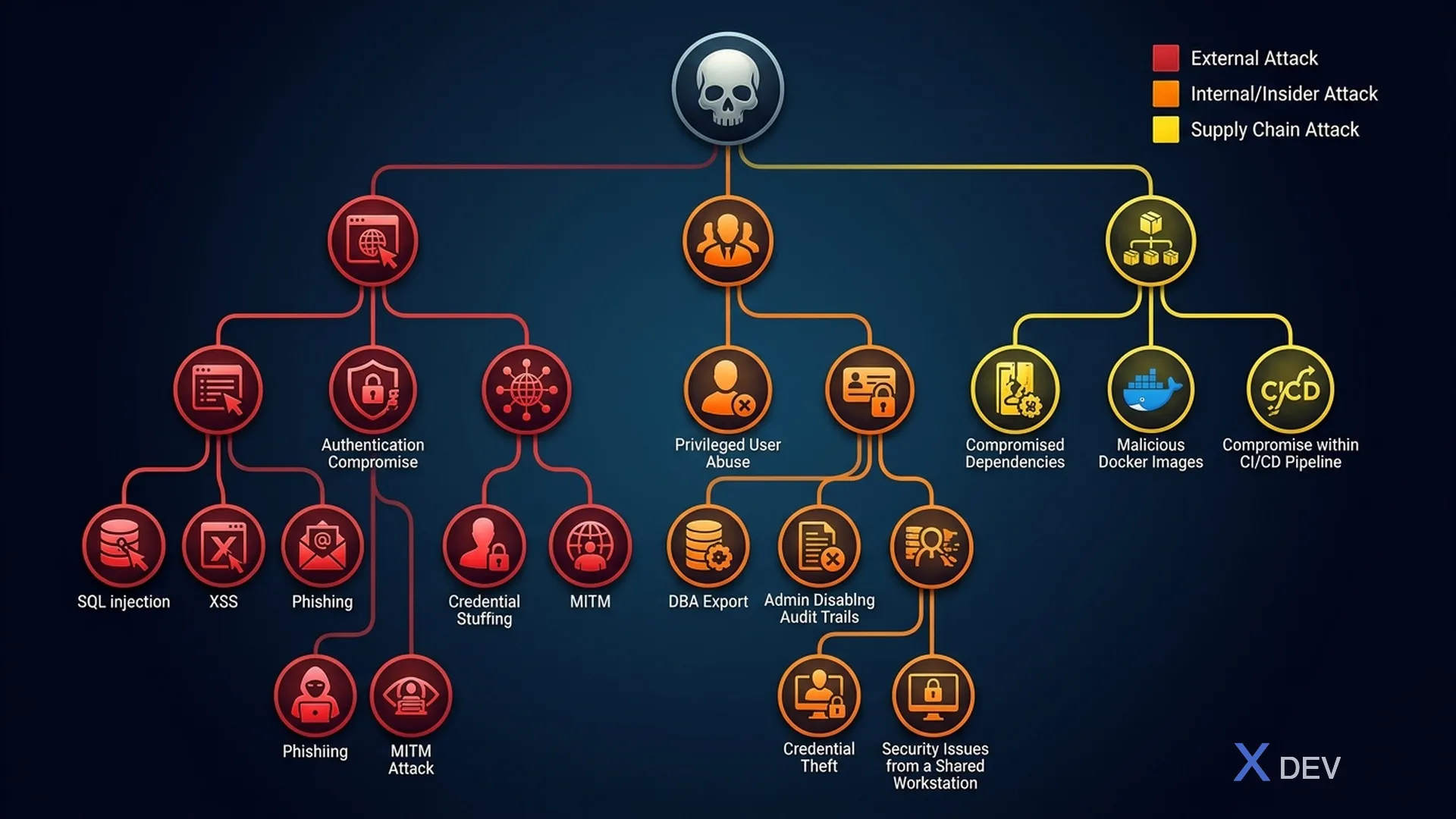
Goal: Steal Patient Medical Records
| Attack Path | DREAD | Priority |
|---|---|---|
| 1.1.1 SQL Injection | 8.6 | CRITICAL |
| 1.1.2 XSS to steal session | 7.2 | HIGH |
| 1.1.3 IDOR to access other patients | 7.0 | HIGH |
| 1.2.1 Credential stuffing | 5.4 | MEDIUM |
| 1.2.2 Phishing doctor credentials | 6.8 | HIGH |
| 1.2.3 Brute force Keycloak | 3.2 | LOW |
| 1.3.1 MITM on API calls | 4.6 | MEDIUM |
| 1.3.2 DNS spoofing | 4.2 | MEDIUM |
| 2.1.1 DBA exports database | 6.8 | HIGH |
| 2.1.2 Admin disables audit | 5.6 | MEDIUM |
| 2.1.3 Doctor accesses non-patient | 6.0 | MEDIUM |
| 2.2.1 Shared workstation session | 6.2 | MEDIUM |
| 2.2.2 Post-it password | 5.0 | MEDIUM |
| 3.1 Compromised dependency | 7.8 | HIGH |
| 3.2 Malicious Docker image | 6.4 | HIGH |
| 3.3 Compromised CI/CD pipeline | 7.0 | HIGH |
6. 脅威モデルからセキュリティ要件まで
6.1. Generating Security Requirements
| Threat | STRIDE | Requirement ID | Security Requirement | Implementation |
|---|---|---|---|---|
| Token theft | S | SEC-001 | Access tokens MUST expire within 5 minutes | Keycloak realm settings |
| SQL injection | T, I | SEC-002 | All database queries MUST use parameterized statements | Hibernate ORM |
| PHI in logs | I | SEC-003 | Application logs MUST NOT contain any of 18 HIPAA identifiers | Log sanitization filter |
| No audit trail | R | SEC-004 | All PHI access MUST be logged with user ID, timestamp, resource | pgAudit + OpenTelemetry |
| DDoS | D | SEC-005 | API endpoints MUST have rate limiting (100 req/min/user) | Kong rate-limiting plugin |
| Privilege escalation | E | SEC-006 | Authorization MUST be checked at both Gateway and Service level | Keycloak + @RolesAllowed |
| Unencrypted PHI | I | SEC-007 | PHI at-rest MUST be encrypted with AES-256 | pgcrypto column encryption |
| No MFA | S | SEC-008 | Clinical users MUST use MFA for external access | Keycloak conditional MFA |
6.2. Security Requirements Traceability Matrix
Requirement → Implementation → Test → Compliance Mapping

SEC-001 → quarkus.oidc.token.age=300
        → Integration test: verify expired token rejected
        → HIPAA §164.312(d) - Authentication

SEC-002 → @NamedQuery with :params
        → SAST scan (Snyk, SonarQube)
        → OWASP A03 - Injection

SEC-003 → PhiLogFilter.java
        → Unit test: verify PHI patterns masked
        → HIPAA §164.312(b) - Audit Controls

SEC-004 → pgAudit + AuditInterceptor.java
        → Integration test: verify audit entry created
        → HIPAA §164.312(b) - Audit Controls
7. 脅威モデリングツールとテンプレート
7.1. Tools
- Microsoft Threat Modeling Tool: Free, STRIDE-based, DFD editor
- OWASP Threat Dragon: Open-source, web-based
- IriusRisk: Enterprise threat modeling platform
- draw.io: Data Flow Diagrams (free)
7.2. Threat Model Document Template
# Threat Model: [System/Service Name]
## Version: [1.0] | Date: [2026-04-03] | Author: [Security Team]

### 1. System Description
- Purpose: [What does the system do?]
- Technology Stack: [Quarkus, PostgreSQL, Keycloak]
- Data Classification: [Level 3 - Confidential]

### 2. Architecture Diagram
[Include DFD with trust boundaries]

### 3. Assets
[List sensitive data and components]

### 4. Threat Enumeration (STRIDE)
[Table of all identified threats]

### 5. DREAD Scoring
[Risk prioritization]

### 6. Mitigations
[Countermeasures for each threat]

### 7. Security Requirements
[Generated requirements with traceability]

### 8. Action Items
[Prioritized list of security work items]

### 9. Review Schedule
[Next review date and trigger conditions]
8. まとめ
このレッスンでは次のことを行います。
- STRIDE を理解し、適用して医療マイクロサービスの脅威を分類する
- DREAD スコアリングを使用して脅威に優先順位を付けます
- 医療固有のシナリオ向けに 攻撃ツリー を構築
- OWASP トップ 10 を特定の緩和策を用いて医療関連にマッピングする
- 脅威を実装およびテストできる セキュリティ要件に変換します
## エクササイズ
- 処方サービス (薬の処方) の完全な STRIDE 分析を実行します。
- DREAD スコアを使用して「ラボ結果の変更」シナリオの攻撃ツリーを構築する
- 最も重要な 10 個の要件に関するセキュリティ要件トレーサビリティ マトリックスを作成する
- OWASP Threat Dragon を使用して患者サービスのデータ フロー図を作成する
| ◀ 前の記事 | 次の記事 ▶ |
|---|---|
| レッスン 3: 健康データの分類 (PHI/ePHI) とリスク評価 | レッスン 5: 医療標準に合わせた Keycloak レルムの設計 - 病院向けのマルチテナント |