1. Threat Modeling là gì?
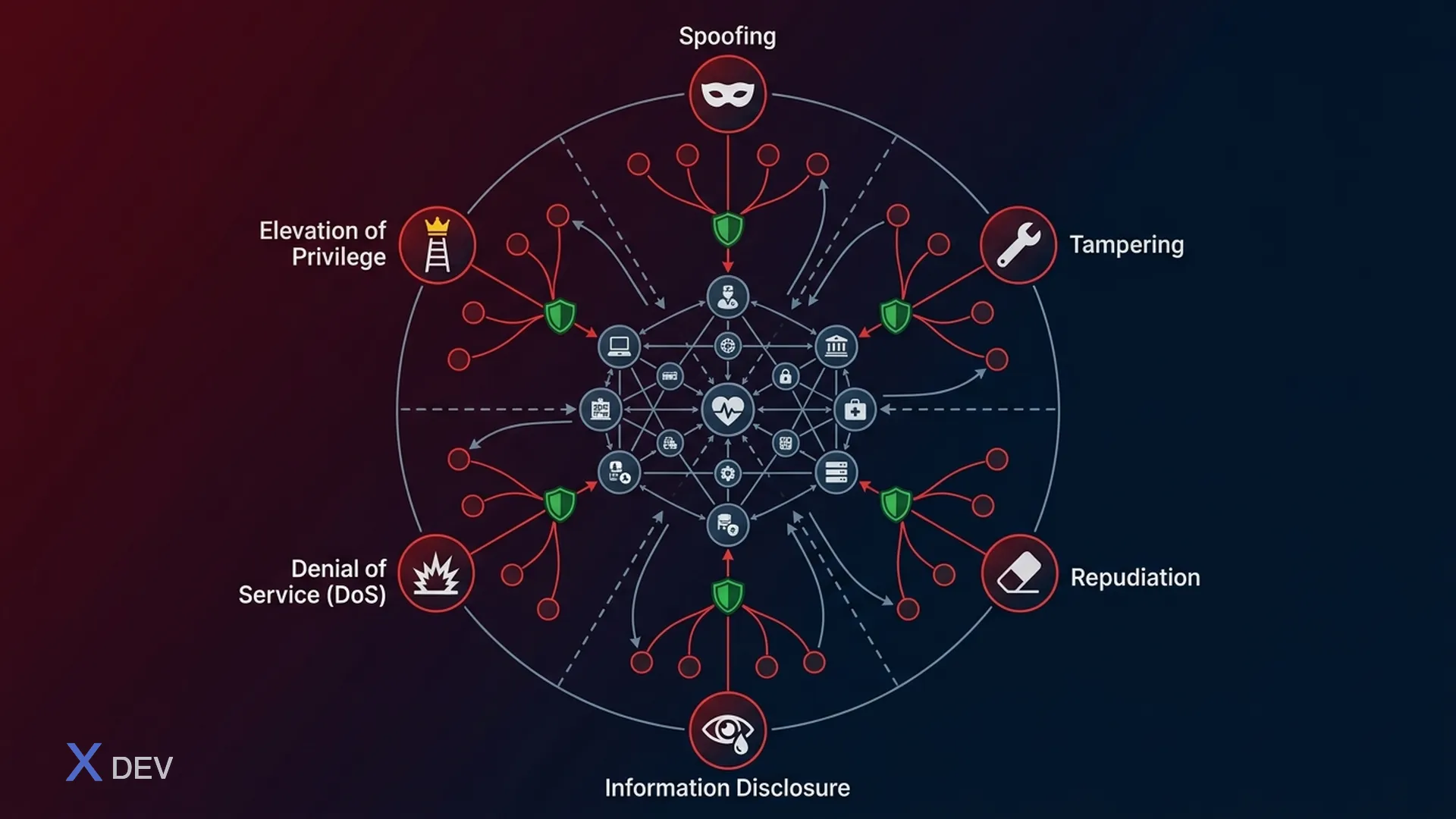
Threat Modeling là quá trình có hệ thống để xác định, đánh giá, và ưu tiên các mối đe dọa bảo mật tiềm ẩn đối với hệ thống. Trong y tế, threat modeling đặc biệt quan trọng vì hậu quả của một cuộc tấn công không chỉ là mất dữ liệu — mà có thể ảnh hưởng đến tính mạng bệnh nhân.
1.1. Quy trình Threat Modeling
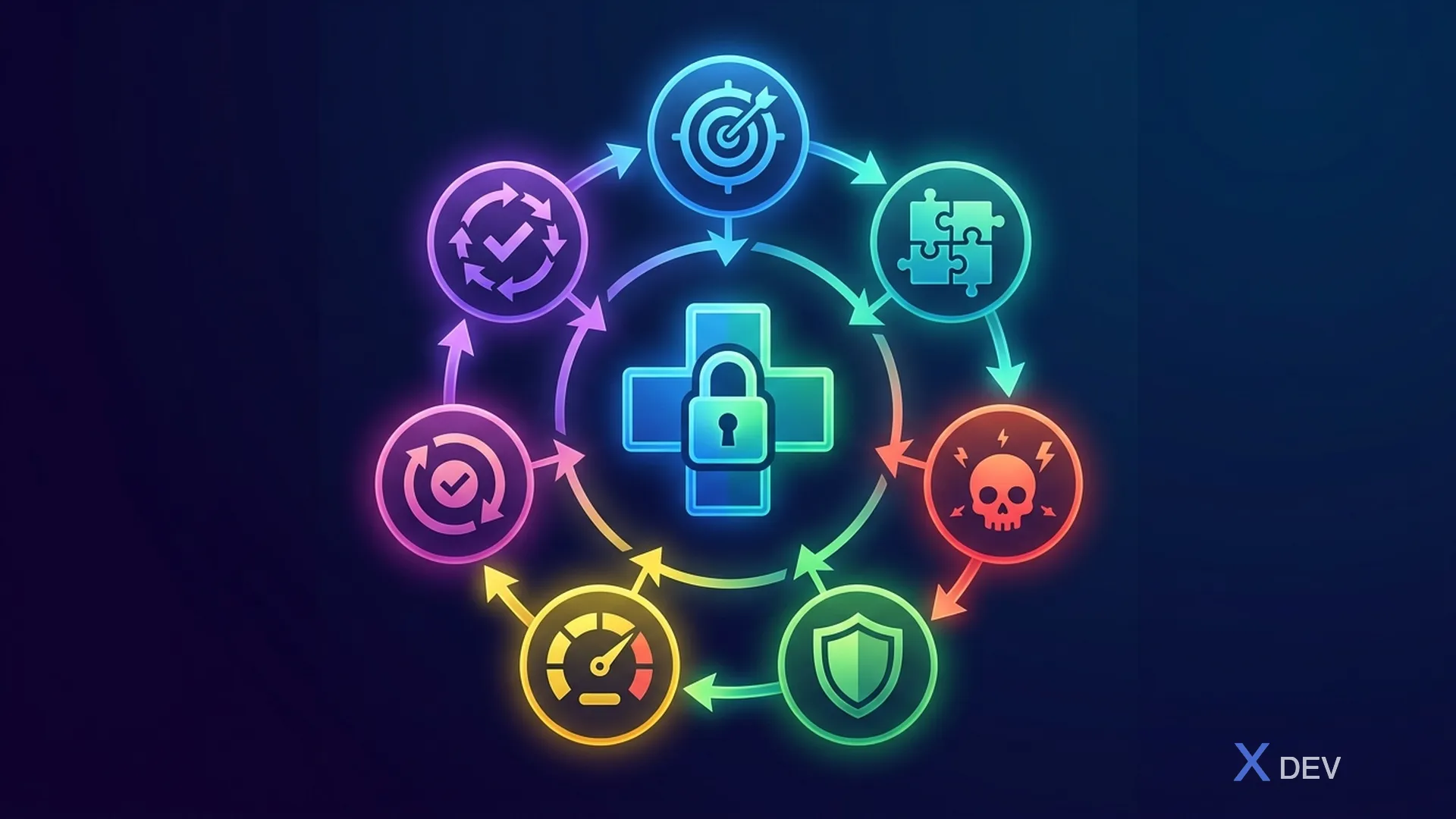
1.2. Khi nào cần Threat Modeling?
- Thiết kế hệ thống mới (HIS, EMR, LIS)
- Thêm microservice mới vào hệ thống hiện tại
- Thay đổi kiến trúc (ví dụ: chuyển từ monolith sang microservices)
- Tích hợp hệ thống bên ngoài (lab instruments, insurance APIs)
- Review định kỳ (6 tháng hoặc sau mỗi major release)
2. STRIDE Threat Model
2.1. Overview STRIDE
STRIDE là framework phân loại threats do Microsoft phát triển:
| Letter | Threat | Property Violated | Ví dụ trong Y Tế |
|---|---|---|---|
| S | Spoofing | Authentication | Giả mạo bác sĩ để truy cập hồ sơ bệnh nhân |
| T | Tampering | Integrity | Sửa đổi kết quả xét nghiệm trong database |
| R | Repudiation | Non-repudiation | Bác sĩ phủ nhận đã kê đơn thuốc sai |
| I | Information Disclosure | Confidentiality | Rò rỉ danh sách bệnh nhân HIV |
| D | Denial of Service | Availability | Tấn công DDoS khiến hệ thống cấp cứu ngừng hoạt động |
| E | Elevation of Privilege | Authorization | Y tá truy cập được chức năng admin |
2.2. STRIDE Analysis cho Healthcare Microservices
S - Spoofing (Giả mạo danh tính)
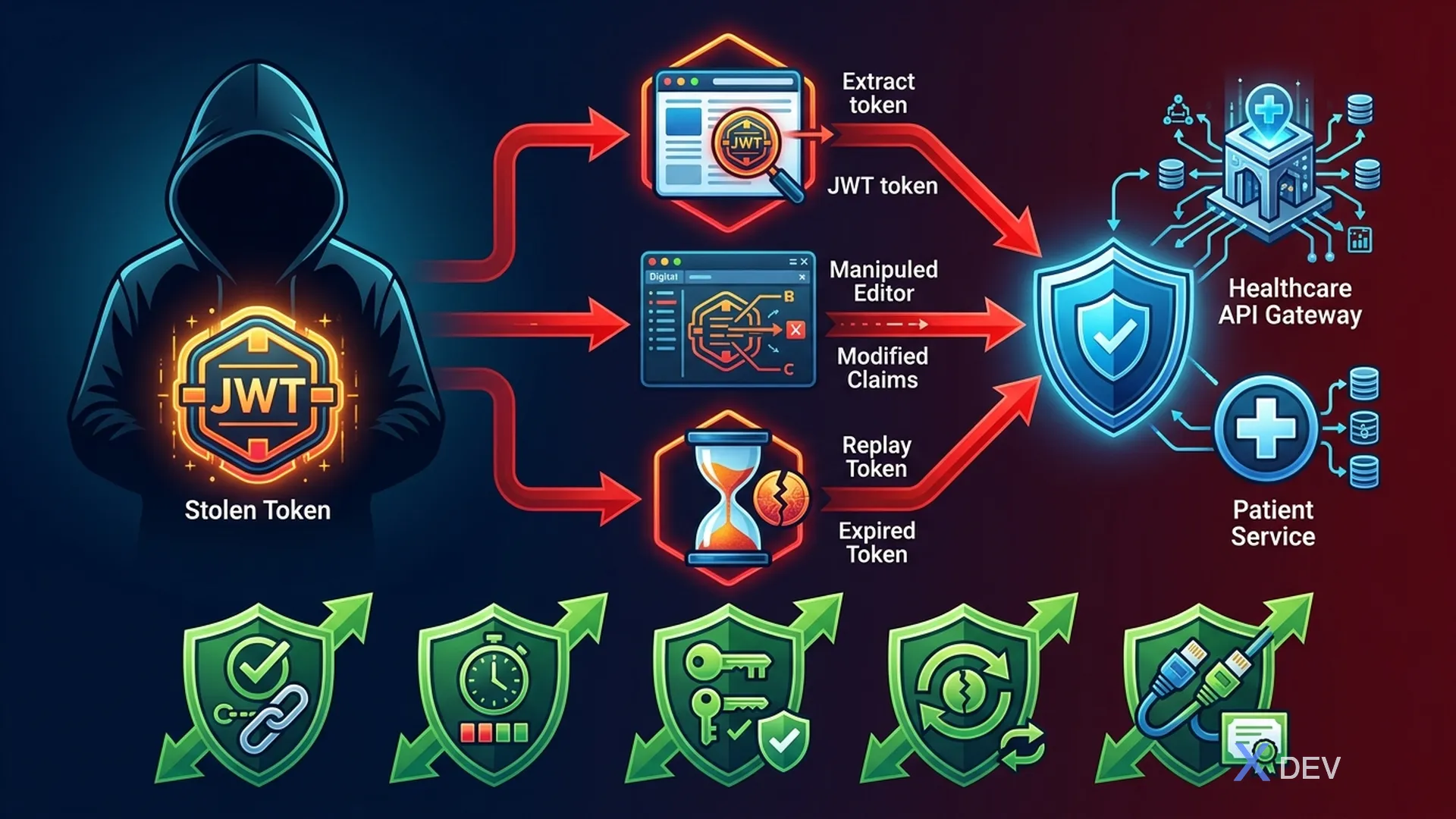
Threat: Attacker giả mạo JWT token để truy cập Patient API
Attack Vector:
- Steal JWT từ browser localStorage
- Forge JWT với modified claims (role: "admin")
- Replay expired token
Affected Components: API Gateway, Patient Service, Clinical Service
Mitigations:
- M1: Keycloak OIDC token validation — quarkus-oidc auto-verifies signature
- M2: Short-lived access tokens (5 min) — giảm token theft window
- M3: DPoP (Proof-of-Possession) — token bound to client certificate
- M4: Refresh token rotation — one-time use refresh tokens
- M5: mTLS between services — service identity verification
T - Tampering (Giả mạo dữ liệu)
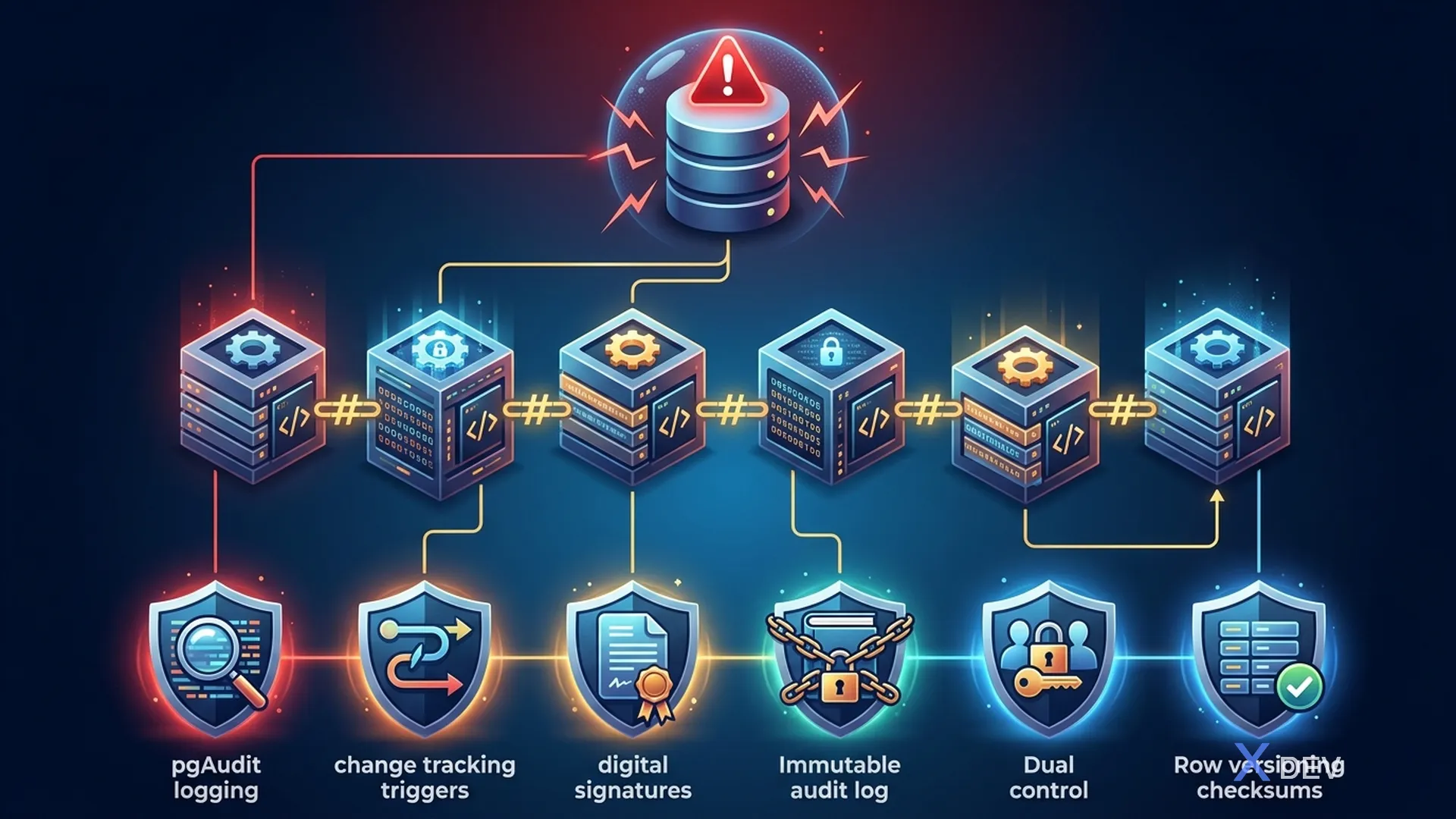
Threat: Insider sửa đổi kết quả xét nghiệm trong lab_db
Attack Vector:
- DBA trực tiếp UPDATE lab_results table
- Khai thác SQL injection để sửa dữ liệu
- Intercept và modify API response
Mitigations:
- M1: pgAudit logging (log all DML)
- M2: Database triggers cho change tracking
- M3: Digital signatures cho lab results
- M4: Immutable audit log (append-only)
- M5: Dual control cho critical changes
- M6: Row versioning with checksums
-- Integrity protection: Row versioning with checksum
CREATE TABLE lab_results (
    id UUID PRIMARY KEY DEFAULT gen_random_uuid(),
    patient_id UUID NOT NULL,
    test_code VARCHAR(20) NOT NULL,
    result_value NUMERIC,
    result_unit VARCHAR(20),
    status VARCHAR(20) DEFAULT 'PRELIMINARY',
    performed_by UUID NOT NULL,
    verified_by UUID,
    -- Integrity fields
    version INTEGER NOT NULL DEFAULT 1,
    data_checksum TEXT NOT NULL,  -- HMAC-SHA256 of all data fields
    previous_checksum TEXT,      -- Chain integrity
    created_at TIMESTAMPTZ DEFAULT NOW(),
    updated_at TIMESTAMPTZ DEFAULT NOW()
);

-- Trigger to enforce integrity
CREATE OR REPLACE FUNCTION verify_lab_result_integrity()
RETURNS TRIGGER AS $$
BEGIN
    -- Verify previous record wasn't tampered
    IF TG_OP = 'UPDATE' THEN
        IF OLD.data_checksum != NEW.previous_checksum THEN
            RAISE EXCEPTION 'Integrity violation: checksum chain broken';
        END IF;
        NEW.version := OLD.version + 1;
    END IF;

    -- Calculate new checksum
    NEW.data_checksum := encode(
        hmac(
            concat(NEW.patient_id::text, NEW.test_code,
                   NEW.result_value::text, NEW.result_unit,
                   NEW.version::text),
            current_setting('app.hmac_key'),
            'sha256'
        ),
        'hex'
    );

    RETURN NEW;
END;
$$ LANGUAGE plpgsql;
I - Information Disclosure (Rò rỉ thông tin)
Threat: PHI bị lộ qua error messages, logs, hoặc API responses
───────────────────────────────────────────────────────────
Attack Vector:
  1. Verbose error messages expose database schema
  2. Application logs contain patient names, SSN
  3. API returns more data than necessary
  4. Debug endpoints left enabled in production

Mitigations trong Quarkus:
// ❌ BAD: Verbose error response exposes internals
@ServerExceptionMapper
public Response handleException(Exception e) {
    return Response.serverError()
        .entity(Map.of("error", e.getMessage(), // May contain SQL, PHI
                       "stackTrace", Arrays.toString(e.getStackTrace())))
        .build();
}

// ✅ GOOD: Generic error response with correlation ID
@ServerExceptionMapper
public Response handleException(Exception e) {
    String correlationId = UUID.randomUUID().toString();
    log.error("Internal error [correlationId={}]", correlationId, e);

    return Response.serverError()
        .entity(Map.of(
            "error", "An internal error occurred",
            "correlationId", correlationId,
            "timestamp", Instant.now().toString()))
        .build();
}
// ❌ BAD: API returns all patient fields
@GET
@Path("/{id}")
public Patient getPatient(@PathParam("id") UUID id) {
    return patientRepository.findById(id); // Returns SSN, full address, etc.
}

// ✅ GOOD: DTO with minimal necessary fields
@GET
@Path("/{id}")
public PatientSummaryDTO getPatient(@PathParam("id") UUID id) {
    Patient patient = patientRepository.findById(id);
    return PatientSummaryDTO.from(patient); // Only name, DOB, MRN
}
D - Denial of Service
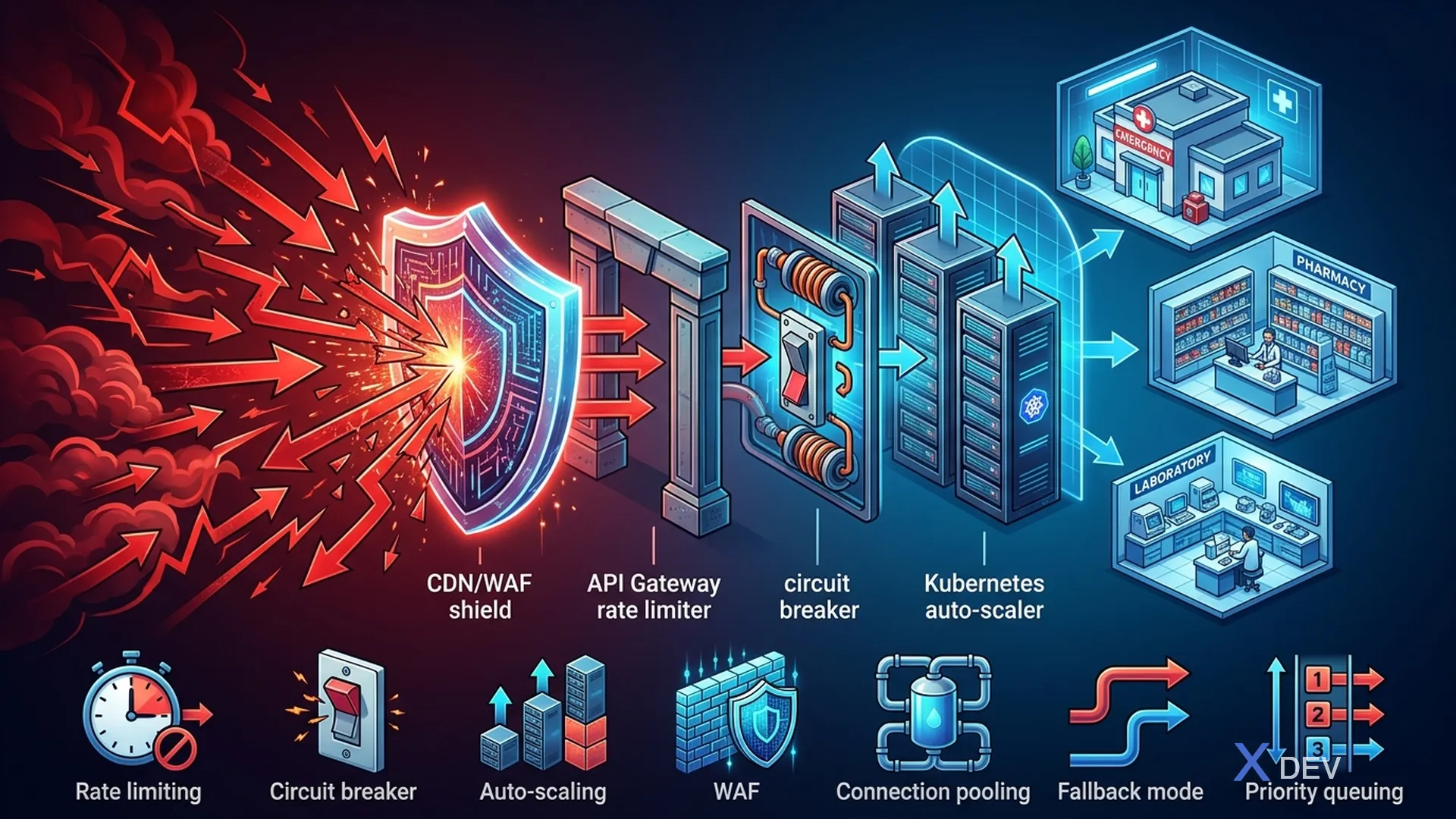
Threat: Tấn công DDoS khiến hệ thống cấp cứu ngừng hoạt động
Impact trong Y Tế:
- Không thể tra cứu dị ứng thuốc → kê đơn sai → nguy hiểm
- Không truy cập được lab results → chẩn đoán chậm
- Hệ thống đặt lịch down → bệnh nhân không thể đến khám
Mitigations:
- M1: Rate limiting at API Gateway
- M2: Circuit breaker (Quarkus Fault Tolerance)
- M3: Auto-scaling Kubernetes pods
- M4: CDN/WAF (Cloudflare, AWS Shield)
- M5: Database connection pooling
- M6: Fallback mode / offline capability
- M7: Priority queuing for ER requests
E - Elevation of Privilege
Threat: Y tá nâng quyền lên doctor role để kê đơn thuốc
───────────────────────────────────────────────────────────
Attack Vector:
  1. Exploit IDOR (Insecure Direct Object Reference)
  2. Modify JWT claims locally
  3. Access admin API endpoints without authorization
  4. Exploit broken function-level authorization

Mitigations trong Keycloak + Quarkus:
// Fine-grained authorization check
@Path("/api/v1/prescriptions")
@Authenticated
public class PrescriptionResource {

    @Inject
    SecurityIdentity identity;

    @Inject
    AuthorizationService authzService;

    @POST
    public Response createPrescription(PrescriptionRequest request) {
        // Check 1: Role-based - only doctors can prescribe
        if (!identity.hasRole("doctor")) {
            throw new ForbiddenException("Only doctors can create prescriptions");
        }

        // Check 2: Attribute-based - doctor must be assigned to patient
        boolean isAssigned = authzService.isDoctorAssignedToPatient(
            identity.getPrincipal().getName(),
            request.patientId()
        );
        if (!isAssigned) {
            auditService.logUnauthorizedAccess(identity, "PRESCRIPTION_CREATE",
                request.patientId());
            throw new ForbiddenException("Not assigned to this patient");
        }

        // Check 3: Department-based - only prescribe within specialty
        String doctorDepartment = identity.getAttribute("department");
        if (!authzService.canPrescribeForDepartment(doctorDepartment,
                request.medicationCategory())) {
            throw new ForbiddenException("Cannot prescribe outside specialty");
        }

        return prescriptionService.create(request);
    }
}
3. DREAD Scoring
3.1. DREAD Factors
| Factor | Description | 1 (Low) | 5 (Medium) | 10 (High) |
|---|---|---|---|---|
| Damage | Mức độ thiệt hại | Data exposure nhỏ | Significant data loss | Complete system compromise |
| Reproducibility | Dễ dàng tái hiện | Khó, cần nhiều điều kiện | Cần authentication | Dễ dàng reproduce |
| Exploitability | Dễ dàng khai thác | Cần expertise cao | Cần tools | Script kiddie level |
| Affected Users | Số người bị ảnh hưởng | Một vài users | Một department | Tất cả bệnh nhân |
| Discoverability | Dễ phát hiện lỗ hổng | Khó tìm | Cần effort | Publicly known |
3.2. DREAD Analysis cho Healthcare Threats
| Threat | D | R | E | A | D | Total | Priority |
|---|---|---|---|---|---|---|---|
| SQL Injection in Patient Search | 10 | 8 | 7 | 10 | 8 | 8.6 | CRITICAL |
| Token theft via XSS | 8 | 7 | 6 | 8 | 7 | 7.2 | HIGH |
| Insider PHI access | 9 | 9 | 5 | 7 | 4 | 6.8 | HIGH |
| DDoS on ER system | 7 | 10 | 8 | 10 | 9 | 8.8 | CRITICAL |
| Unpatched Quarkus CVE | 8 | 6 | 7 | 10 | 8 | 7.8 | HIGH |
| Backup data theft | 10 | 3 | 4 | 10 | 3 | 6.0 | MEDIUM |
DREAD Score: Total / 5. Score > 7 = Critical, 5-7 = High, 3-5 = Medium, < 3 = Low
4. OWASP Top 10 trong Healthcare Context
4.1. Mapping OWASP Top 10 cho Healthcare Microservices
| # | OWASP Vulnerability | Healthcare Impact | Quarkus/PostgreSQL/Keycloak Mitigation |
|---|---|---|---|
| A01 | Broken Access Control | Y tá xem hồ sơ tâm thần bệnh nhân | Keycloak RBAC + PostgreSQL RLS |
| A02 | Cryptographic Failures | PHI stored/transmitted unencrypted | pgcrypto + TLS 1.3 + Vault KMS |
| A03 | Injection | SQL injection expose patient data | Hibernate ORM parameterized queries |
| A04 | Insecure Design | No consent management | FHIR Consent resource + audit |
| A05 | Security Misconfiguration | Keycloak default admin credentials | Hardened configuration, no defaults |
| A06 | Vulnerable Components | Log4Shell in healthcare app | Quarkus BOM, Dependabot, SBOM |
| A07 | Auth Failures | Weak passwords for doctor accounts | Keycloak password policies + MFA |
| A08 | Software/Data Integrity | Tampered lab results | Digital signatures, pgAudit |
| A09 | Logging Failures | No audit trail for PHI access | OpenTelemetry + ELK + pgAudit |
| A10 | SSRF | Internal service access via FHIR proxy | URL allowlisting, network policies |
5. Attack Trees cho Healthcare
5.1. Attack Tree: Steal Patient Medical Records
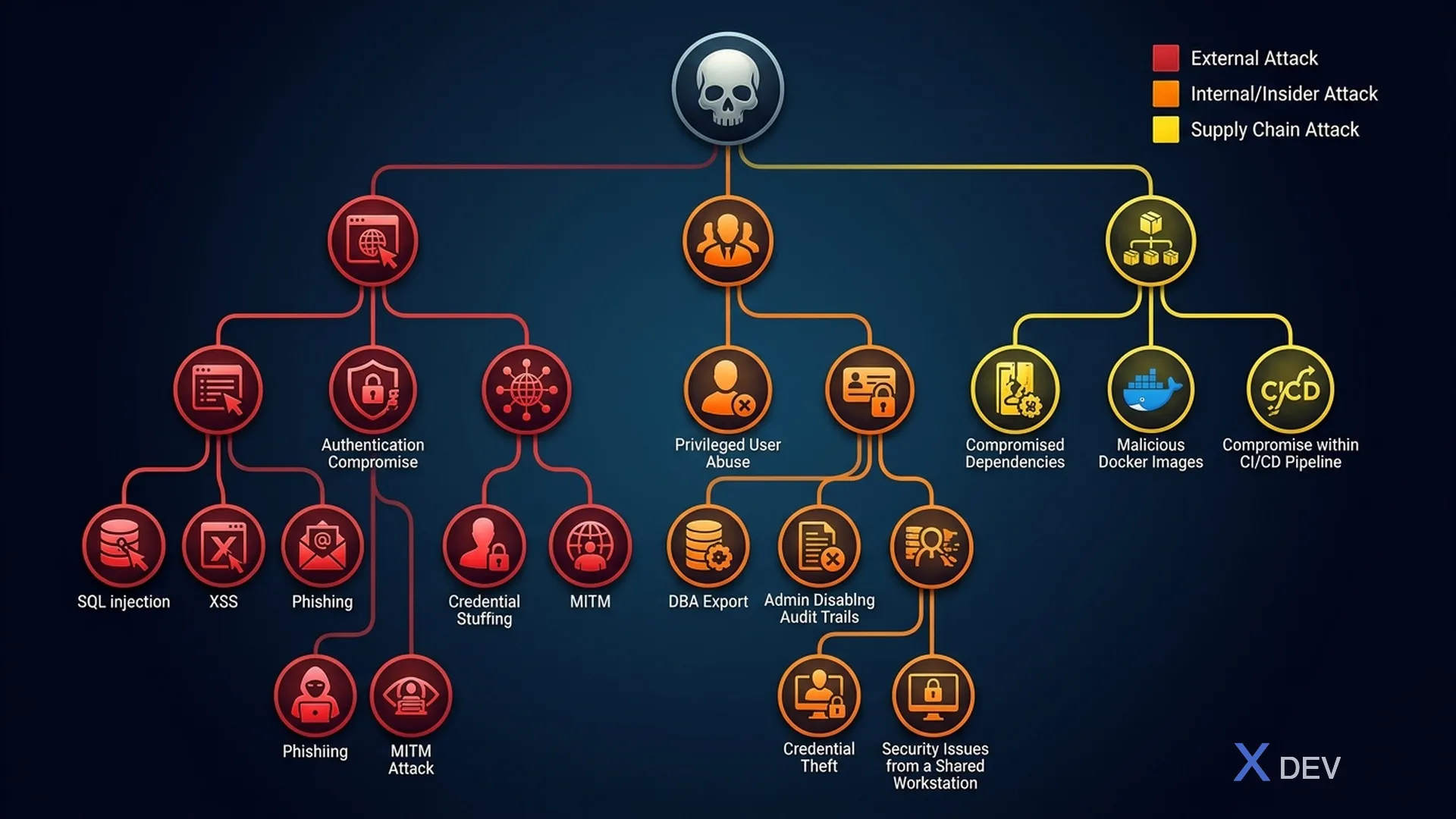
Goal: Steal Patient Medical Records
| Attack Path | DREAD | Priority |
|---|---|---|
| 1.1.1 SQL Injection | 8.6 | CRITICAL |
| 1.1.2 XSS to steal session | 7.2 | HIGH |
| 1.1.3 IDOR to access other patients | 7.0 | HIGH |
| 1.2.1 Credential stuffing | 5.4 | MEDIUM |
| 1.2.2 Phishing doctor credentials | 6.8 | HIGH |
| 1.2.3 Brute force Keycloak | 3.2 | LOW |
| 1.3.1 MITM on API calls | 4.6 | MEDIUM |
| 1.3.2 DNS spoofing | 4.2 | MEDIUM |
| 2.1.1 DBA exports database | 6.8 | HIGH |
| 2.1.2 Admin disables audit | 5.6 | MEDIUM |
| 2.1.3 Doctor accesses non-patient | 6.0 | MEDIUM |
| 2.2.1 Shared workstation session | 6.2 | MEDIUM |
| 2.2.2 Post-it password | 5.0 | MEDIUM |
| 3.1 Compromised dependency | 7.8 | HIGH |
| 3.2 Malicious Docker image | 6.4 | HIGH |
| 3.3 Compromised CI/CD pipeline | 7.0 | HIGH |
6. Từ Threat Model đến Security Requirements
6.1. Generating Security Requirements
| Threat | STRIDE | Requirement ID | Security Requirement | Implementation |
|---|---|---|---|---|
| Token theft | S | SEC-001 | Access tokens MUST expire within 5 minutes | Keycloak realm settings |
| SQL injection | T, I | SEC-002 | All database queries MUST use parameterized statements | Hibernate ORM |
| PHI in logs | I | SEC-003 | Application logs MUST NOT contain any of 18 HIPAA identifiers | Log sanitization filter |
| No audit trail | R | SEC-004 | All PHI access MUST be logged with user ID, timestamp, resource | pgAudit + OpenTelemetry |
| DDoS | D | SEC-005 | API endpoints MUST have rate limiting (100 req/min/user) | Kong rate-limiting plugin |
| Privilege escalation | E | SEC-006 | Authorization MUST be checked at both Gateway and Service level | Keycloak + @RolesAllowed |
| Unencrypted PHI | I | SEC-007 | PHI at-rest MUST be encrypted with AES-256 | pgcrypto column encryption |
| No MFA | S | SEC-008 | Clinical users MUST use MFA for external access | Keycloak conditional MFA |
6.2. Security Requirements Traceability Matrix
Requirement → Implementation → Test → Compliance Mapping

SEC-001 → quarkus.oidc.token.age=300
        → Integration test: verify expired token rejected
        → HIPAA §164.312(d) - Authentication

SEC-002 → @NamedQuery with :params
        → SAST scan (Snyk, SonarQube)
        → OWASP A03 - Injection

SEC-003 → PhiLogFilter.java
        → Unit test: verify PHI patterns masked
        → HIPAA §164.312(b) - Audit Controls

SEC-004 → pgAudit + AuditInterceptor.java
        → Integration test: verify audit entry created
        → HIPAA §164.312(b) - Audit Controls
7. Threat Modeling Tools và Templates
7.1. Tools
- Microsoft Threat Modeling Tool: Free, STRIDE-based, DFD editor
- OWASP Threat Dragon: Open-source, web-based
- IriusRisk: Enterprise threat modeling platform
- draw.io: Data Flow Diagrams (free)
7.2. Threat Model Document Template
# Threat Model: [System/Service Name]
## Version: [1.0] | Date: [2026-04-03] | Author: [Security Team]

### 1. System Description
- Purpose: [What does the system do?]
- Technology Stack: [Quarkus, PostgreSQL, Keycloak]
- Data Classification: [Level 3 - Confidential]

### 2. Architecture Diagram
[Include DFD with trust boundaries]

### 3. Assets
[List sensitive data and components]

### 4. Threat Enumeration (STRIDE)
[Table of all identified threats]

### 5. DREAD Scoring
[Risk prioritization]

### 6. Mitigations
[Countermeasures for each threat]

### 7. Security Requirements
[Generated requirements with traceability]

### 8. Action Items
[Prioritized list of security work items]

### 9. Review Schedule
[Next review date and trigger conditions]
8. Tổng kết
Trong bài học này, chúng ta đã:
- Hiểu và áp dụng STRIDE để phân loại threats cho healthcare microservices
- Sử dụng DREAD scoring để ưu tiên threats
- Xây dựng Attack Trees cho healthcare-specific scenarios
- Mapping OWASP Top 10 vào context y tế với mitigations cụ thể
- Chuyển đổi threats thành Security Requirements có thể implement và test
Bài tập
- Thực hiện STRIDE analysis đầy đủ cho Prescription Service (kê đơn thuốc)
- Xây dựng Attack Tree cho scenario "Modify Lab Results" với DREAD scoring
- Tạo Security Requirements Traceability Matrix cho 10 requirements quan trọng nhất
- Sử dụng OWASP Threat Dragon để vẽ Data Flow Diagram cho Patient Service
| ◀ Bài trước | Bài tiếp theo ▶ |
|---|---|
| Bài 3: Phân loại Dữ liệu Y Tế (PHI/ePHI) và Đánh giá Rủi ro | Bài 5: Thiết kế Keycloak Realm chuẩn Y Tế - Multi-tenancy cho Bệnh viện |