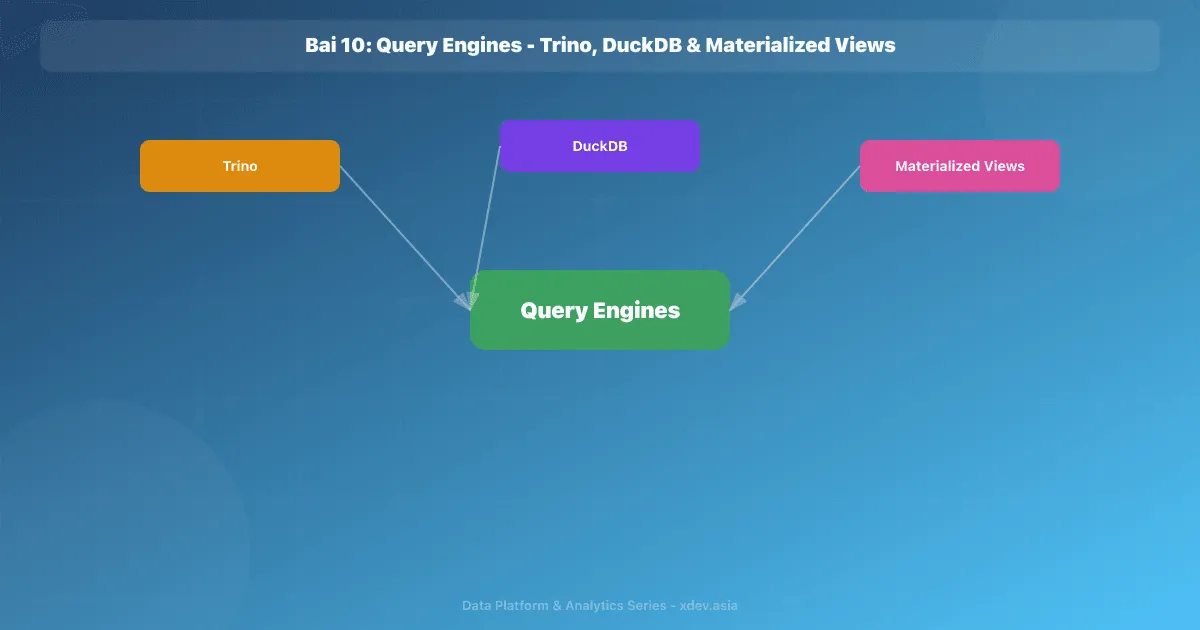
簡介
與 Trino/Presto 的共同查詢。用於嵌入式分析的 DuckDB。物化視圖和增量計算。查詢優化。
1. 使用 Trino/Presto 進行聯合查詢
1.1 基本概念
Trino/Presto 聯合查詢是該領域最重要的主題之一。了解核心概念將幫助您從一開始就設計出正確的系統。
Key Concepts:
├── Concept 1: Nền tảng lý thuyết
├── Concept 2: Áp dụng thực tế
├── Concept 3: Best practices
└── Concept 4: Anti-patterns cần tránh
1.2 為什麼它很重要?
| 方面 | 不適用 | 正確應用 |
|---|---|---|
| 效能 | 瓶頸、高延遲 | 最佳化、可擴充 |
| 可靠性 | 單點故障 | 容錯 |
| 可維護性 | 技術債累積 | 乾淨的建築物 |
| 安全 | 弱勢群體 | 縱深防禦 |
2. 用於嵌入式分析的 DuckDB
2.1 總體架構
┌─────────────────────────────────────────────────────┐
│                  SYSTEM ARCHITECTURE                 │
│                                                      │
│  ┌──────────┐  ┌──────────┐  ┌──────────────────┐  │
│  │  Client   │  │  API     │  │  Core Service    │  │
│  │  Layer    │──│  Gateway │──│  Layer           │  │
│  └──────────┘  └──────────┘  └──────────────────┘  │
│                                      │               │
│                               ┌──────▼──────┐       │
│                               │  Data Layer │       │
│                               └─────────────┘       │
└─────────────────────────────────────────────────────┘
2.2 元件設計
系統中每個組件的設計都需要遵循以下原則:
- 單一職責:每個組件僅承擔一項職責
- 鬆散耦合:最小化組件之間的依賴關係
- 高內聚:相關元素位於同一組件中
- 介面隔離:清晰、獨立的 API
3.物化視圖與增量計算
3.1 設計模式的應用
Applied Patterns:
├── Strategy Pattern: Cho phép thay đổi algorithm at runtime
├── Observer Pattern: Event notification mechanism
├── Repository Pattern: Data access abstraction
└── Factory Pattern: Object creation flexibility
3.2 程式碼範例
// Example implementation
public interface Service {
    Result process(Request request);
    boolean supports(RequestType type);
}

@Component
public class CoreService implements Service {

    @Override
    public Result process(Request request) {
        // Validate input
        validator.validate(request);

        // Execute business logic
        var result = businessLogic.execute(request);

        // Publish domain event
        eventBus.publish(new ProcessedEvent(result));

        return result;
    }
}
4.查詢最佳化。
4.1 監控與可觀察性
Observability Stack:
├── Metrics: Prometheus + Grafana
├── Logging: ELK / Loki
├── Tracing: OpenTelemetry + Jaeger
└── Alerting: PagerDuty
4.2 效能最佳化
| 指標 | 目標 | 戰略 |
|---|---|---|
| 延遲 p99 | < 100ms | Caching, async processing |
| Throughput | > 10K RPS | 水平縮放 |
| 可用性 | 99.99% | 多區域、故障轉移 |
| 錯誤率 | < 0.01% | 斷路器,重試 |
總結
在本課中,我們學習了查詢引擎 - Trino、DuckDB 和物化視圖。要點:
- 了解核心概念以及如何應用
- 根據需求設計架構
- 實施模式和最佳實踐
- 生產考量:監控、效能、安全
下一篇文章:我們將繼續本系列的下一個主題。