簡介
前端後端 (BFF) 是一種為每個前端客戶端放置單獨的後端層的模式。 BFF 聚合來自多個微服務的數據,將其轉換為適合特定前端的格式。
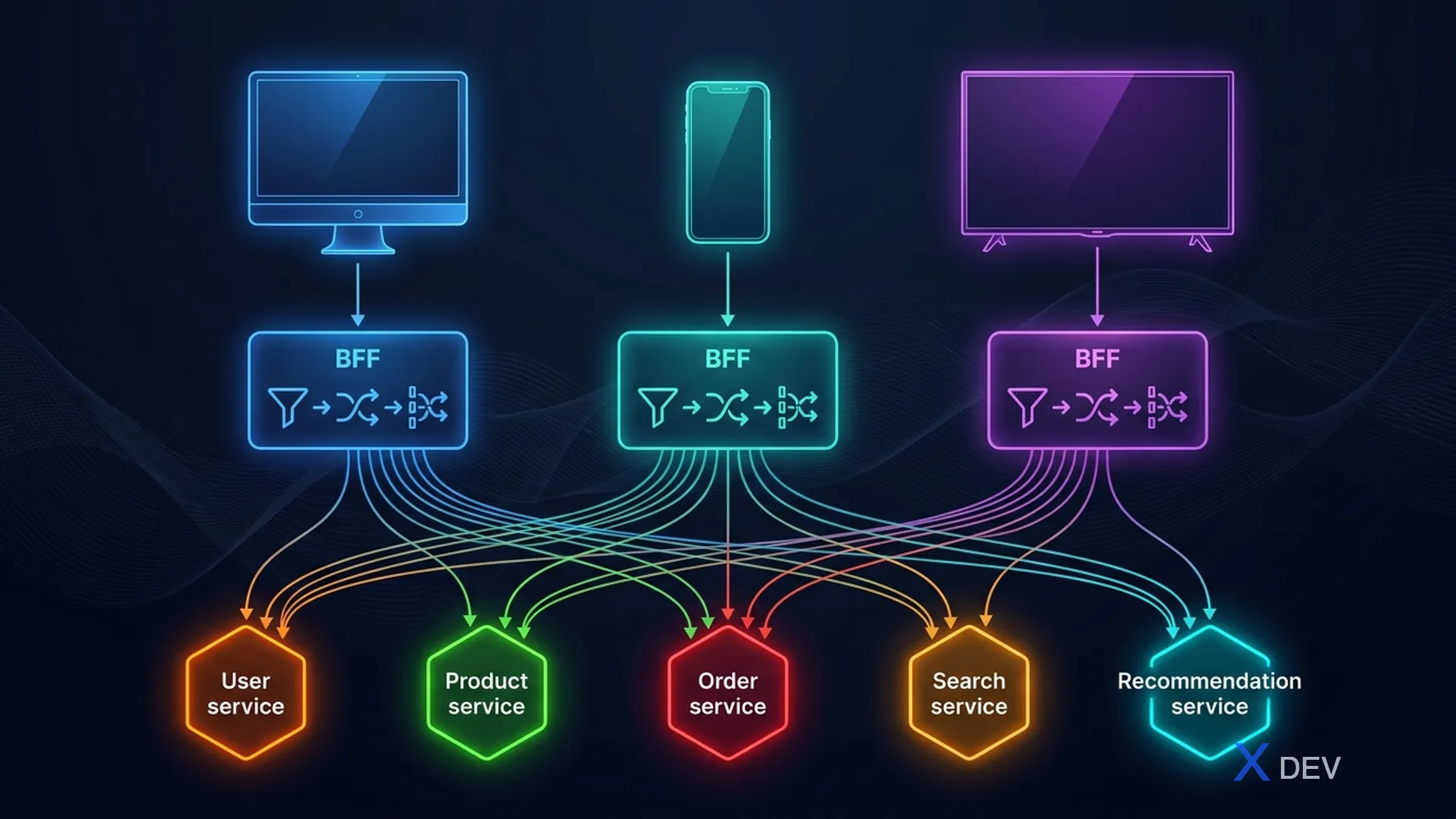
1. 為什麼你需要一個最好的朋友?
1.1 沒有BFF的問題
❌ Mỗi MFE gọi trực tiếp nhiều microservices:

Product MFE ──► Product Service
            ──► Review Service
            ──► Inventory Service
            ──► Pricing Service

→ 4 API calls cho 1 product page
→ Frontend phải aggregate data
→ Over-fetching (mỗi API trả về nhiều hơn cần)
→ Latency: waterfall requests
1.2 與最好的朋友
✅ BFF aggregates cho frontend:

Product MFE ──► Web BFF ──► Product Service
                        ──► Review Service
                        ──► Inventory Service

→ 1 API call cho 1 product page
→ BFF aggregate và transform data
→ Frontend nhận đúng data cần
→ Parallel calls tại BFF layer
2. BFF 架構
┌─────────────┐  ┌─────────────┐  ┌─────────────┐
│  Web App    │  │ Mobile App  │  │  Admin App  │
│  (MFE)     │  │  (React     │  │  (MFE)      │
│            │  │   Native)   │  │             │
└──────┬──────┘  └──────┬──────┘  └──────┬──────┘
       │                │                │
       ▼                ▼                ▼
┌──────────────┐ ┌──────────────┐ ┌──────────────┐
│   Web BFF    │ │  Mobile BFF  │ │  Admin BFF   │
│  (Node.js)   │ │  (Node.js)   │ │  (Node.js)   │
│  Full data   │ │  Compact data│ │  All CRUD    │
└──────┬───────┘ └──────┬───────┘ └──────┬───────┘
       │                │                │
       └────────────────┼────────────────┘
                        ▼
              ┌─────────────────┐
              │  Microservices  │
              │  (gRPC / REST)  │
              └─────────────────┘
3.BFF設計原則
3.1 每種前端類型一個 BFF
| 前端 | 最好的朋友 | 優化為 |
|---|---|---|
| 網路(桌面) | 網路好友 | 資料全,UI豐富 |
| 手機 | 行動好友 | 緊湊的數據、頻寬 |
| 管理面板 | 管理員好友 | CRUD 操作 |
| 第三方 | 公共 API(非 BFF) | 穩定,版本化 |
3.2 BFF 職責
BFF SHOULD:
✅ Aggregate data từ multiple services
✅ Transform data cho frontend format
✅ Handle authentication (validate tokens)
✅ Caching (Redis) cho frequently accessed data
✅ Rate limiting per client

BFF SHOULD NOT:
❌ Contain business logic (belongs to services)
❌ Have its own database (stateless!)
❌ Become a "smart proxy" monolith
❌ Be shared across different frontends
4. BFF 實作 (Node.js/Fastify)
// Web BFF - Product Page Aggregation
app.get('/api/bff/product/:id', async (req, reply) => {
  const { id } = req.params;

  // Parallel calls to microservices
  const [product, reviews, inventory] = await Promise.all([
    productService.getProduct(id),
    reviewService.getReviews(id, { limit: 5 }),
    inventoryService.getStock(id),
  ]);

  // Transform for web frontend
  return {
    ...product,
    rating: reviews.averageRating,
    topReviews: reviews.items.slice(0, 3),
    inStock: inventory.quantity > 0,
    stockLevel: inventory.quantity > 10 ? 'high' : 'low',
  };
});
5. BFF 與 API 網關
| 特點 | API網關 | 最好的朋友 |
|---|---|---|
| 目的 | 跨領域關注點 | 特定於前端的聚合 |
| 邏輯 | 路由、驗證、速率限制 | 資料轉換 |
| 每位顧客 | 為所有人合一 | 每種前端類型一個 |
| 維護者 | 平台團隊 | 前端團隊 |
在實踐中,同時使用:
Frontend → API Gateway → BFF → Microservices
           (routing,      (aggregation,
            auth,          transformation)
            rate limit)
總結
- BFF = 每個前端類型的單獨後端
- 聚合資料、轉換格式、降低前端複雜性
- 無狀態,不含業務邏輯
- 每種前端類型(Web、行動、管理員)一名 BFF
- 通常與API網關結合使用