簡介
API 閘道是來自前端的所有 API 呼叫的單一入口點。它處理跨領域的問題:身份驗證、速率限制、路由、監控——幫助微服務專注於業務邏輯。
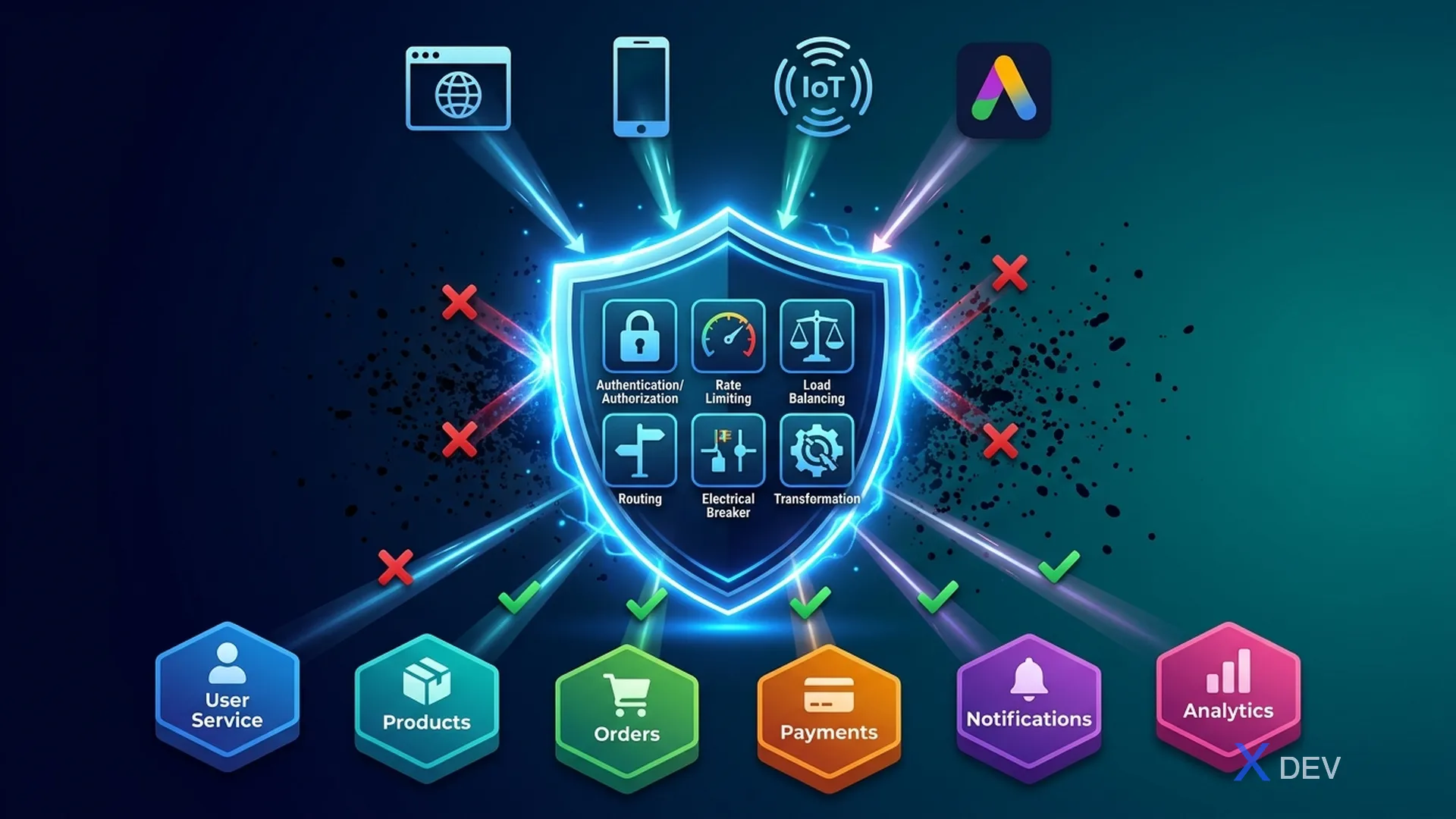
1.為什麼需要API網關?
1.1 無網關
❌ Client gọi trực tiếp services:

Frontend ──► User Service    (port 8001)
         ──► Product Service (port 8002)
         ──► Order Service   (port 8003)
         ──► Cart Service    (port 8004)

Vấn đề:
- Frontend phải biết địa chỉ từng service
- Mỗi service tự implement auth, rate limit, CORS
- Không có single point for monitoring/logging
- Service addresses thay đổi → frontend phải update
1.2 使用API網關
✅ Single entry point:

Frontend ──► API Gateway (/api/*) ──► User Service
                                  ──► Product Service
                                  ──► Order Service

API Gateway handles:
├── Authentication (JWT verification)
├── Rate Limiting (100 req/min per user)
├── Routing (path-based → service)
├── Load Balancing (round-robin)
├── SSL Termination
├── CORS
├── Request/Response transformation
└── Monitoring & Logging
2. 比較 API 網關
| 特點 | 孔 | APISIX | 特使網關 | AWS API GW |
|---|---|---|---|---|
| 核心 | Nginx/OpenResty | Nginx/etcd | 特使代理人 | 管理 |
| 性能 | 高 | 非常高 | 非常高 | 高 |
| 插件 | 100+ | 80+ | 透過過濾器 | AWS 原生 |
| K8s 原生 | 金剛入口 | APISIX 入口 | K8s 閘道器 API | 不適用 |
| 設定 | 資料庫/宣告式 | etcd/YAML | K8s CRD | 控制台/CF |
| 儀表板 | 孔經理 | 阿帕契儀表板 | 不適用 | 控制台 |
| 成本 | 開源 | 開源 | 開源 | 按請求付費 |
| 最適合 | 一般 | 高性能,中國 | K8s原生 | AWS 生態系統 |
3. Kong配置
3.1 宣告式設定 (kong.yml)
_format_version: "3.0"

services:
  - name: product-service
    url: http://product-svc:8080
    routes:
      - name: product-routes
        paths:
          - /api/v1/products
        strip_path: false
    plugins:
      - name: jwt
      - name: rate-limiting
        config:
          minute: 100
          policy: redis
          redis_host: redis
      - name: cors
        config:
          origins: ["https://app.example.com"]
          methods: ["GET", "POST", "PUT", "DELETE"]

  - name: order-service
    url: http://order-svc:8080
    routes:
      - name: order-routes
        paths:
          - /api/v1/orders
    plugins:
      - name: jwt
      - name: rate-limiting
        config:
          minute: 50
3.2 關鍵插件
| 插件 | 目的 |
|---|---|
jwt | 驗證 JWT 令牌 |
rate-limiting | 每個消費者的速率限制 |
cors | CORS 標頭 |
request-transformer | 修改請求頭/內文 |
response-transformer | 修改回覆 |
prometheus | 指標端點 |
file-log / tcp-log | 記錄 |
ip-restriction | 白名單/黑名單 IP |
4. APISIX 配置
routes:
  - uri: /api/v1/products/*
    upstream:
      type: roundrobin
      nodes:
        "product-svc:8080": 1
    plugins:
      jwt-auth:
        key: "product-key"
      limit-req:
        rate: 100
        burst: 50
        key_type: "var"
        key: "consumer_name"

  - uri: /api/v1/orders/*
    upstream:
      nodes:
        "order-svc:8080": 1
    plugins:
      jwt-auth: {}
5. 網關模式
5.1 基於路徑的路由
/api/v1/products/*  → Product Service
/api/v1/orders/*    → Order Service
/api/v1/users/*     → User Service
/api/v1/cart/*      → Cart Service
5.2 基於標頭的路由
X-API-Version: v2 → v2 service
X-Client-Type: mobile → mobile-optimized service
5.3 金絲雀路由
95% traffic → Product Service v1 (stable)
5% traffic  → Product Service v2 (canary)
6. API 閘道的 GitOps
Repository:
├── gateway/
│   ├── kong.yml (declarative config)
│   ├── plugins/
│   └── consumers/
└── .github/workflows/
    └── deploy-gateway.yml

CI/CD:
1. PR: change gateway config
2. Review: team review routing/auth changes
3. Merge: auto-apply via deck sync (Kong)
4. Monitor: check metrics after deploy
總結
- API 閘道 = 所有 API 呼叫的單一入口點
- 處理橫切:身份驗證、速率限制、路由、監控
- Kong:通用、成熟、插件豐富
- APISIX:透過 etcd 的高效能、動態插件
- Envoy Gateway:K8s 網關 API 原生
- GitOps:聲明式配置,版本控制