簡介
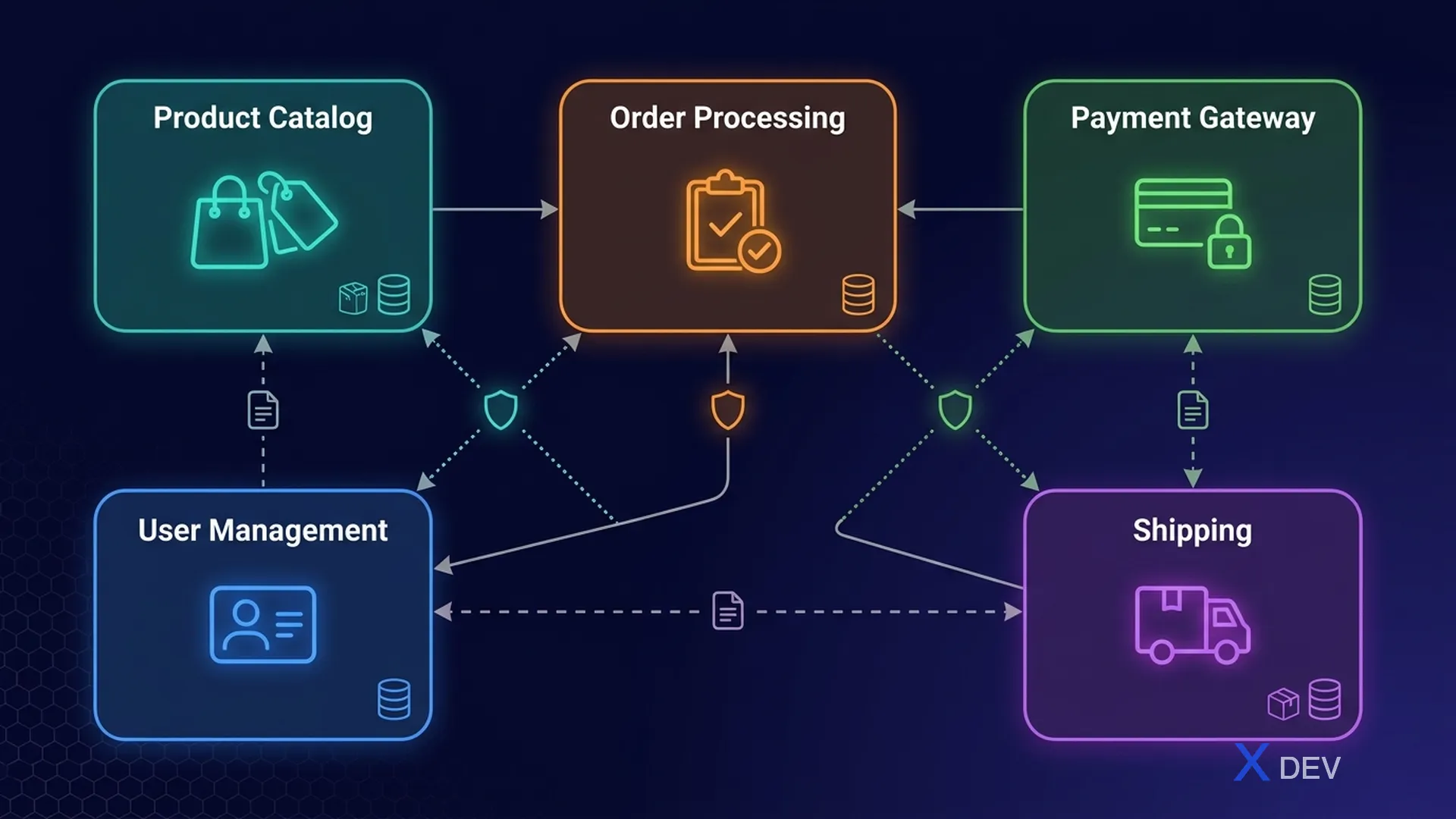
領域驅動設計 (DDD) 不僅僅是一種編寫程式碼的方法 - 它將複雜的系統分解為具有業務意義的部分。 DDD是決定如何劃分微服務和如何劃分微前端的基礎。如果分割不正確,您將擁有一個「分散式整體」—比原始整體更糟。
1. 為什麼需要DDD?
1.1 技術分解問題
將系統劃分為技術層(UI層、業務層、資料層)是最常見的錯誤:
❌ Technical Decomposition (SAI):
├── frontend-service
├── backend-service
├── database-service
└── notification-service

✅ Domain Decomposition (ĐÚNG):
├── user-management (UI + API + DB cho User)
├── product-catalog (UI + API + DB cho Product)
├── order-processing (UI + API + DB cho Order)
└── payment (UI + API + DB cho Payment)
1.2 DDD解決什麼問題?
- 通用語言:整個團隊(開發、PM、業務)使用相同的“語言”
- 有界上下文:定義域之間的清晰邊界
- 減少耦合:每個有界上下文都是獨立的單元
- 協調業務與技術:架構反映業務結構
2. 策略 DDD — 著眼大局
2.1 無所不在的語言
每個限界上下文都有自己的語言。相同的詞“產品”但在每種情況下含義不同:
┌───────────────────┐  ┌──────────────────┐  ┌──────────────────┐
│  Product Catalog   │  │   Order Context  │  │  Shipping Context│
│                    │  │                  │  │                  │
│ Product:           │  │ OrderItem:       │  │ Parcel:          │
│ - name, desc       │  │ - productId      │  │ - weight         │
│ - price, images    │  │ - quantity       │  │ - dimensions     │
│ - categories       │  │ - unitPrice      │  │ - tracking       │
│ - reviews          │  │ - discount       │  │ - destination    │
└───────────────────┘  └──────────────────┘  └──────────────────┘

Cùng "Product" nhưng mỗi context cần thông tin khác nhau!
2.2 有界上下文
有界上下文是應用一致域模型的邏輯邊界。
原則:
- 每個限界上下文 = 1 個微服務(或一小群)
- 每個限界上下文 = 1 個微前端(或 UI 的一部分)
- 上下文之間:透過 API 或事件 進行通訊(無共享資料庫!)
2.3 上下文映射
有界上下文並不是獨立存在的-它們彼此之間有關係:
Context Map:
┌──────────────┐          ┌──────────────┐
│   Product    │◄─────────│    Order     │
│   Catalog    │ Upstream  │  Processing  │
│  (Supplier)  │──────────►│ (Consumer)   │
└──────────────┘          └──────┬───────┘
                                 │
                          ┌──────┴───────┐
                          │   Payment    │
                          │   Gateway    │
                          └──────────────┘
關係模式:
| 圖案 | 說明 | 何時使用 |
|---|---|---|
| 客戶-供應商 | 上游提供,下游消耗 | 明確依賴關係 |
| 共享核心 | 分享部分模型 | 兩者的背景密切相關 |
| 反腐敗層 | 兩個模型之間的層轉換 | 遺留系統整合 |
| 發布語言 | 用於通訊的標準 API/架構 | 許多消費者需要使用 |
3. 戰術 DDD — 設計細節
3.1 聚合
聚合是被視為一致性單位的實體群組。所有更改都會透過聚合根。
Order Aggregate:
┌─────────────────────────────────┐
│  Order (Aggregate Root)         │
│  ├── OrderItem                  │
│  ├── OrderItem                  │
│  └── ShippingAddress            │
│                                 │
│  Invariants:                    │
│  - Total = sum(items.price)     │
│  - Status transitions are valid │
│  - At least 1 item required     │
└─────────────────────────────────┘
3.2 領域事件
領域事件描述了領域中發生的**事件:
// Domain Events
interface OrderPlaced {
  orderId: string;
  customerId: string;
  items: OrderItem[];
  totalAmount: number;
  placedAt: Date;
}

interface PaymentConfirmed {
  paymentId: string;
  orderId: string;
  amount: number;
  confirmedAt: Date;
}

// Event flow
OrderPlaced → PaymentService listens → PaymentConfirmed → ShippingService listens
4. 事件風暴-域發現
4.1 什麼是事件風暴?
事件風暴是一個研討會,開發人員 + 領域專家透過貼上便籤來共同探索領域:
Timeline: ─────────────────────────────────────────────►

🟧 Domain Event     🟦 Command          🟨 Policy/Rule
"Order Placed"     "Place Order"       "If payment fails,
                                        cancel order"

🟪 Aggregate        🟩 External System   🔴 Hot Spot
"Order"            "Payment Gateway"   "Race condition
                                        when checking stock"
4.2 從事件風暴到限界上下文
研討會結束後,將相關事件分組 → 定義有界脈絡 → 對應到微服務 + 微前端。
Event Storming Results → Bounded Contexts:
├── Product Context: ProductCreated, ProductUpdated, CategoryChanged
├── Cart Context: ItemAddedToCart, CartAbandoned, CouponApplied
├── Order Context: OrderPlaced, OrderConfirmed, OrderShipped
├── Payment Context: PaymentInitiated, PaymentConfirmed, RefundIssued
└── User Context: UserRegistered, ProfileUpdated, AddressAdded

Mapping:
├── Product Context → Product Microservice + Product MFE
├── Cart Context    → Cart Microservice + Cart MFE
├── Order Context   → Order Microservice + Checkout MFE
├── Payment Context → Payment Microservice (no separate MFE)
└── User Context    → User Microservice + Account MFE
5. 將 DDD 應用於微前端
5.1 有界上下文 → 微前端
每個限界上下文不僅映射到 1 個微服務,還映射到 1 個微前端:
Bounded Context: Product Catalog
├── Backend: Product Microservice
│   ├── REST API / GraphQL
│   ├── PostgreSQL database
│   └── Search index (Elasticsearch)
│
├── Frontend: Product Micro Frontend
│   ├── Product listing page
│   ├── Product detail page
│   ├── Search & filter UI
│   └── Product reviews
│
└── Team: Product Team (full-stack ownership)
5.2 根據 DDD 的團隊拓撲
┌──────────────────────────────────────────┐
│              Organization                │
├──────────┬──────────┬────────┬───────────┤
│ Team     │ Team     │ Team   │ Team      │
│ Product  │ Cart     │ Order  │ Platform  │
├──────────┼──────────┼────────┼───────────┤
│ MFE:     │ MFE:     │ MFE:   │ Shell App │
│ Product  │ Cart     │ Order  │ Design Sys│
│ pages    │ sidebar  │ pages  │ Auth      │
├──────────┼──────────┼────────┼───────────┤
│ µS:      │ µS:      │ µS:    │ API GW    │
│ Product  │ Cart     │ Order  │ Infra     │
│ API      │ API      │ API    │           │
├──────────┼──────────┼────────┼───────────┤
│ DB:      │ DB:      │ DB:    │ Shared    │
│ Postgres │ Redis    │ Postgres│ Services │
└──────────┴──────────┴────────┴───────────┘
總結
- DDD是正確分解系統的思考基礎
- 有界上下文定義邊界→映射到微服務+微前端
- 事件風暴有助於與業務專家一起探索領域
- 上下文映射定義上下文之間的關係
- 按領域(而非依技術層)劃分是黃金法則