Giới thiệu
Domain-Driven Design (DDD) không chỉ là một phương pháp viết code — đó là tư duy phân tách hệ thống phức tạp thành các phần có ý nghĩa business. DDD là nền tảng quyết định cách chia Microservices và cách chia Micro Frontend. Nếu chia sai, bạn sẽ có một "distributed monolith" — tệ hơn cả monolith ban đầu.
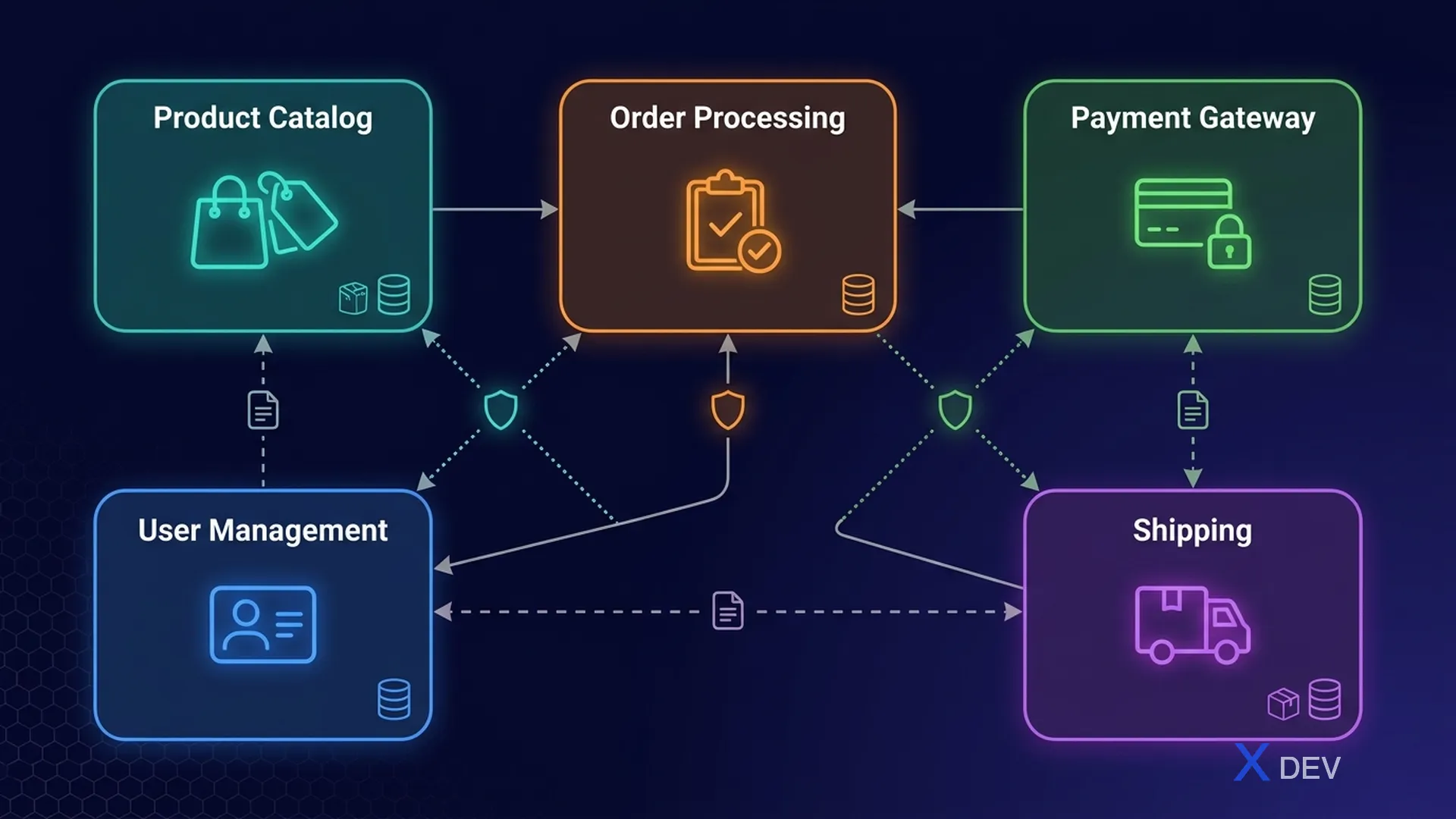
1. Tại sao cần DDD?
1.1 Vấn đề của technical decomposition
Cách chia hệ thống theo lớp kỹ thuật (UI layer, Business layer, Data layer) là sai lầm phổ biến nhất:
❌ Technical Decomposition (SAI):
├── frontend-service
├── backend-service
├── database-service
└── notification-service

✅ Domain Decomposition (ĐÚNG):
├── user-management (UI + API + DB cho User)
├── product-catalog (UI + API + DB cho Product)
├── order-processing (UI + API + DB cho Order)
└── payment (UI + API + DB cho Payment)
1.2 DDD giải quyết gì?
- Ubiquitous Language: Cả team (dev, PM, business) nói cùng "ngôn ngữ"
- Bounded Context: Xác định ranh giới rõ ràng giữa các domain
- Giảm coupling: Mỗi bounded context là một đơn vị độc lập
- Align business & tech: Kiến trúc phản ánh cấu trúc business
2. Strategic DDD — Nhìn bức tranh lớn
2.1 Ubiquitous Language
Mỗi Bounded Context có ngôn ngữ riêng. Cùng từ "Product" nhưng có nghĩa khác nhau trong từng context:
┌───────────────────┐  ┌──────────────────┐  ┌──────────────────┐
│  Product Catalog   │  │   Order Context  │  │  Shipping Context│
│                    │  │                  │  │                  │
│ Product:           │  │ OrderItem:       │  │ Parcel:          │
│ - name, desc       │  │ - productId      │  │ - weight         │
│ - price, images    │  │ - quantity       │  │ - dimensions     │
│ - categories       │  │ - unitPrice      │  │ - tracking       │
│ - reviews          │  │ - discount       │  │ - destination    │
└───────────────────┘  └──────────────────┘  └──────────────────┘

Cùng "Product" nhưng mỗi context cần thông tin khác nhau!
2.2 Bounded Context
Bounded Context là ranh giới logic mà bên trong đó, một domain model nhất quán được áp dụng.
Nguyên tắc:
- Mỗi Bounded Context = 1 Microservice (hoặc một nhóm nhỏ)
- Mỗi Bounded Context = 1 Micro Frontend (hoặc một phần UI)
- Giữa các context: giao tiếp qua API hoặc Events (không share database!)
2.3 Context Mapping
Các Bounded Context không tồn tại độc lập — chúng có mối quan hệ với nhau:
Context Map:
┌──────────────┐          ┌──────────────┐
│   Product    │◄─────────│    Order     │
│   Catalog    │ Upstream  │  Processing  │
│  (Supplier)  │──────────►│ (Consumer)   │
└──────────────┘          └──────┬───────┘
                                 │
                          ┌──────┴───────┐
                          │   Payment    │
                          │   Gateway    │
                          └──────────────┘
Các pattern quan hệ:
| Pattern | Mô tả | Khi nào dùng |
|---|---|---|
| Customer-Supplier | Upstream cung cấp, Downstream tiêu thụ | Quan hệ phụ thuộc rõ ràng |
| Shared Kernel | Chia sẻ một phần model | Hai context liên quan chặt chẽ |
| Anti-Corruption Layer | Layer chuyển đổi giữa hai model | Tích hợp hệ thống legacy |
| Published Language | API/Schema chuẩn để giao tiếp | Nhiều consumers cần dùng |
3. Tactical DDD — Chi tiết thiết kế
3.1 Aggregate
Aggregate là nhóm entities được treat như một đơn vị consistency. Mọi thay đổi đều đi qua Aggregate Root.
Order Aggregate:
┌─────────────────────────────────┐
│  Order (Aggregate Root)         │
│  ├── OrderItem                  │
│  ├── OrderItem                  │
│  └── ShippingAddress            │
│                                 │
│  Invariants:                    │
│  - Total = sum(items.price)     │
│  - Status transitions are valid │
│  - At least 1 item required     │
└─────────────────────────────────┘
3.2 Domain Events
Domain Events mô tả sự kiện đã xảy ra trong domain:
// Domain Events
interface OrderPlaced {
  orderId: string;
  customerId: string;
  items: OrderItem[];
  totalAmount: number;
  placedAt: Date;
}

interface PaymentConfirmed {
  paymentId: string;
  orderId: string;
  amount: number;
  confirmedAt: Date;
}

// Event flow
OrderPlaced → PaymentService listens → PaymentConfirmed → ShippingService listens
4. Event Storming — Khám phá Domain
4.1 Event Storming là gì?
Event Storming là workshop mà developers + domain experts cùng nhau khám phá domain bằng cách dán sticky notes:
Timeline: ─────────────────────────────────────────────►

🟧 Domain Event     🟦 Command          🟨 Policy/Rule
"Order Placed"     "Place Order"       "If payment fails,
                                        cancel order"

🟪 Aggregate        🟩 External System   🔴 Hot Spot
"Order"            "Payment Gateway"   "Race condition
                                        when checking stock"
4.2 Từ Event Storming đến Bounded Context
Sau workshop, nhóm các events liên quan lại → xác định Bounded Context → map thành Microservices + Micro Frontends.
Event Storming Results → Bounded Contexts:
├── Product Context: ProductCreated, ProductUpdated, CategoryChanged
├── Cart Context: ItemAddedToCart, CartAbandoned, CouponApplied
├── Order Context: OrderPlaced, OrderConfirmed, OrderShipped
├── Payment Context: PaymentInitiated, PaymentConfirmed, RefundIssued
└── User Context: UserRegistered, ProfileUpdated, AddressAdded

Mapping:
├── Product Context → Product Microservice + Product MFE
├── Cart Context    → Cart Microservice + Cart MFE
├── Order Context   → Order Microservice + Checkout MFE
├── Payment Context → Payment Microservice (no separate MFE)
└── User Context    → User Microservice + Account MFE
5. Áp dụng DDD cho Micro Frontend
5.1 Bounded Context → Micro Frontend
Mỗi Bounded Context không chỉ map thành 1 Microservice mà còn map thành 1 Micro Frontend:
Bounded Context: Product Catalog
├── Backend: Product Microservice
│   ├── REST API / GraphQL
│   ├── PostgreSQL database
│   └── Search index (Elasticsearch)
│
├── Frontend: Product Micro Frontend
│   ├── Product listing page
│   ├── Product detail page
│   ├── Search & filter UI
│   └── Product reviews
│
└── Team: Product Team (full-stack ownership)
5.2 Team Topology theo DDD
┌──────────────────────────────────────────┐
│              Organization                │
├──────────┬──────────┬────────┬───────────┤
│ Team     │ Team     │ Team   │ Team      │
│ Product  │ Cart     │ Order  │ Platform  │
├──────────┼──────────┼────────┼───────────┤
│ MFE:     │ MFE:     │ MFE:   │ Shell App │
│ Product  │ Cart     │ Order  │ Design Sys│
│ pages    │ sidebar  │ pages  │ Auth      │
├──────────┼──────────┼────────┼───────────┤
│ µS:      │ µS:      │ µS:    │ API GW    │
│ Product  │ Cart     │ Order  │ Infra     │
│ API      │ API      │ API    │           │
├──────────┼──────────┼────────┼───────────┤
│ DB:      │ DB:      │ DB:    │ Shared    │
│ Postgres │ Redis    │ Postgres│ Services │
└──────────┴──────────┴────────┴───────────┘
Tóm tắt
- DDD là nền tảng tư duy để phân tách hệ thống đúng cách
- Bounded Context xác định ranh giới → map thành Microservices + Micro Frontends
- Event Storming giúp khám phá domain cùng business experts
- Context Mapping xác định mối quan hệ giữa các context
- Chia theo domain (không phải theo layer kỹ thuật) là nguyên tắc vàng
Bài tiếp theo: Bài 3: Kiến trúc tổng quan Full-Stack — Microservices + Micro Frontend + BFF