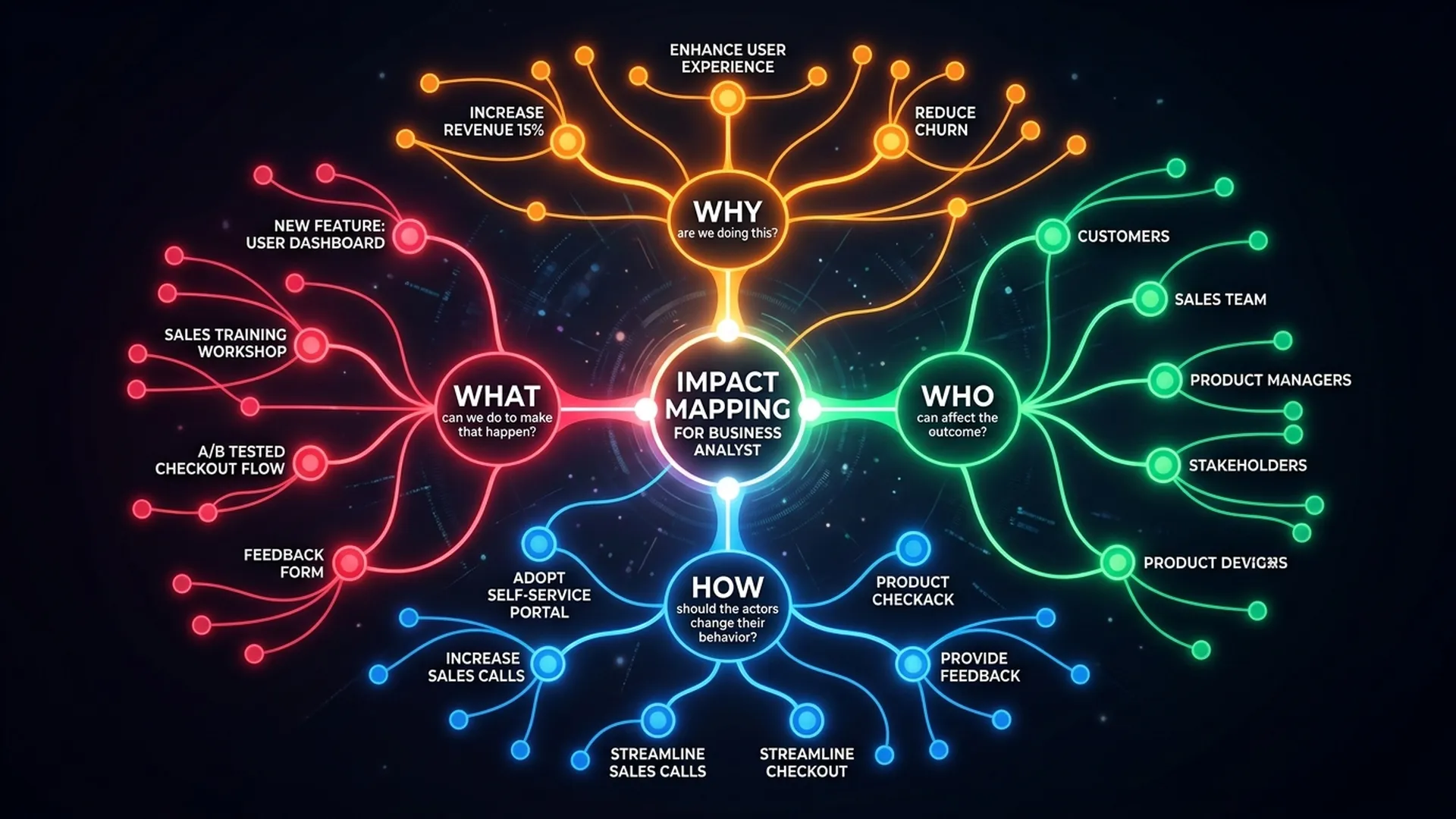
製品開発でよくある anti-pattern のひとつが feature factory です。team はその feature が business goal にどう影響するかを明確にしないまま、feature を作り続けます。Impact Mapping は、BA と team がこのループから抜け出すための technique です。
Impact Mappingとは?
Impact Mapping は Gojko Adzic が考案した strategic planning technique で、WHY -> WHO -> HOW -> WHAT という構造の visual map を作ります。
                    [GOAL]
                       |
        ┌──────────────┼──────────────┐
        ↓              ↓              ↓
    [Actor 1]      [Actor 2]      [Actor 3]
        |              |              |
    ┌───┴───┐      ┌───┴───┐      ┌───┴───┐
    ↓       ↓      ↓       ↓      ↓       ↓
[Impact] [Impact] [Impact][Impact][Impact][Impact]
    |       |
┌───┴┐  ┌───┴┐
↓    ↓  ↓    ↓
[Del][Del][Del][Del]
| Level | 問い | 例 |
|---|---|---|
| Goal (WHY) | なぜこれをやるのか? | Q3 revenue を 20% 増やす |
| Actors (WHO) | 誰が goal に影響するのか? | Customer、Sales team、Support |
| Impacts (HOW) | どのように behavior が変わる必要があるのか? | Customer が self-serve するようになる |
| Deliverables (WHAT) | その impact を作るために何を build するのか? | AI chatbot、Self-service portal |
なぜBAにImpact Mappingが重要なのか?
従来の問題
- Stakeholder が feature を request -> BA が document 化 -> Dev が build -> feature は delivered されたが business goal は達成できない
- Team が「なぜこれを作るのか」を理解していない
- Prioritization が business value ではなく "squeaky wheel" で決まる
Impact Mappingが解決すること
- Traceability: すべての deliverable を business goal まで trace できる
- Scope management: goal を壊さずに scope を cut しやすい
- Alignment: team 全員が WHY を理解できる
- Out-of-scope decisions: goal に map できない feature に "no" と言いやすい
AIプロジェクトでImpact Mapを作る方法
Step 1: Goal(WHY)を定義する
Goal は business outcome でなければならず、output ではありません。
❌ 良くない: "AI chatbot を立ち上げる" ✅ 良い: "6か月で support tickets を 40% 減らす"
❌ 良くない: "recommendation engine を実装する" ✅ 良い: "average order value を 15% 上げる"
Goal の書き方: [Metric] [Direction] [Value] [Timeframe]
Step 2: Actors(WHO)を特定する
Goal に影響できる人・system をすべて洗い出します。
Primary Actors(goal を直接達成する人たち):
- End users(customers、employees)
- Business stakeholders
Secondary Actors(primary actors を支える人たち):
- Internal teams(support、sales、ops)
- External partners
Off-stage Actors(間接的に影響する人たち):
- Regulators
- Competitors
- External systems/APIs
Step 3: Impacts(HOW)を定義する
各 actor に対して、「goal を達成するには何を違う形で行う必要があるか?」 と問います。
Impact は behavior change であり、feature ではありません。
❌ "chatbot を使う"(action であって behavior change ではない) ✅ "hotline に電話しなくても自分で問題解決できる"
❌ "recommendation email を受け取る" ✅ "これまで知らなかった商品を追加購入する"
Impact の template: "[Actor] will [verb] [behavior change]"
Step 4: Deliverables(WHAT)をブレインストーミングする
各 impact に対して、「その impact を起こすために何を build できるか?」 と考えます。
この段階は brainstorming です。まだ絞り込まず、多くの options を列挙します。
- AI features
- UX improvements
- Process changes
- Content/documentation
- Integrations
検討すべき AI-specific deliverables:
- Conversational AI(chatbot、voice assistant)
- Recommendation engine
- Predictive analytics dashboard
- Automated classification/routing
- AI-assisted search
- Personalization engine
Step 5: Impact Mapを使ってPrioritizeする
Map ができたら次を確認します。
- Critical path を見つける: どの deliverable が goal に最大の impact を与えるか?
- Confidence を見積もる: その deliverable が impact を生むとどれだけ信じられるか?
- Effort を考える: high impact / low effort か?
- Slice する: もっと小さく deliver して hypothesis を検証できるか?
実例: AI Customer Support
Scenario: E-commerce が customer experience を改善したい
Impact Map:
GOAL: Tăng CSAT từ 3.2 → 4.5 trong Q3 2026

WHO: Customer
HOW:
  - Nhận câu trả lời trong < 2 phút (không phải 24h)
  - Tự track order status mà không cần chat
  - Hiểu chính sách return rõ ràng ngay lần đầu
WHAT:
  - AI chatbot với instant response
  - Order tracking self-service
  - AI-powered FAQ with clear policy explanations

WHO: Support Agent
HOW:
  - Dành thời gian cho complex cases thay vì repetitive Q&A
  - Có context đầy đủ khi escalation xảy ra
WHAT:
  - AI triage & routing system
  - AI-generated conversation summary cho escalations
  - Suggested response templates

WHO: Product Manager
HOW:
  - Biết pain points thực sự của customer
  - Prioritize roadmap dựa trên impact
WHAT:
  - AI analytics dashboard từ chat data
  - Automated pattern detection từ negative feedback
Agile SprintsにおけるImpact Mapping
Impact Mapping は project の最初に 一度だけ 行うことが多いですが、BA は次を行うべきです。
- 四半期ごとに review する - business goal は変わっていないか?
- 各 release 後に update する - 期待した impacts を deliver できたか?
- Backlog filter として使う - 新しい story は map 上の impact に結び付くべき
- Sprint review で提示する - "この sprint でどの impact を達成したか" を stakeholder に示す
Impact Mapping vs User Story Mapping
| Impact Mapping | User Story Mapping | |
|---|---|---|
| Focus | Business outcomes | User journey/workflow |
| Level | Strategic | Tactical |
| When | Early planning、quarterly review | Sprint planning |
| Output | Prioritized impacts & deliverables | Prioritized story backlog |
| Used by | BA + Product + Business | BA + Dev + QA |
Best practice: Impact Mapping で scope と priority を定義し、User Story Mapping で delivery を計画します。
Impact Mapを作るツール
| Tool | 使い方 |
|---|---|
| Miro | Template 付きの digital whiteboard |
| Mermaid diagram | Code-based で Git 管理しやすい |
| FigJam | Figma team 向け collaborative tool |
| Draw.io / Lucidchart | Formal diagrams |
| Sticky notes | Stakeholders との workshop |
Mermaid template:
mindmap
  root((Tăng CSAT 4.5))
    Customer
      Self-serve order tracking
        Real-time tracking page
        SMS/email notifications
      Instant answers
        AI chatbot
        Smart FAQ
    Support Agent
      Handle complex cases only
        AI triage system
        Auto-routing
Impact Mappingでよくある失敗
- Goal が曖昧すぎる: "Improve customer experience" -> 測定できない
- Secondary actors を無視する: internal teams の behavior change を忘れる
- WHAT に直行する: HOW を飛ばすと deliverables に narrative がなくなる
- Launch 後に review しない: 一度作って放置すると価値がなくなる
- WHAT を詳細にしすぎる: Impact Map は strategic view、詳細は user stories に持たせる
まとめ
Impact Mapping は AI 時代の BA に特に有効です。AI features は ROI が不明確 になりやすく、business need ではなく "trend" で build されがちだからです。すべての AI feature を measurable impact を持つ具体的な business goal に結び付ければ、次が可能になります。
- Executives に AI investment を justify できる
- Business case のない features を cut できる
- Data science team と product team の priorities を align できる
- 意味のある形で success を測定できる
まずは 1 つの goal と 2〜3 人の actors から始めてください。最初から perfect map を作ろうとしないことです。