Giới thiệu
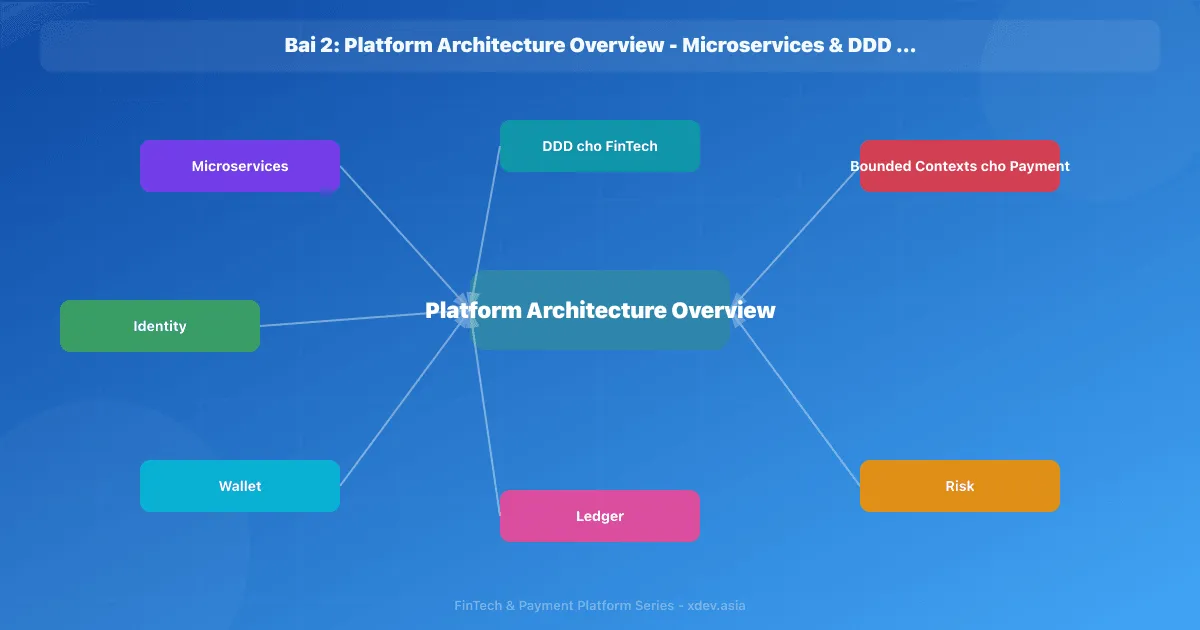
Một FinTech Platform không phải là một ứng dụng monolithic đơn giản — nó là một hệ thống phức tạp với nhiều domain khác nhau cần được tách biệt rõ ràng. Trong bài này, chúng ta sẽ thiết kế kiến trúc tổng quan sử dụng Microservices và Domain-Driven Design (DDD).
1. High-Level Architecture
1.1 Tổng quan hệ thống
┌─────────────────────────────────────────────────────────┐
│                    CLIENT LAYER                          │
│  ┌──────────┐  ┌──────────┐  ┌──────────┐  ┌────────┐ │
│  │Mobile App│  │ Web App  │  │Merchant  │  │Partner │ │
│  │          │  │          │  │Dashboard │  │  API   │ │
│  └────┬─────┘  └────┬─────┘  └────┬─────┘  └───┬────┘ │
└───────┼──────────────┼─────────────┼────────────┼───────┘
        │              │             │            │
┌───────▼──────────────▼─────────────▼────────────▼───────┐
│                   API GATEWAY LAYER                       │
│  ┌─────────────────────────────────────────────────────┐ │
│  │ API Gateway (Kong/Envoy)                            │ │
│  │ ├── Rate Limiting    ├── Authentication             │ │
│  │ ├── Request Routing  ├── SSL Termination            │ │
│  │ └── API Versioning   └── Request/Response Transform │ │
│  └─────────────────────────────────────────────────────┘ │
└─────────────────────────┬───────────────────────────────┘
                          │
┌─────────────────────────▼───────────────────────────────┐
│                   SERVICE MESH                            │
│  ┌──────────┐ ┌──────────┐ ┌──────────┐ ┌────────────┐ │
│  │ Payment  │ │ Wallet   │ │ Ledger   │ │   Risk     │ │
│  │ Service  │ │ Service  │ │ Service  │ │  Service   │ │
│  └──────────┘ └──────────┘ └──────────┘ └────────────┘ │
│  ┌──────────┐ ┌──────────┐ ┌──────────┐ ┌────────────┐ │
│  │ Identity │ │ Merchant │ │Reporting │ │Notification│ │
│  │ Service  │ │ Service  │ │ Service  │ │  Service   │ │
│  └──────────┘ └──────────┘ └──────────┘ └────────────┘ │
└─────────────────────────┬───────────────────────────────┘
                          │
┌─────────────────────────▼───────────────────────────────┐
│                   DATA LAYER                              │
│  ┌───────┐ ┌───────┐ ┌───────┐ ┌───────┐ ┌───────────┐│
│  │PostgreSQL│ │Redis │ │Kafka │ │  S3   │ │Elasticsearch││
│  └───────┘ └───────┘ └───────┘ └───────┘ └───────────┘│
└─────────────────────────────────────────────────────────┘
1.2 Nguyên tắc thiết kế
- Domain-first: Chia service theo domain, không theo technical layer
- Database per service: Mỗi service sở hữu data riêng
- Event-driven communication: Async communication cho cross-domain
- API-first design: Contract-first approach với OpenAPI
- Defense in depth: Security ở mọi layer
2. Domain-Driven Design cho FinTech
2.1 Strategic Design — Bounded Contexts
┌─────────────────────────────────────────────────────────────┐
│                    FINTECH PLATFORM                          │
│                                                              │
│  ┌─────────────┐  ┌─────────────┐  ┌─────────────────────┐ │
│  │  IDENTITY   │  │   PAYMENT   │  │      WALLET         │ │
│  │   Context   │  │   Context   │  │      Context        │ │
│  │             │  │             │  │                     │ │
│  │ • User      │  │ • Payment   │  │ • Account           │ │
│  │ • KYC       │  │ • Refund    │  │ • Balance           │ │
│  │ • Auth      │  │ • PSP       │  │ • Transaction       │ │
│  │ • Session   │  │ • Checkout  │  │ • Transfer          │ │
│  └─────────────┘  └─────────────┘  └─────────────────────┘ │
│                                                              │
│  ┌─────────────┐  ┌─────────────┐  ┌─────────────────────┐ │
│  │   LEDGER    │  │    RISK     │  │     MERCHANT        │ │
│  │   Context   │  │   Context   │  │     Context         │ │
│  │             │  │             │  │                     │ │
│  │ • Journal   │  │ • Fraud     │  │ • Merchant          │ │
│  │ • Account   │  │ • AML       │  │ • Settlement        │ │
│  │ • Posting   │  │ • KYC       │  │ • Fee               │ │
│  │ • Balance   │  │ • Scoring   │  │ • Contract          │ │
│  └─────────────┘  └─────────────┘  └─────────────────────┘ │
│                                                              │
│  ┌─────────────┐  ┌─────────────┐  ┌─────────────────────┐ │
│  │  LENDING    │  │ REPORTING   │  │   NOTIFICATION      │ │
│  │  Context    │  │  Context    │  │     Context         │ │
│  │             │  │             │  │                     │ │
│  │ • Loan      │  │ • Report    │  │ • Template          │ │
│  │ • Credit    │  │ • Dashboard │  │ • Channel           │ │
│  │ • Schedule  │  │ • Export    │  │ • Preference        │ │
│  │ • Offer     │  │ • Audit     │  │ • History           │ │
│  └─────────────┘  └─────────────┘  └─────────────────────┘ │
└─────────────────────────────────────────────────────────────┘
2.2 Context Mapping
Identity ──[U/D]──► Payment    (Identity upstream, Payment downstream)
Payment  ──[Pub]──► Ledger     (Payment publishes events, Ledger subscribes)
Payment  ──[Pub]──► Risk       (Payment publishes for fraud check)
Payment  ──[ACL]──► PSP        (Anti-corruption layer for external PSPs)
Wallet   ──[Pub]──► Ledger     (Wallet changes reflected in Ledger)
Merchant ──[Pub]──► Reporting  (Merchant events feed Reporting)
Risk     ──[U/D]──► Payment    (Risk provides scoring to Payment)
Patterns sử dụng:
- Published Language: Events dùng chung schema (Avro/Protobuf)
- Anti-Corruption Layer (ACL): Wrap external PSP APIs
- Upstream/Downstream (U/D): Clear dependency direction
- Shared Kernel: Common types (Money, Currency, Address)
2.3 Shared Kernel — Common Value Objects
// Shared across all bounded contexts
public record Money(BigDecimal amount, Currency currency) {
    public Money {
        if (amount.scale() > currency.getDefaultFractionDigits()) {
            throw new IllegalArgumentException("Invalid precision");
        }
    }

    public Money add(Money other) {
        requireSameCurrency(other);
        return new Money(amount.add(other.amount), currency);
    }
}

public record TransactionId(String value) {
    // UUID v7 for time-ordered IDs
    public static TransactionId generate() {
        return new TransactionId(UUIDv7.generate().toString());
    }
}
3. Microservice Architecture
3.1 Service Topology
                    ┌──────────────┐
                    │ API Gateway  │
                    └──────┬───────┘
                           │
          ┌────────────────┼────────────────┐
          │                │                │
   ┌──────▼──────┐ ┌──────▼──────┐ ┌──────▼──────┐
   │   Payment   │ │   Wallet    │ │  Identity   │
   │   Service   │ │   Service   │ │   Service   │
   │             │ │             │ │             │
   │ PostgreSQL  │ │ PostgreSQL  │ │ PostgreSQL  │
   │    Redis    │ │    Redis    │ │    Redis    │
   └──────┬──────┘ └──────┬──────┘ └─────────────┘
          │                │
          └────────┬───────┘
                   │
            ┌──────▼──────┐
            │    Kafka    │  Event Bus
            └──────┬──────┘
                   │
     ┌─────────────┼─────────────┐
     │             │             │
┌────▼────┐ ┌─────▼─────┐ ┌────▼────┐
│ Ledger  │ │   Risk    │ │Reporting│
│ Service │ │  Service  │ │ Service │
│         │ │           │ │         │
│PostgreSQL│ │PostgreSQL │ │ClickHouse│
└─────────┘ │   Redis   │ └─────────┘
            │  ML Model │
            └───────────┘
3.2 Communication Patterns
| Pattern | Use Case | Ví dụ |
|---|---|---|
| Sync (REST/gRPC) | Real-time queries | Check balance, get payment status |
| Async (Events) | State changes | Payment completed → update ledger |
| Command | Action requests | Process payment, create refund |
| Query | Read-only | Get transaction history |
3.3 Database per Service
Payment Service  ──► payment_db (PostgreSQL)
                     ├── payments
                     ├── payment_methods
                     ├── payment_attempts
                     └── refunds

Wallet Service   ──► wallet_db (PostgreSQL)
                     ├── accounts
                     ├── balances
                     ├── transactions
                     └── holds

Ledger Service   ──► ledger_db (PostgreSQL)
                     ├── journal_entries
                     ├── postings
                     ├── accounts
                     └── balances

Risk Service     ──► risk_db (PostgreSQL + Redis)
                     ├── fraud_rules
                     ├── risk_scores
                     ├── blacklists
                     └── ml_features (Redis)
4. Event-Driven Architecture
4.1 Domain Events
Payment Domain Events:
├── PaymentInitiated
├── PaymentAuthorized
├── PaymentCaptured
├── PaymentFailed
├── PaymentRefunded
└── PaymentSettled

Wallet Domain Events:
├── AccountCreated
├── BalanceCredited
├── BalanceDebited
├── TransferInitiated
├── TransferCompleted
└── HoldPlaced

Risk Domain Events:
├── FraudCheckRequested
├── FraudCheckCompleted
├── RiskScoreCalculated
├── TransactionBlocked
└── AlertRaised
4.2 Event Schema (Avro)
{
  "type": "record",
  "name": "PaymentCompletedEvent",
  "namespace": "com.fintech.payment.events",
  "fields": [
    {"name": "eventId", "type": "string"},
    {"name": "eventType", "type": "string"},
    {"name": "timestamp", "type": "long"},
    {"name": "paymentId", "type": "string"},
    {"name": "amount", "type": {"type": "record", "name": "Money", "fields": [
      {"name": "value", "type": "string"},
      {"name": "currency", "type": "string"}
    ]}},
    {"name": "merchantId", "type": "string"},
    {"name": "customerId", "type": "string"},
    {"name": "paymentMethod", "type": "string"},
    {"name": "status", "type": "string"}
  ]
}
4.3 Event Flow — Payment Processing
Customer ─── Initiate Payment ───► Payment Service
                                       │
                                       ├──► Risk Service (Fraud Check)
                                       │       │
                                       │    ◄──┤ (Approved/Rejected)
                                       │
                                       ├──► PSP (Authorize)
                                       │       │
                                       │    ◄──┤ (Auth Response)
                                       │
                                       ├──► Event: PaymentAuthorized
                                       │       │
                                       │       ├──► Wallet Service (Debit)
                                       │       ├──► Ledger Service (Record)
                                       │       ├──► Notification Service
                                       │       └──► Reporting Service
                                       │
                                       └──► Response to Customer
5. API Gateway Design
5.1 Gateway Responsibilities
API Gateway Configuration:
  authentication:
    - JWT validation
    - API key verification
    - mTLS for service-to-service

  rate_limiting:
    default: 100 req/min
    premium: 1000 req/min
    merchant_api: 5000 req/min

  routing:
    /api/v1/payments/*  → payment-service
    /api/v1/wallets/*   → wallet-service
    /api/v1/merchants/* → merchant-service
    /api/v1/reports/*   → reporting-service

  security:
    - CORS policies
    - Request validation
    - IP whitelisting (for merchant APIs)
    - PCI-DSS compliant headers
5.2 API Versioning Strategy
/api/v1/payments       ← Current stable
/api/v2/payments       ← Next version (beta)

Header-based: Accept: application/vnd.fintech.v1+json
6. Cross-cutting Concerns
6.1 Observability Stack
┌──────────────────────────────────────┐
│          OBSERVABILITY STACK          │
├──────────────────────────────────────┤
│ Metrics:  Prometheus + Grafana       │
│ Logging:  ELK Stack / Loki          │
│ Tracing:  OpenTelemetry + Jaeger    │
│ Alerting: PagerDuty / OpsGenie     │
└──────────────────────────────────────┘
6.2 Security Layer
Defense in Depth:
├── Network: VPC, Security Groups, WAF
├── Transport: TLS 1.3, mTLS
├── Application: JWT, OAuth2, RBAC
├── Data: Encryption at rest (AES-256)
├── Payment: Tokenization, HSM
└── Audit: Immutable audit logs
Tổng kết
Kiến trúc FinTech Platform cần:
- DDD để chia domain phức tạp thành bounded contexts rõ ràng
- Microservices với database per service cho isolation
- Event-Driven cho loose coupling và eventual consistency
- API Gateway cho security, routing, rate limiting
- Defense in Depth cho security ở mọi layer
Bài tiếp theo: Chúng ta sẽ deep-dive vào Regulatory Compliance — PCI-DSS, PSD2, và quy định NHNN Việt Nam — và cách thiết kế hệ thống đáp ứng các yêu cầu compliance.