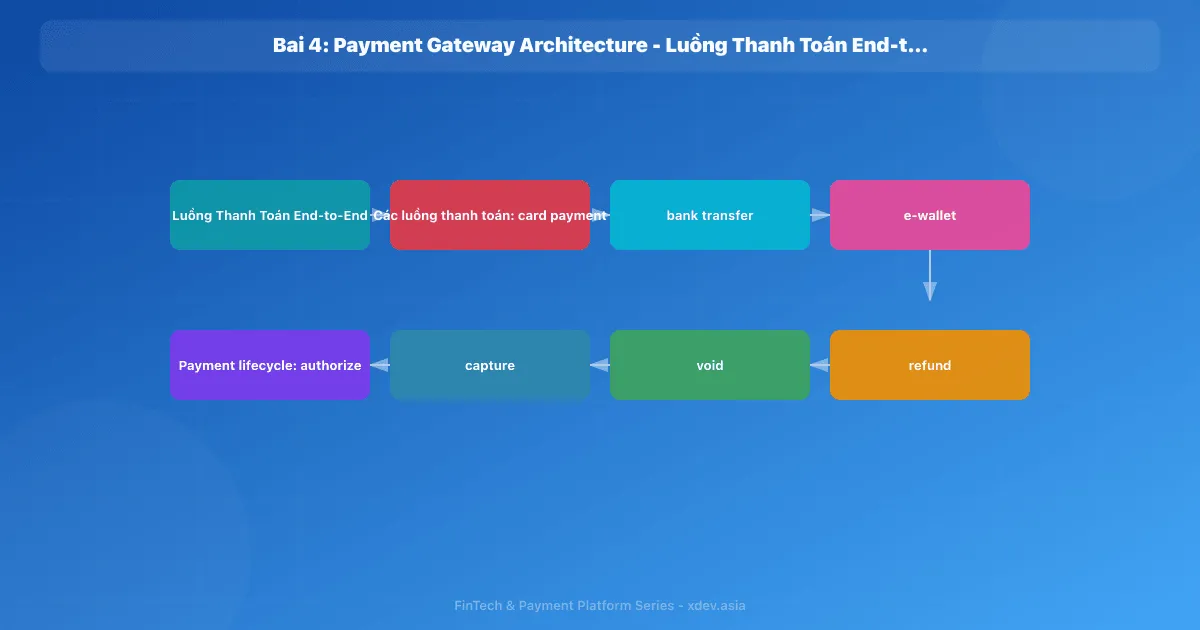
Giới thiệu
Payment Gateway là trái tim của mọi FinTech platform — nơi xử lý luồng tiền từ người mua đến người bán. Trong bài này, chúng ta sẽ thiết kế Payment Gateway architecture hoàn chỉnh, từ checkout flow đến settlement.
1. Payment Gateway là gì?
1.1 Vai trò trong Payment Ecosystem
┌──────────┐    ┌──────────┐    ┌──────────┐    ┌──────────┐    ┌──────────┐
│ Customer │───►│ Merchant │───►│ Payment  │───►│ Acquirer │───►│  Issuer  │
│          │    │  (Shop)  │    │ Gateway  │    │  Bank    │    │  Bank    │
└──────────┘    └──────────┘    └──────────┘    └──────────┘    └──────────┘
                                     │
                                     │ Orchestration
                                     │
                              ┌──────▼──────┐
                              │ Payment     │
                              │ Processors  │
                              │ (PSPs)      │
                              └─────────────┘
Payment Gateway đóng vai trò orchestrator — điều phối luồng thanh toán giữa merchant, acquirer bank, card network, và issuer bank.
1.2 Payment Gateway vs Payment Processor
| Thành phần | Vai trò | Ví dụ |
|---|---|---|
| Payment Gateway | Nhận, validate, route payment requests | Stripe, VNPay |
| Payment Processor | Xử lý transaction với card networks | Worldpay, First Data |
| Acquirer | Bank của merchant, nhận funds | Vietcombank, BIDV |
| Issuer | Bank phát hành thẻ cho customer | Techcombank, ACB |
| Card Network | Network kết nối acquirer-issuer | Visa, Mastercard, NAPAS |
2. Payment Lifecycle
2.1 Các trạng thái của Payment
                    ┌───────────┐
                    │  CREATED  │
                    └─────┬─────┘
                          │
                    ┌─────▼─────┐
              ┌─────│ PENDING   │─────┐
              │     └─────┬─────┘     │
              │           │           │
        ┌─────▼─────┐    │    ┌──────▼─────┐
        │  FAILED   │    │    │  EXPIRED   │
        └───────────┘    │    └────────────┘
                         │
                   ┌─────▼──────┐
                   │ AUTHORIZED │
                   └─────┬──────┘
                         │
              ┌──────────┼──────────┐
              │          │          │
        ┌─────▼─────┐   │   ┌─────▼─────┐
        │  VOIDED   │   │   │ CAPTURED  │
        └───────────┘   │   └─────┬─────┘
                        │         │
                        │   ┌─────▼─────┐
                        │   │  SETTLED  │
                        │   └─────┬─────┘
                        │         │
                        │   ┌─────▼─────┐
                        └──►│ REFUNDED  │
                            └───────────┘
2.2 Two-Phase Payment (Auth + Capture)
Phase 1: Authorization (Reserve funds)
──────────────────────────────────────
Customer ──► Gateway ──► PSP ──► Issuer Bank
                                    │
                              Reserve $100
                              (Hold on card)
                                    │
Customer ◄── Gateway ◄── PSP ◄─────┘
             Auth Code: auth_xyz

Phase 2: Capture (Collect funds)
──────────────────────────────────────
Merchant ──► Gateway ──► PSP ──► Issuer Bank
                                    │
                              Capture $100
                              (Move from hold)
                                    │
Merchant ◄── Gateway ◄── PSP ◄─────┘
             Captured: $100
Use cases cho Two-Phase:
- Hotels (reserve khi book, capture khi checkout)
- Marketplaces (capture khi ship)
- Pre-orders
3. Payment Gateway Architecture
3.1 Internal Components
┌─────────────────────────────────────────────────────────────┐
│                    PAYMENT GATEWAY                           │
│                                                              │
│  ┌──────────┐  ┌──────────┐  ┌──────────┐  ┌────────────┐ │
│  │ Checkout  │  │ Payment  │  │  Router   │  │   PSP      │ │
│  │ Service   │  │ Engine   │  │  Service  │  │  Adapters  │ │
│  └────┬──────┘  └────┬──────┘  └────┬──────┘  └────┬───────┘ │
│       │              │              │              │          │
│  ┌────▼──────────────▼──────────────▼──────────────▼───────┐ │
│  │                    Event Bus (Kafka)                     │ │
│  └─────────────────────────┬───────────────────────────────┘ │
│                            │                                  │
│  ┌──────────┐  ┌──────────▼──┐  ┌──────────┐  ┌──────────┐ │
│  │Idempotency│  │  State     │  │  Retry   │  │  Webhook │ │
│  │  Store    │  │  Machine   │  │  Engine  │  │  Sender  │ │
│  └──────────┘  └─────────────┘  └──────────┘  └──────────┘ │
└─────────────────────────────────────────────────────────────┘
3.2 Payment Request Flow
// Simplified payment processing flow
public class PaymentEngine {

    public PaymentResult processPayment(PaymentRequest request) {
        // 1. Idempotency check
        var existing = idempotencyStore.find(request.getIdempotencyKey());
        if (existing.isPresent()) {
            return existing.get(); // Return cached result
        }

        // 2. Validate request
        validator.validate(request);

        // 3. Create payment record
        var payment = Payment.create(request);
        paymentRepository.save(payment);

        // 4. Risk check
        var riskResult = riskService.evaluate(payment);
        if (riskResult.isBlocked()) {
            payment.fail(riskResult.getReason());
            return PaymentResult.blocked(riskResult);
        }

        // 5. Route to PSP
        var psp = router.selectPSP(payment);
        var adapter = pspAdapterFactory.getAdapter(psp);

        // 6. Process with PSP
        try {
            var pspResult = adapter.authorize(payment);
            payment.authorize(pspResult);

            // 7. Publish event
            eventBus.publish(new PaymentAuthorizedEvent(payment));

            return PaymentResult.success(payment);
        } catch (PSPException e) {
            payment.fail(e.getMessage());
            return PaymentResult.failed(e);
        }
    }
}
3.3 Idempotency Pattern
Request 1: POST /payments  {idempotency_key: "key_abc", amount: 100}
  → Process payment → Return: {id: "pay_123", status: "authorized"}
  → Store: idempotency_store["key_abc"] = response

Request 2: POST /payments  {idempotency_key: "key_abc", amount: 100}
  → Found in idempotency_store → Return cached: {id: "pay_123", status: "authorized"}
  → No duplicate charge!
@Service
public class IdempotencyService {
    private final RedisTemplate<String, String> redis;

    public Optional<PaymentResult> check(String key) {
        String cached = redis.opsForValue().get("idempotency:" + key);
        if (cached != null) {
            return Optional.of(deserialize(cached));
        }
        // Try to acquire lock
        Boolean acquired = redis.opsForValue()
            .setIfAbsent("idempotency:" + key + ":lock", "1",
                Duration.ofMinutes(5));
        if (!acquired) {
            throw new PaymentInProgressException();
        }
        return Optional.empty();
    }

    public void store(String key, PaymentResult result) {
        redis.opsForValue().set("idempotency:" + key,
            serialize(result), Duration.ofHours(24));
        redis.delete("idempotency:" + key + ":lock");
    }
}
4. Payment Methods
4.1 Các phương thức thanh toán
Payment Methods:
├── Card Payments
│   ├── Credit Card (Visa, Mastercard, JCB)
│   ├── Debit Card (ATM cards)
│   └── Prepaid Card
├── Bank Transfer
│   ├── Internet Banking
│   ├── QR Transfer (VietQR)
│   └── Direct Debit
├── E-Wallet
│   ├── MoMo, ZaloPay, ShopeePay
│   └── Apple Pay, Google Pay
├── Buy Now Pay Later
│   ├── Installment plans
│   └── Pay-in-4
└── Alternative
    ├── Crypto payments
    └── Telecom billing
4.2 Checkout Flow Design
┌──────────────────────────────────────────────────────────────┐
│                     CHECKOUT FLOW                             │
│                                                               │
│  Step 1:          Step 2:           Step 3:        Step 4:   │
│  Cart Review  →   Payment Method →  Confirm    →  Result    │
│                                                               │
│  ┌──────────┐  ┌──────────────┐  ┌──────────┐  ┌─────────┐ │
│  │ Items    │  │ □ Credit Card│  │ Total:   │  │ ✓ Paid  │ │
│  │ Subtotal │  │ □ Bank       │  │ $100     │  │ Receipt │ │
│  │ Shipping │  │ □ MoMo       │  │ Pay Now  │  │ Order # │ │
│  │ Tax      │  │ □ ZaloPay    │  │          │  │         │ │
│  └──────────┘  └──────────────┘  └──────────┘  └─────────┘ │
└──────────────────────────────────────────────────────────────┘
5. Retry & Error Handling
5.1 Retry Strategy
Payment Retry Policy:
├── Network timeout     → Retry with exponential backoff
├── PSP 5xx error       → Retry with different PSP
├── Rate limited        → Retry after delay
├── Insufficient funds  → No retry (terminal error)
├── Card declined       → No retry (terminal error)
└── Fraud blocked       → No retry (terminal error)
@Retryable(
    value = {PSPTimeoutException.class, PSPServerException.class},
    maxAttempts = 3,
    backoff = @Backoff(delay = 1000, multiplier = 2)
)
public PSPResponse authorizeWithRetry(Payment payment) {
    return pspAdapter.authorize(payment);
}

@Recover
public PSPResponse fallbackPSP(PSPTimeoutException e, Payment payment) {
    // Try alternative PSP
    var fallbackPSP = router.selectFallback(payment);
    return fallbackPSP.authorize(payment);
}
5.2 Webhook Delivery
Payment Result → Webhook Queue → Delivery Engine
                                      │
                                 ┌────▼────┐
                                 │ Attempt │
                                 │   1     │──► merchant.com/webhook
                                 └────┬────┘
                                      │ (Failed)
                                 Wait 1 min
                                      │
                                 ┌────▼────┐
                                 │ Attempt │
                                 │   2     │──► merchant.com/webhook
                                 └────┬────┘
                                      │ (Failed)
                                 Wait 5 min
                                      │
                                 ┌────▼────┐
                                 │ Attempt │
                                 │   3     │──► merchant.com/webhook
                                 └─────────┘
                                 ... up to 5 attempts
6. Database Schema
6.1 Core Payment Tables
CREATE TABLE payments (
    id                UUID PRIMARY KEY DEFAULT gen_random_uuid(),
    idempotency_key   VARCHAR(255) UNIQUE NOT NULL,
    merchant_id       UUID NOT NULL,
    customer_id       UUID,
    amount            BIGINT NOT NULL, -- Amount in smallest currency unit (cents/dong)
    currency          VARCHAR(3) NOT NULL DEFAULT 'VND',
    status            VARCHAR(30) NOT NULL DEFAULT 'CREATED',
    payment_method    VARCHAR(50) NOT NULL,
    description       TEXT,
    metadata          JSONB DEFAULT '{}',
    psp_reference     VARCHAR(255),
    auth_code         VARCHAR(100),
    failure_reason    TEXT,
    captured_amount   BIGINT DEFAULT 0,
    refunded_amount   BIGINT DEFAULT 0,
    created_at        TIMESTAMPTZ NOT NULL DEFAULT NOW(),
    updated_at        TIMESTAMPTZ NOT NULL DEFAULT NOW(),
    expires_at        TIMESTAMPTZ,
    CONSTRAINT valid_status CHECK (status IN (
        'CREATED', 'PENDING', 'AUTHORIZED', 'CAPTURED',
        'SETTLED', 'VOIDED', 'REFUNDED', 'FAILED', 'EXPIRED'
    ))
);

CREATE TABLE payment_attempts (
    id            UUID PRIMARY KEY DEFAULT gen_random_uuid(),
    payment_id    UUID NOT NULL REFERENCES payments(id),
    psp_id        VARCHAR(50) NOT NULL,
    attempt_no    INT NOT NULL,
    status        VARCHAR(30) NOT NULL,
    request_body  JSONB,
    response_body JSONB,
    response_code VARCHAR(10),
    error_message TEXT,
    latency_ms    INT,
    created_at    TIMESTAMPTZ NOT NULL DEFAULT NOW()
);

CREATE INDEX idx_payments_merchant ON payments(merchant_id, created_at DESC);
CREATE INDEX idx_payments_status ON payments(status) WHERE status IN ('PENDING', 'AUTHORIZED');
CREATE INDEX idx_payment_attempts_payment ON payment_attempts(payment_id);
Tổng kết
Payment Gateway architecture đòi hỏi:
- State Machine rõ ràng cho payment lifecycle
- Idempotency để đảm bảo không charge trùng
- Two-phase payment (Auth + Capture) cho flexibility
- Retry logic thông minh với fallback PSP
- Webhook có guaranteed delivery cho merchant notification
Bài tiếp theo: Deep-dive vào Payment Processing — Authorization, Capture, Settlement workflows và batch processing.