Giới thiệu
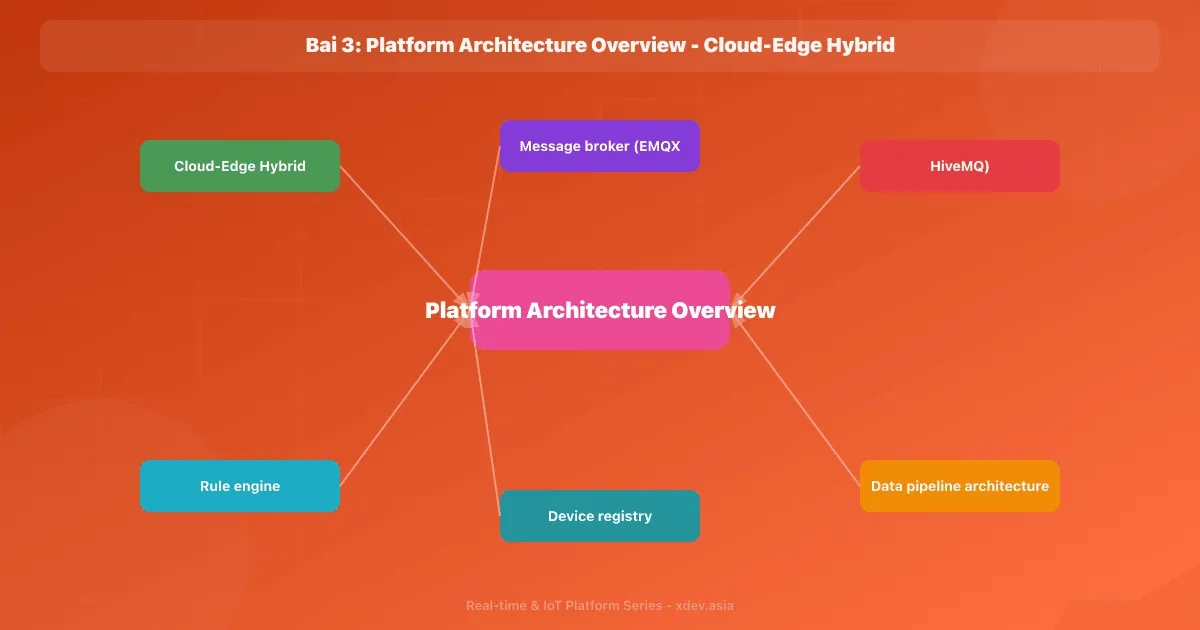
Thiết kế kiến trúc IoT Platform: cloud-edge hybrid. Message broker (EMQX, HiveMQ). Rule engine. Device registry. Data pipeline architecture.
1. Thiết kế kiến trúc IoT Platform: cloud-edge hybrid
1.1 Khái niệm cơ bản
Thiết kế kiến trúc IoT Platform: cloud-edge hybrid là một trong những chủ đề quan trọng nhất trong lĩnh vực này. Hiểu rõ các concepts cốt lõi sẽ giúp bạn thiết kế hệ thống đúng đắn ngay từ đầu.
Key Concepts:
├── Concept 1: Nền tảng lý thuyết
├── Concept 2: Áp dụng thực tế
├── Concept 3: Best practices
└── Concept 4: Anti-patterns cần tránh
1.2 Tại sao quan trọng?
| Khía cạnh | Không áp dụng | Áp dụng đúng |
|---|---|---|
| Performance | Bottlenecks, latency cao | Optimized, scalable |
| Reliability | Single point of failure | Fault-tolerant |
| Maintainability | Technical debt tích lũy | Clean architecture |
| Security | Vulnerable | Defense in depth |
2. Message broker (EMQX, HiveMQ)
2.1 Kiến trúc tổng quan
┌─────────────────────────────────────────────────────┐
│                  SYSTEM ARCHITECTURE                 │
│                                                      │
│  ┌──────────┐  ┌──────────┐  ┌──────────────────┐  │
│  │  Client   │  │  API     │  │  Core Service    │  │
│  │  Layer    │──│  Gateway │──│  Layer           │  │
│  └──────────┘  └──────────┘  └──────────────────┘  │
│                                      │               │
│                               ┌──────▼──────┐       │
│                               │  Data Layer │       │
│                               └─────────────┘       │
└─────────────────────────────────────────────────────┘
2.2 Component Design
Mỗi component trong hệ thống cần được thiết kế với các nguyên tắc:
- Single Responsibility: Mỗi component chỉ đảm nhiệm một trách nhiệm
- Loose Coupling: Giảm thiểu dependency giữa các components
- High Cohesion: Các elements liên quan nằm cùng một component
- Interface Segregation: API rõ ràng, tách biệt
3. Rule engine
3.1 Design Patterns áp dụng
Applied Patterns:
├── Strategy Pattern: Cho phép thay đổi algorithm at runtime
├── Observer Pattern: Event notification mechanism
├── Repository Pattern: Data access abstraction
└── Factory Pattern: Object creation flexibility
3.2 Code Example
// Example implementation
public interface Service {
    Result process(Request request);
    boolean supports(RequestType type);
}

@Component
public class CoreService implements Service {

    @Override
    public Result process(Request request) {
        // Validate input
        validator.validate(request);

        // Execute business logic
        var result = businessLogic.execute(request);

        // Publish domain event
        eventBus.publish(new ProcessedEvent(result));

        return result;
    }
}
4. Device registry
4.1 Monitoring & Observability
Observability Stack:
├── Metrics: Prometheus + Grafana
├── Logging: ELK / Loki
├── Tracing: OpenTelemetry + Jaeger
└── Alerting: PagerDuty
4.2 Performance Optimization
| Metric | Target | Strategy |
|---|---|---|
| Latency p99 | < 100ms | Caching, async processing |
| Throughput | > 10K RPS | Horizontal scaling |
| Availability | 99.99% | Multi-region, failover |
| Error rate | < 0.01% | Circuit breaker, retry |
Tổng kết
Trong bài học này, chúng ta đã tìm hiểu về Platform Architecture Overview - Cloud-Edge Hybrid. Các key takeaways:
- Hiểu rõ concepts cốt lõi và cách áp dụng
- Thiết kế architecture phù hợp với requirements
- Implementation patterns và best practices
- Production considerations: monitoring, performance, security
Bài tiếp theo: Chúng ta sẽ tiếp tục với chủ đề tiếp theo trong series.