Giới thiệu
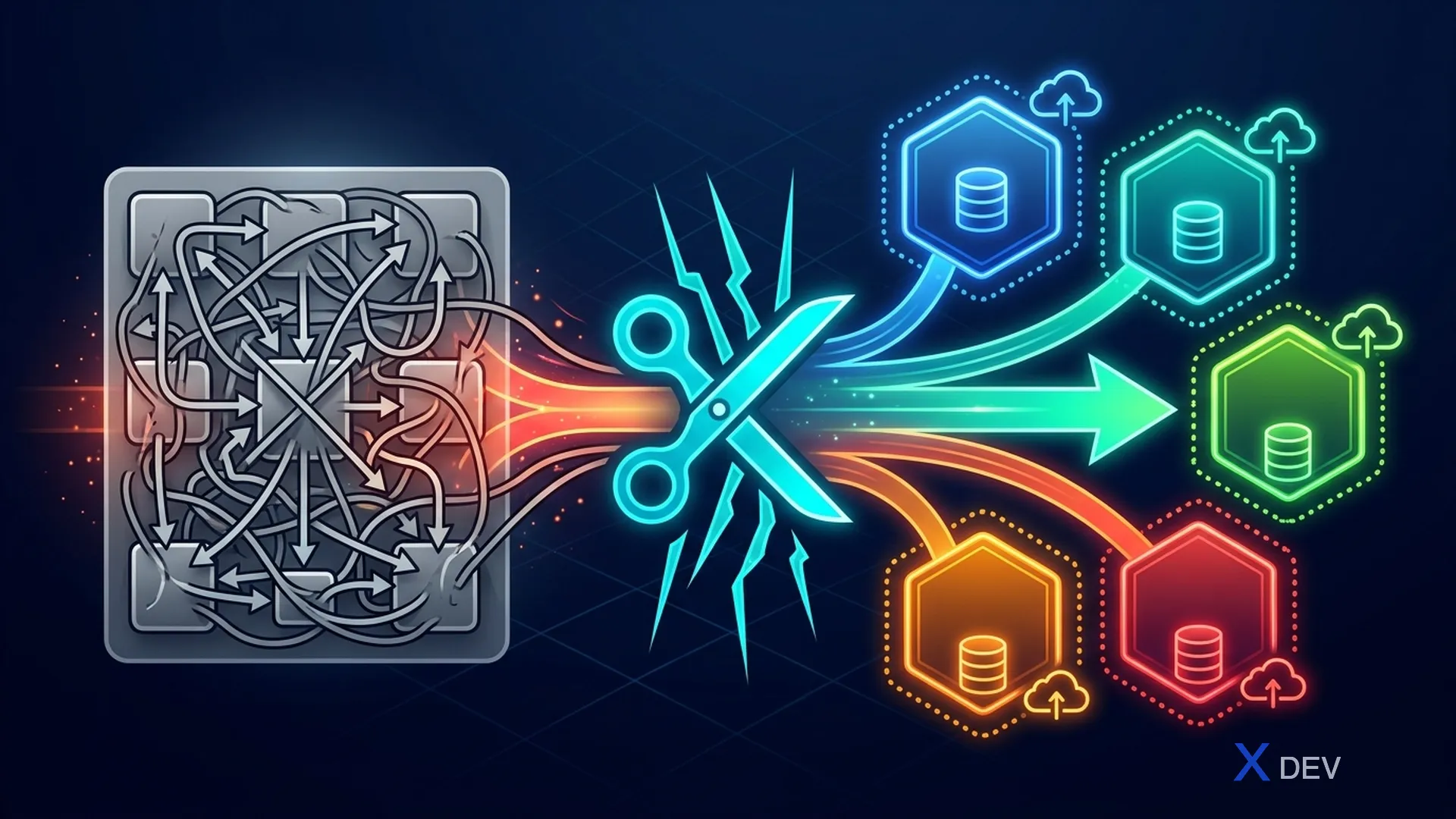
Phân tách service là quyết định kiến trúc quan trọng nhất khi chuyển sang Microservices. Chia quá nhỏ → complexity bùng nổ. Chia quá lớn → distributed monolith. Bài này hướng dẫn phương pháp systematic để xác định service boundaries đúng cách.
1. Nguyên tắc phân tách
1.1 Single Responsibility cho Services
Mỗi service chịu trách nhiệm cho một business capability duy nhất:
- User Service → Quản lý user lifecycle (register, login, profile)
- Product Service → Product catalog, search, reviews
- Order Service → Order processing, fulfillment, history
1.2 Hai chiến lược chính
Decompose by Business Capability:
Dựa trên chức năng business mà tổ chức cung cấp:
E-Commerce Business Capabilities:
├── Customer Management   → User Service
├── Product Management    → Product Service
├── Order Management      → Order Service
├── Payment Processing    → Payment Service
├── Inventory Management  → Inventory Service
└── Shipping & Delivery   → Shipping Service
Decompose by Subdomain (DDD):
Dựa trên các subdomain được xác định qua DDD:
Core Subdomains (competitive advantage):
├── Product Catalog → Product Service (custom-built, best team)
├── Order Processing → Order Service (complex logic)

Supporting Subdomains (necessary but not differentiating):
├── Inventory → Inventory Service
├── Customer Profile → User Service

Generic Subdomains (solved problems):
├── Authentication → Keycloak (off-the-shelf)
├── Payment Gateway → Stripe integration
├── Email → SendGrid/SES
1.3 Dấu hiệu service boundaries đúng
- Service có thể develop, deploy, scale độc lập
- Thay đổi trong service A ít khi yêu cầu thay đổi service B
- Mỗi service có database riêng (no shared tables)
- Team có thể làm việc trên service mà không cần coordinate với team khác
- Service có cohesive API — các endpoints liên quan chặt chẽ
2. Context Mapping Patterns
Khi đã xác định Bounded Contexts, cần xác định mối quan hệ giữa chúng:
2.1 Partnership
Hai teams hợp tác chặt chẽ, cùng phát triển interface:
Product Team ←→ Search Team
(cùng định nghĩa product schema cho search indexing)
2.2 Customer-Supplier
Upstream (supplier) cung cấp data/API, Downstream (customer) consume:
Product Service (Supplier) → Order Service (Customer)
(Order Service cần product info nhưng không thay đổi product)
2.3 Anti-Corruption Layer (ACL)
Layer chuyển đổi để protect domain model khỏi external/legacy systems:
┌──────────┐     ┌─────┐     ┌──────────────┐
│ Order    │ ──► │ ACL │ ──► │ Legacy ERP   │
│ Service  │     │     │     │ (SOAP/XML)   │
└──────────┘     └─────┘     └──────────────┘
ACL convert REST/JSON ↔ SOAP/XML
3. Anti-patterns cần tránh
3.1 Distributed Monolith
❌ Services phụ thuộc chặt chẽ:
Service A → Service B → Service C → Service A (circular!)
Kết quả: phải deploy A, B, C cùng lúc = worse than monolith
3.2 Nano-services
❌ Chia quá nhỏ:
├── ProductNameService
├── ProductPriceService
├── ProductImageService
└── ProductReviewService

✅ Chia hợp lý:
└── ProductService (gom lại thành 1 service)
3.3 Shared Database
❌ Nhiều services dùng chung DB:
Service A ──┐
Service B ──┼──► Shared PostgreSQL (products table)
Service C ──┘
Thay đổi schema → break tất cả services

✅ Database per Service:
Service A → DB_A
Service B → DB_B (replicate data nếu cần)
Service C → DB_C
4. Hands-on: Phân tách E-Commerce Platform
Áp dụng vào dự án xuyên suốt series:
E-Commerce Platform Services:

┌─────────────────────────────────────────┐
│ User Service (Supporting)               │
│ - Registration, Login, Profile          │
│ - PostgreSQL (users, addresses)         │
│ - Team: 2-3 devs                       │
├─────────────────────────────────────────┤
│ Product Service (Core)                  │
│ - Catalog, Search, Reviews, Categories  │
│ - PostgreSQL + Elasticsearch            │
│ - Team: 3-4 devs                       │
├─────────────────────────────────────────┤
│ Cart Service (Supporting)               │
│ - Add/Remove items, Apply coupon        │
│ - Redis (fast, ephemeral)              │
│ - Team: 2 devs                         │
├─────────────────────────────────────────┤
│ Order Service (Core)                    │
│ - Place order, Track, History           │
│ - PostgreSQL (orders, order_items)      │
│ - Team: 3-4 devs                       │
├─────────────────────────────────────────┤
│ Payment Service (Generic)               │
│ - Stripe/VNPay integration              │
│ - PostgreSQL (transactions)            │
│ - Team: 2 devs                         │
└─────────────────────────────────────────┘
Tóm tắt
| Nguyên tắc | Mô tả |
|---|---|
| Chia theo Domain | Dùng DDD Bounded Context, không chia theo technical layer |
| Loosely Coupled | Service A thay đổi không cần deploy Service B |
| High Cohesion | Các chức năng liên quan nằm cùng 1 service |
| Own Data | Mỗi service có database riêng |
| Right Size | Không quá lớn (monolith), không quá nhỏ (nano-service) |
Bài tiếp theo: Bài 5: API Design Masterclass — REST, GraphQL & gRPC