Giới thiệu
Trong Monolith, transaction đơn giản: BEGIN → INSERT order → UPDATE inventory → COMMIT. Trong Microservices, mỗi service có DB riêng → không thể dùng distributed ACID transaction (2PC quá chậm, fragile). Saga Pattern là giải pháp tiêu chuẩn.
1. Vấn đề: Distributed Transactions
1.1 Tại sao 2PC (Two-Phase Commit) không phù hợp?
- Blocking: tất cả participants bị lock cho đến khi coordinator quyết định
- Single point of failure: coordinator crash → deadlock
- Performance hit: latency tăng đáng kể
- Không scale: thêm participant = thêm complexity exponential
1.2 Accept Eventual Consistency
Trong Microservices, chúng ta chấp nhận eventual consistency thay vì strong consistency. Dữ liệu sẽ nhất quán cuối cùng, không phải ngay lập tức.
2. Saga Pattern
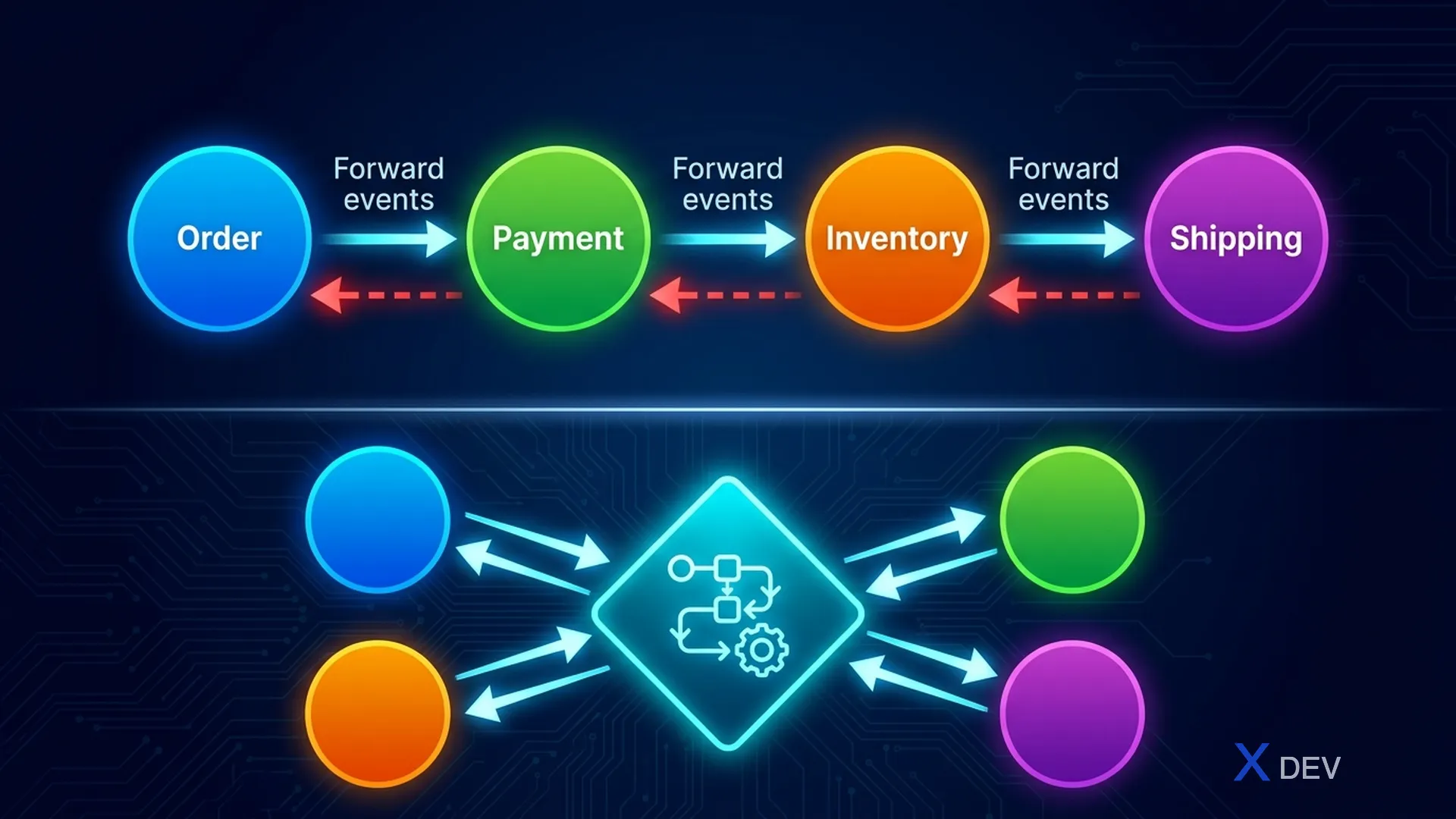
Saga = chuỗi local transactions, mỗi transaction update 1 service. Nếu một transaction fail, các compensating transactions undo các thay đổi trước đó.
2.1 Choreography-based Saga
Mỗi service publish event → service tiếp theo lắng nghe và hành động:
Order Service         Payment Service       Inventory Service
     │                      │                      │
     │──OrderCreated───────►│                      │
     │                      │──PaymentProcessed───►│
     │                      │                      │──InventoryReserved──►
     │                      │                      │
     │ (nếu Inventory fail)                        │
     │                      │◄──InventoryFailed────│
     │◄──PaymentRefunded────│                      │
     │──OrderCancelled      │                      │
Ưu điểm: Simple, loosely coupled, no central coordinator Nhược điểm: Hard to track overall flow, cyclic dependencies possible
2.2 Orchestration-based Saga
Saga Orchestrator điều phối toàn bộ flow:
                    ┌─────────────────┐
                    │ Order Saga      │
                    │ Orchestrator    │
                    └──┬──┬──┬───────┘
                       │  │  │
            ┌──────────┘  │  └──────────┐
            ▼             ▼             ▼
      ┌──────────┐ ┌──────────┐ ┌──────────┐
      │ Payment  │ │Inventory │ │ Shipping │
      │ Service  │ │ Service  │ │ Service  │
      └──────────┘ └──────────┘ └──────────┘

Orchestrator:
1. Create Order (PENDING)
2. Command: ProcessPayment → Payment Service
3. If success: Command: ReserveInventory → Inventory Service
4. If success: Command: CreateShipment → Shipping Service
5. If any fail: Compensate previous steps in reverse
Ưu điểm: Clear flow, easy to understand, centralized error handling Nhược điểm: Orchestrator can become bottleneck, single point of failure
2.3 Khi nào dùng cái gì?
| Criteria | Choreography | Orchestration |
|---|---|---|
| Complexity | 2-3 steps | 4+ steps |
| Visibility | Khó track | Rõ ràng |
| Coupling | Loose | Medium (to orchestrator) |
| Error handling | Distributed | Centralized |
3. Compensating Transactions
Compensating transaction = "undo" cho business transaction (không phải DB rollback):
Forward:                  Compensating:
CreateOrder         →     CancelOrder
ProcessPayment      →     RefundPayment
ReserveInventory    →     ReleaseInventory
CreateShipment      →     CancelShipment
Lưu ý: Compensating transaction phải idempotent — gọi nhiều lần cho cùng kết quả.
4. Idempotency — Xử lý Duplicate Messages
Trong distributed system, message có thể gửi nhiều lần (at-least-once delivery). Service phải xử lý duplicate:
// Idempotent payment processing
async function processPayment(command) {
  // Check idempotency key
  const existing = await db.findPayment(command.idempotencyKey);
  if (existing) return existing; // Already processed

  // Process payment
  const result = await stripe.charge(command.amount);
  await db.savePayment({
    idempotencyKey: command.idempotencyKey,
    ...result
  });
  return result;
}
5. Hands-on: E-Commerce Order Saga
Create Order Saga (Orchestration):

Step 1: Order Service   → CreateOrder(PENDING)
Step 2: Payment Service → ChargeCustomer(orderId, amount)
  ✅ → Step 3
  ❌ → Compensate: CancelOrder → DONE (Order: PAYMENT_FAILED)

Step 3: Inventory Service → ReserveItems(orderId, items)
  ✅ → Step 4
  ❌ → Compensate: RefundPayment → CancelOrder → DONE (Order: OUT_OF_STOCK)

Step 4: Order Service → ConfirmOrder(orderId)
  ✅ → DONE (Order: CONFIRMED)

Step 5 (async): Notification Service → SendConfirmationEmail
Tóm tắt
- 2PC không phù hợp cho Microservices — quá chậm và fragile
- Saga Pattern = chuỗi local transactions + compensating transactions
- Choreography: simple flows (2-3 steps), loose coupling
- Orchestration: complex flows (4+ steps), clear visibility
- Idempotency là bắt buộc — luôn handle duplicate messages
Bài tiếp theo: Bài 9: Event Sourcing & CQRS — Khi nào cần, khi nào không?