Giới thiệu
Event Sourcing và CQRS là hai pattern mạnh mẽ nhưng thường bị lạm dụng. Bài này giúp bạn hiểu bản chất, lợi ích thực sự, và quan trọng nhất — khi nào KHÔNG nên dùng.
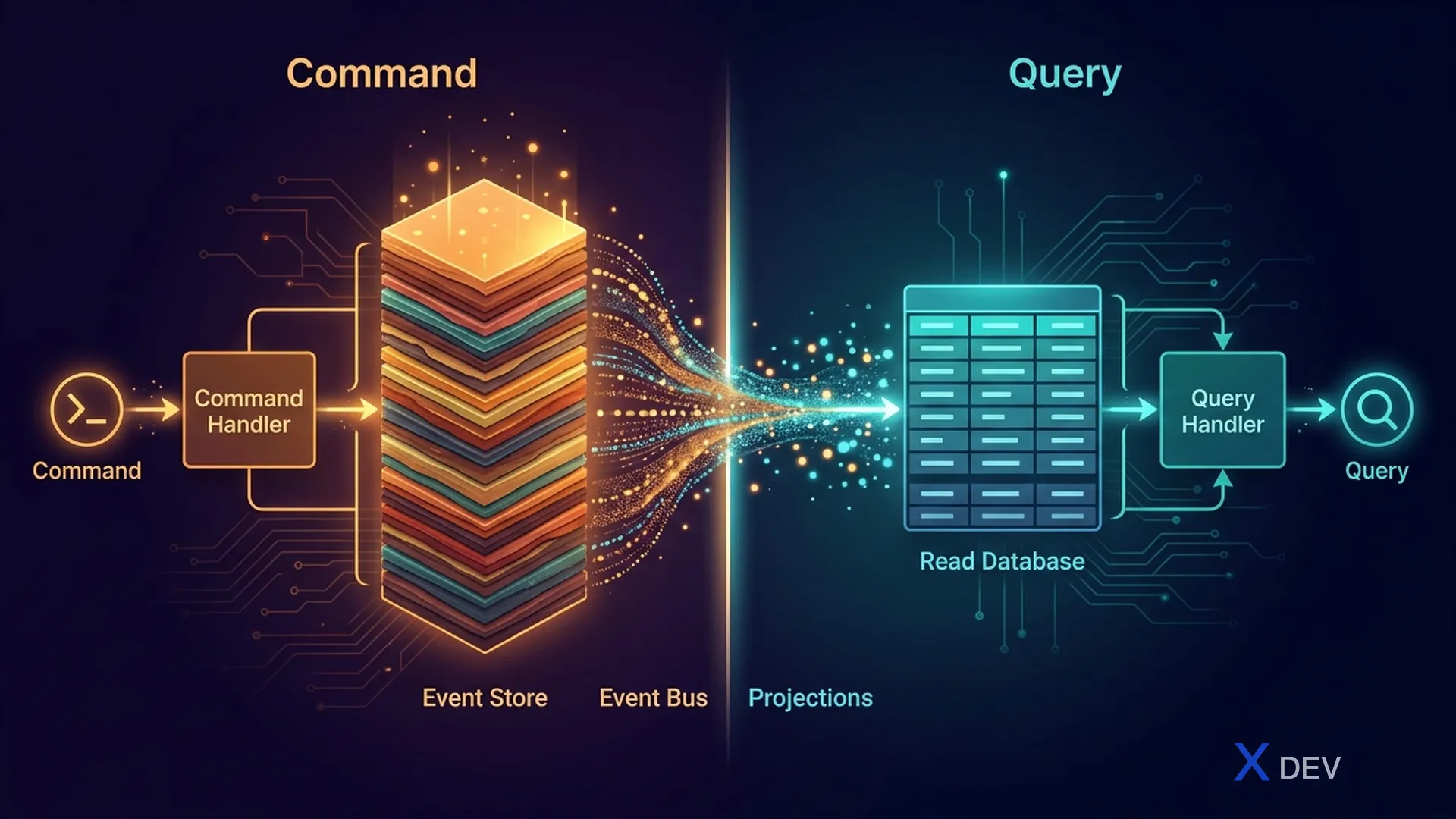
1. Event Sourcing
1.1 Ý tưởng cốt lõi
Thay vì lưu trạng thái hiện tại, lưu chuỗi sự kiện đã xảy ra:
Traditional (State-based):
┌─────────────────────────┐
│ orders table            │
│ id: 123                 │
│ status: SHIPPED   ← chỉ biết trạng thái hiện tại
│ total: 500.000         │
└─────────────────────────┘

Event Sourcing:
┌─────────────────────────────────────┐
│ Event Store (Order #123)            │
│ 1. OrderCreated    {items, total}   │
│ 2. PaymentReceived {amount}         │
│ 3. ItemRemoved     {itemId}   ← biết toàn bộ lịch sử
│ 4. OrderConfirmed  {}               │
│ 5. OrderShipped    {trackingId}     │
└─────────────────────────────────────┘

State = replay(events) → current state
1.2 Lợi ích
- Complete audit trail: biết chính xác ai làm gì, khi nào
- Time travel: rebuild state tại bất kỳ thời điểm nào
- Debug: replay events để reproduce bugs
- Analytics: analyze event patterns
1.3 Nhược điểm
- Complexity: cần event store, projections, snapshots
- Eventual consistency: read model không real-time
- Schema evolution: thay đổi event schema rất khó
- Query khó: không thể SELECT * FROM orders WHERE status = 'SHIPPED'
2. CQRS (Command Query Responsibility Segregation)
2.1 Tách Read và Write
Traditional:
┌──────────┐     ┌──────────┐
│  Client  │────►│ Service  │────► Database
│          │◄────│(CRUD all)│◄──── (1 model)
└──────────┘     └──────────┘

CQRS:
                 ┌──────────────┐     ┌────────────┐
           ────► │ Command Side │────►│ Write DB   │
┌──────────┐     │ (Create,     │     │ (optimized │
│  Client  │     │  Update)     │     │  for write)│
└──────────┘     └──────────────┘     └─────┬──────┘
           ────► ┌──────────────┐           │ Events
                 │ Query Side   │     ┌─────▼──────┐
           ◄──── │ (Read,       │◄────│ Read DB    │
                 │  Search)     │     │ (optimized │
                 └──────────────┘     │  for read) │
                                      └────────────┘
2.2 Khi nào CQRS có giá trị?
- Read/Write ratio rất chênh lệch (90% read, 10% write)
- Read model cần format khác write model (denormalized views)
- Cần scale read/write independently (add read replicas)
- Complex queries cần optimized read models (Elasticsearch, materialized views)
3. Decision Framework
3.1 Khi nào DÙNG Event Sourcing + CQRS?
✅ Financial systems (cần audit trail) ✅ Order processing (trạng thái phức tạp, cần history) ✅ Collaborative editing (conflict resolution) ✅ Regulatory compliance (cần prove what happened)
3.2 Khi nào KHÔNG DÙNG?
❌ Simple CRUD (blog, user profile) → overkill ❌ Team nhỏ, chưa có experience → learning curve quá cao ❌ Không cần audit trail hay time travel ❌ Real-time consistency là bắt buộc
3.3 Có thể dùng CQRS KHÔNG CẦN Event Sourcing
CQRS without Event Sourcing (pragmatic approach):

Write Side: PostgreSQL (normalized)
  → On write: publish event to Kafka

Read Side: Elasticsearch (denormalized)
  → Consumer: listen events → update search index

Đơn giản hơn nhiều, vẫn có lợi ích tách read/write.
4. Áp dụng cho E-Commerce
Product Service: CQRS (no Event Sourcing)
  Write: PostgreSQL (products table)
  Read:  Elasticsearch (search index, facets)
  Sync:  ProductUpdated event → ES consumer

Order Service: Event Sourcing + CQRS (trạng thái phức tạp)
  Event Store: PostgreSQL (events table)
  Read Model: PostgreSQL (materialized orders view)

Cart Service: Simple CRUD (Redis)
  Không cần CQRS — read/write model giống nhau

User Service: Simple CRUD (PostgreSQL)
  Không cần CQRS — straightforward CRUD
Tóm tắt
| Pattern | Complexity | Khi nào dùng | Khi nào tránh |
|---|---|---|---|
| Simple CRUD | Low | Most services | High-traffic reads |
| CQRS only | Medium | Tách read/write scale | Simple domains |
| Event Sourcing | High | Audit trail, time travel | Simple CRUD |
| ES + CQRS | Very High | Financial, ordering | Almost everything else |
Nguyên tắc vàng: Bắt đầu simple (CRUD). Chỉ thêm CQRS/ES khi có pain point cụ thể chứng minh cần thiết.
Bài tiếp theo: Bài 10: Micro Frontend là gì? — Lợi ích, Trade-offs & Decision Framework