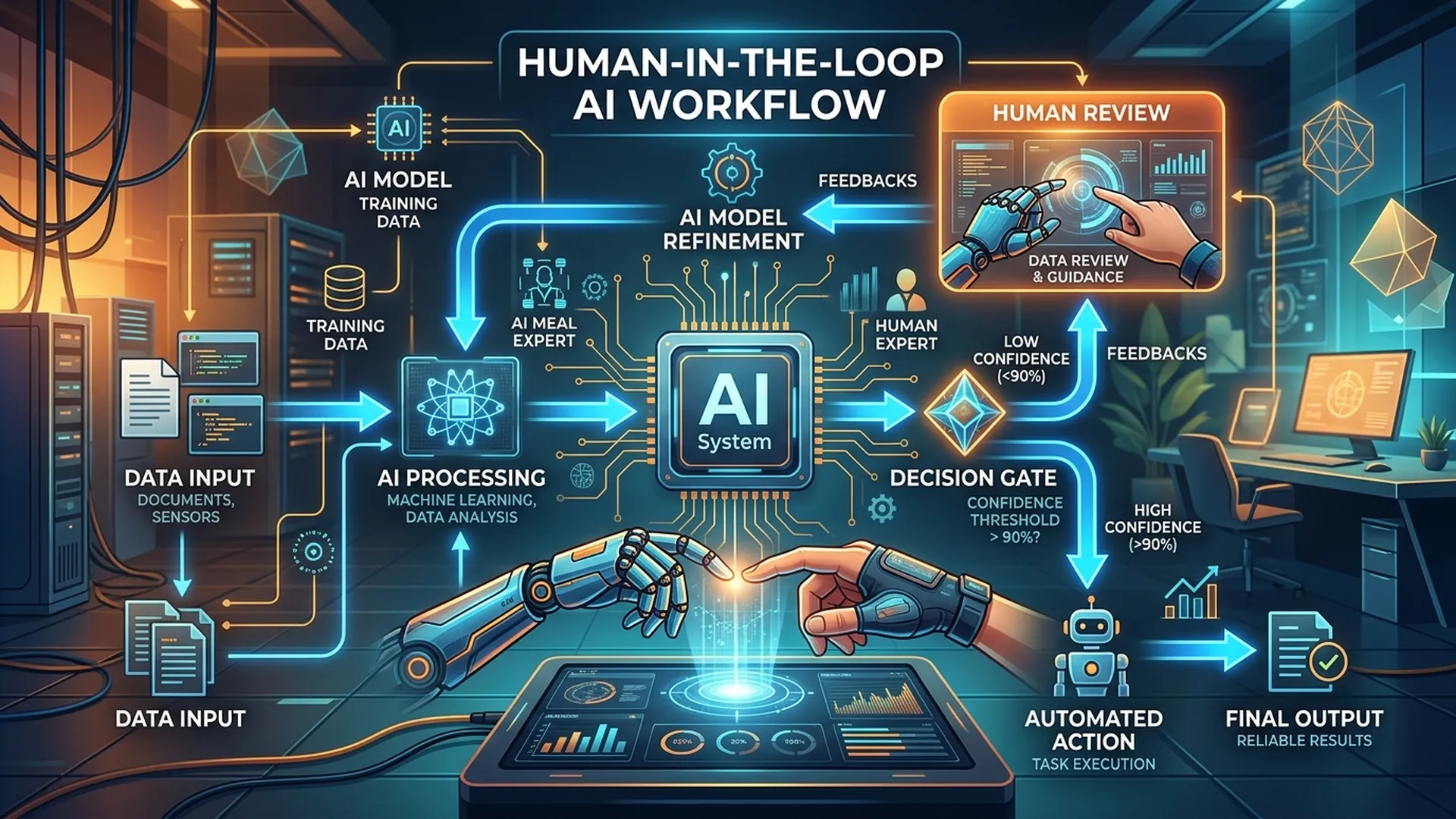
完璧な AI は存在しません。問いは「いつ AI が間違えるか」ではなく、「AI が間違えたときシステムはどう処理し、誰が責任を持つか」です。これが BA が解くべき HITL(Human-in-the-loop)設計課題です。
1. HITL とは何か、なぜ重要か
Human-in-the-loop とは、AI を完全自動で動かすのではなく、特定の意思決定ポイントで人間を組み込む設計パターンです。
HITL が必要な 3 つの理由:
- Confidence gap -> AI の確信度が自動判断に足りない
- High-stakes decision -> 誤りコストが高い(医療、金融、法務)
- Regulatory requirement -> 一部業界では human review が法的に必須(GDPR Article 22)
2. Escalation Trigger の設計
2.1 Trigger の種類
| Trigger Type | 例 | エスカレーション先 |
|---|---|---|
| Confidence threshold | Score < 0.80 | 通常レビューキュー |
| Sensitive category | 入力に機微語句を含む | Senior reviewer |
| High-value transaction | 金額 > 50 million | Manager approval |
| New entity | 初回顧客/初回ケース | Manual onboarding flow |
| Model uncertainty flag | AI が「不確実」と自己申告 | Specialist team |
| Time constraint | SLA 期限が近い | Urgent queue |
2.2 Threshold Calibration
threshold は BA 単独で決めるものではなく、stakeholder と較正します。
確認すべき質問:
1. 「AI が 10 件中 1 件間違うことを business は許容できますか?」
   -> Threshold >= 0.9

2. 「false negative(見逃し)のコストはいくらですか?」
   -> 高コストなら threshold を上げ、escalation を増やす

3. 「review agent は 1 日何件処理できますか?」
   -> 処理能力が threshold 設計に逆影響する
3. Escalation Flow Template
[AI Processing Complete]
         ↓
[Check Trigger Conditions]
    ↙         ↘
No trigger   Trigger detected
    ↓              ↓
[Auto Action]  [Determine Escalation Level]
               ├── Level 1: Standard Queue (SLA: 4h)
               ├── Level 2: Priority Queue (SLA: 1h)
               └── Level 3: Immediate Alert (SLA: 15min)
                        ↓
               [Route to Appropriate Reviewer]
               (by skill, availability, or round-robin)
                        ↓
               [Agent Review Interface]
               ├── AI recommendation + confidence を表示
               ├── 元入力/context を表示
               ├── Action: Approve / Reject / Edit / Escalate
               └── 必須: Comment(reject/edit 時)
                        ↓
               [Record Decision + Override Reason]
                        ↓
               [Feedback to Model (if applicable)]
4. Agent Review Interface の要件
BA は review UI 要件を具体化する必要があります。
## Agent Review Screen — AC

### Must Show:
- [ ] 元入力/request 全文(truncate しない)
- [ ] AI recommendation と confidence score
- [ ] AI explanation(XAI がある場合)
- [ ] 関連 context(顧客履歴、類似ケース)
- [ ] SLA countdown(期限まで残り時間)

### Actions Required:
- [ ] Approve(1-click、comment 任意)
- [ ] Reject(理由必須: dropdown + free text)
- [ ] AI 出力を編集して corrected として submit
- [ ] 上位レベルへ escalate(理由付き)

### Audit Trail (auto-captured):
- [ ] Agent ID + timestamp
- [ ] Action taken
- [ ] Comment/reason
- [ ] Review 所要時間(start -> submit)
5. SLA と Capacity Planning
BA は workload 見積もりと SLA 定義を行います。
SLA Matrix
| Escalation Level | Trigger | SLA | Breach Action |
|---|---|---|---|
| Standard | Confidence 0.7-0.8 | 4 business hours | Level 2 へ自動エスカレーション |
| Priority | Confidence < 0.7 or high-value | 1 hour | supervisor へ alert |
| Critical | Safety flag or regulatory | 15 minutes | on-call を呼び出し |
Capacity Formula
Daily escalation volume = Total requests x Escalation rate
Agent capacity needed = Daily escalation volume ÷ (cases/agent/day)

例:
- 1000 requests/day x 15% escalation rate = 150 cases
- Agent が 30 cases/day 処理
- 最低 5 agents(+20% buffer = 6 agents)
6. Feedback Loop の設計
escalation は終点ではなく、学習ループに接続すべきです。
| Decision | フィードバックの用途 |
|---|---|
| Agent が AI 推奨を承認 | 正例シグナルとして強化 |
| Agent が AI 出力を上書き | 負例シグナル + 修正ラベル |
| Agent が上位へエスカレーション | 再学習データ収集のフラグ |
| 同カテゴリで上書き多発 | model review/retraining を発火 |
BA が明示すべき項目: feedback 頻度、labeling プロセス、retraining の責任者。
まとめ
優れた HITL 設計があれば、人間の safety net により低め閾値でも早期リリースが可能です。逆に HITL 設計が不十分だと、agent burnout、SLA breach、最終的な AI 機能停止につながります。
BA は AI autonomy と human oversight のバランスを設計するアーキテクトです。