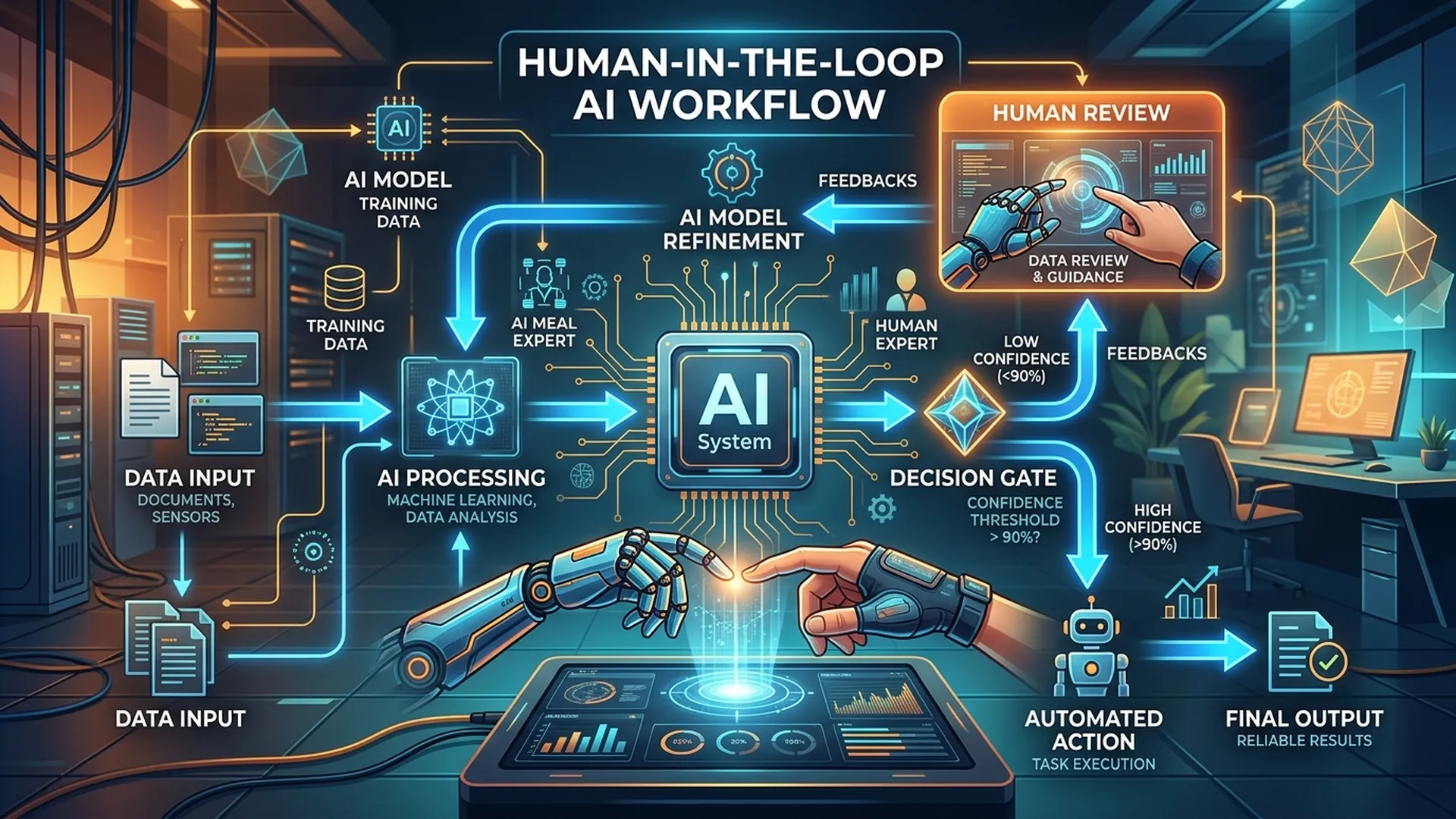
沒有任何 AI 是完美的。真正問題不是「AI 何時會錯」,而是「AI 出錯時系統怎麼處理、誰負責」。這就是 BA 必須解決的 HITL(Human-in-the-loop)設計問題。
1. 什麼是 HITL,為什麼重要?
Human-in-the-loop 是一種設計模式:在人機關鍵決策點引入人員,而不是讓 AI 全自動執行。
HITL 必要的 3 個原因:
- Confidence gap -> AI 信心不足,不適合自動決策
- High-stakes decision -> 錯誤代價過高(醫療、金融、法務)
- Regulatory requirement -> 部分產業法規要求強制 human review(GDPR Article 22)
2. Escalation Trigger 設計
2.1 Trigger 類型
| Trigger Type | 範例 | Escalation 到 |
|---|---|---|
| Confidence threshold | Score < 0.80 | 一般審核隊列 |
| Sensitive category | Input 含敏感詞 | Senior reviewer |
| High-value transaction | 金額 > 50 million | Manager approval |
| New entity | 首次 customer/case | Manual onboarding flow |
| Model uncertainty flag | AI 自我標記「不確定」 | Specialist team |
| Time constraint | SLA 快到期 | Urgent queue |
2.2 Threshold Calibration
BA 不應單獨決定 threshold,必須與 stakeholder 校準:
應詢問的問題:
1.「如果 AI 每 10 件錯 1 件,business 能接受嗎?」
   -> Threshold >= 0.9

2.「false negative(漏判)的成本是多少?」
   -> 若成本高,threshold 要更高,接受更多 escalation

3.「agent review 每天能處理幾件?」
   -> capacity 會反向影響 threshold 設定
3. Escalation Flow Template
[AI Processing Complete]
         ↓
[Check Trigger Conditions]
    ↙         ↘
No trigger   Trigger detected
    ↓              ↓
[Auto Action]  [Determine Escalation Level]
               ├── Level 1: Standard Queue (SLA: 4h)
               ├── Level 2: Priority Queue (SLA: 1h)
               └── Level 3: Immediate Alert (SLA: 15min)
                        ↓
               [Route to Appropriate Reviewer]
               (by skill, availability, or round-robin)
                        ↓
               [Agent Review Interface]
               ├── 顯示 AI recommendation + confidence
               ├── 顯示原始 input/context
               ├── Action: Approve / Reject / Edit / Escalate
               └── Mandatory: Comment(若 reject/edit)
                        ↓
               [Record Decision + Override Reason]
                        ↓
               [Feedback to Model (if applicable)]
4. Agent Review Interface Requirements
BA 必須明確規格 agent review UI:
## Agent Review Screen — AC

### Must Show:
- [ ] 完整 original input/request(不可 truncate)
- [ ] AI recommendation 與 confidence score
- [ ] AI explanation(若 model 支援 XAI)
- [ ] Relevant context(customer history、similar cases)
- [ ] SLA countdown(deadline 前剩餘時間)

### Actions Required:
- [ ] Approve(1-click,可選 comment)
- [ ] Reject(mandatory reason:dropdown + free text)
- [ ] Edit AI output 並 submit corrected 結果
- [ ] Escalate to higher level 並填寫 reason

### Audit Trail (auto-captured):
- [ ] Agent ID + timestamp
- [ ] Action taken
- [ ] Comment/reason
- [ ] Review 花費時間(start -> submit)
5. SLA 與 Capacity Planning
BA 需要估算工作量並定義 SLA:
SLA Matrix
| Escalation Level | Trigger | SLA | Breach Action |
|---|---|---|---|
| Standard | Confidence 0.7-0.8 | 4 business hours | 自動升級到 Level 2 |
| Priority | Confidence < 0.7 or high-value | 1 hour | 通知 supervisor |
| Critical | Safety flag or regulatory | 15 minutes | 呼叫 on-call |
Capacity Formula
Daily escalation volume = Total requests x Escalation rate
Agent capacity needed = Daily escalation volume ÷ (cases/agent/day)

範例:
- 1000 requests/day x 15% escalation rate = 150 cases
- 每位 agent 可處理 30 cases/day
- 至少需要 5 位(加 20% buffer = 6 位)
6. Feedback Loop 設計
Escalation 不是終點,必須形成 feedback loop:
| Decision | Feedback 用途 |
|---|---|
| Agent approves AI recommendation | 正向訊號,強化 model |
| Agent overrides AI output | 負向訊號 + 修正 label |
| Agent escalates higher | 標記為 retraining data 收集目標 |
| 同類別多次 override | 觸發 model review/retraining |
**BA 必須規範:**feedback 頻率、labeling 流程、retraining trigger 責任人。
結論
良好的 HITL 設計能讓 AI 在較低 threshold 也能較早上線,因為有人類 safety net。反之,HITL 設計不佳會導致 agent burnout、SLA breach,最後因「不可信」而停用 AI 功能。
BA 是平衡 AI autonomy 與 human oversight 的架構設計者。