Giới thiệu
FinTech (Financial Technology) đã thay đổi hoàn toàn cách chúng ta tương tác với dịch vụ tài chính. Từ việc thanh toán bằng QR code tại quán cà phê đến vay tiền online trong 5 phút — tất cả đều được vận hành bởi các hệ thống FinTech phía sau.
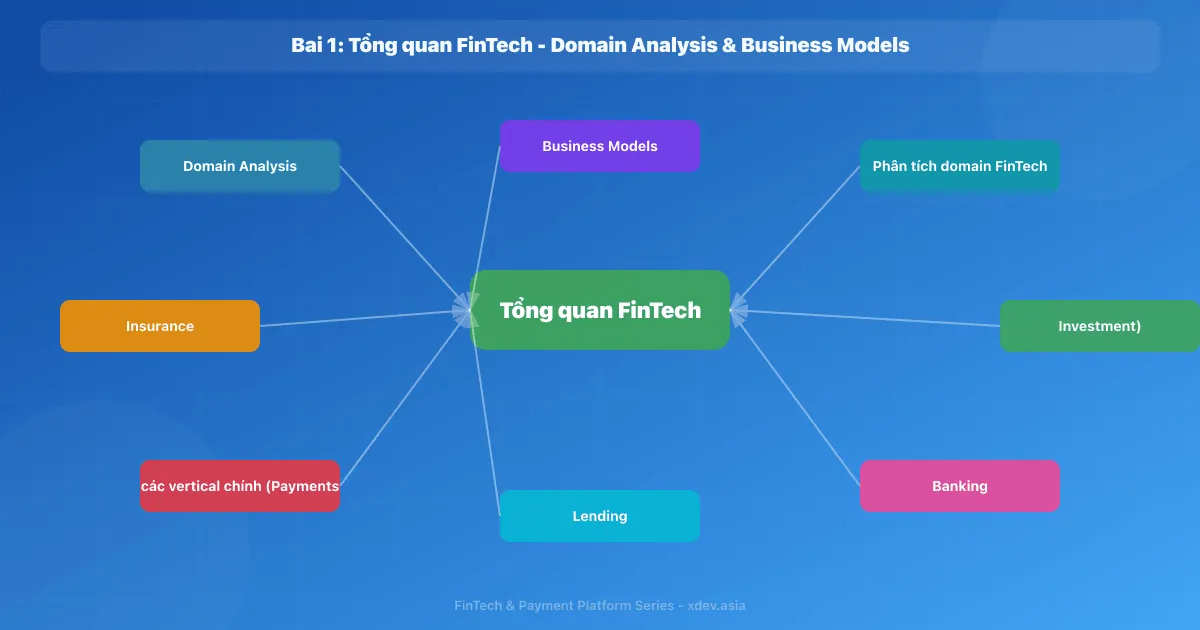
Trong bài học đầu tiên này, chúng ta sẽ phân tích toàn diện domain FinTech, hiểu các vertical chính, business models, và regulatory landscape — đặc biệt tại thị trường Việt Nam.
1. FinTech là gì?
1.1 Định nghĩa
FinTech là sự kết hợp giữa Finance và Technology — sử dụng công nghệ để cải thiện, tự động hóa, và disrupting các dịch vụ tài chính truyền thống.
FinTech = Financial Services + Modern Technology
        = Traditional Banking Problems + Software Solutions
1.2 Evolution of FinTech
| Giai đoạn | Thời kỳ | Đặc điểm |
|---|---|---|
| FinTech 1.0 | 1866-1967 | Telegraph, transatlantic cables, Telex |
| FinTech 2.0 | 1967-2008 | ATMs, SWIFT, online banking |
| FinTech 3.0 | 2008-2020 | Mobile payments, P2P lending, neobanks |
| FinTech 4.0 | 2020-nay | Embedded finance, DeFi, AI-powered, super apps |
1.3 Tại sao FinTech quan trọng cho Software Engineers?
- Thị trường khổng lồ: Global FinTech market đạt $340B vào 2026
- Thị trường Việt Nam: 50+ triệu người dùng ví điện tử, 80% dân số có smartphone
- Lương cao: FinTech engineers có mức lương top thị trường
- Technical challenges: High-throughput, consistency, security, compliance
2. Các Vertical chính trong FinTech
2.1 Payments — Thanh toán
Vertical lớn nhất và phổ biến nhất:
┌─────────────────────────────────────────────┐
│              PAYMENTS ECOSYSTEM              │
├─────────────┬──────────────┬────────────────┤
│   Online    │   In-store   │    P2P/P2M     │
│  Payments   │  (POS/QR)    │   Transfer     │
├─────────────┼──────────────┼────────────────┤
│ Payment     │ Merchant     │ Cross-border   │
│ Gateway     │ Acquiring    │ Remittance     │
├─────────────┼──────────────┼────────────────┤
│ E-wallet    │ Buy Now      │ Subscription   │
│             │ Pay Later    │ Billing        │
└─────────────┴──────────────┴────────────────┘
Ví dụ tại Việt Nam: VNPay, MoMo, ZaloPay, ShopeePay, VietQR
2.2 Lending — Cho vay
Consumer Lending          Business Lending
├── Personal loans        ├── SME loans
├── Buy Now Pay Later     ├── Invoice financing
├── Microloans            ├── Supply chain finance
└── Student loans         └── Revenue-based financing
Ví dụ: MoMo (cho vay tiêu dùng), Tima, Fiin Credit
2.3 Digital Banking — Ngân hàng số
- Neobanks: Ngân hàng hoàn toàn digital (không chi nhánh)
- Challenger banks: Ngân hàng traditional + digital transformation
- Banking-as-a-Service (BaaS): API-first banking infrastructure
Ví dụ tại VN: Timo, TNEX, Cake by VPBank
2.4 InsurTech — Bảo hiểm công nghệ
- On-demand insurance, parametric insurance
- Claims automation với AI
- Telematics-based pricing
2.5 WealthTech & Investment
- Robo-advisors, fractional investing
- Social trading, copy trading
- Crypto exchanges và DeFi
3. Business Models trong FinTech
3.1 Revenue Models
| Model | Mô tả | Ví dụ |
|---|---|---|
| Transaction fee | % hoặc fixed fee per transaction | Stripe (2.9% + $0.30) |
| Interchange fee | Fee từ card network | Visa, Mastercard |
| Subscription | Monthly/annual fee | Banking apps premium |
| Interest spread | Chênh lệch lãi suất | Lending platforms |
| FX markup | Spread trên tỷ giá | Wise, cross-border |
| Freemium | Free basic + paid premium | MoMo, ZaloPay |
| Data monetization | Analytics, insights | Credit scoring data |
3.2 Platform Business Model
┌──────────────────────────────────────────────┐
│              FINTECH PLATFORM                 │
│                                               │
│  ┌─────────┐    ┌──────────┐    ┌─────────┐ │
│  │Consumers│◄──►│ Platform │◄──►│Merchants│ │
│  │(Payers) │    │          │    │(Payees) │ │
│  └─────────┘    └────┬─────┘    └─────────┘ │
│                      │                        │
│              ┌───────┴───────┐                │
│              │  Value-added  │                │
│              │   Services    │                │
│              ├───────────────┤                │
│              │ Analytics     │                │
│              │ Lending       │                │
│              │ Insurance     │                │
│              │ Loyalty       │                │
│              └───────────────┘                │
└──────────────────────────────────────────────┘
4. FinTech Ecosystem tại Việt Nam
4.1 Các Player chính
┌─────────────────────────────────────────────────┐
│            VIETNAM FINTECH LANDSCAPE             │
├──────────────┬──────────────────────────────────┤
│ E-Wallets    │ MoMo, ZaloPay, ShopeePay, VNPay │
│ Payment GW   │ VNPay, OnePay, PayOS, 2C2P      │
│ Digital Bank │ Timo, TNEX, Cake, KakaoBank VN   │
│ Lending      │ MoMo, Tima, Fiin, Home Credit    │
│ QR Payment   │ VietQR (NAPAS), VNPay-QR         │
│ Remittance   │ Wise, Remitly, Ria               │
│ InsurTech    │ Papaya, Manulife (digital)        │
└──────────────┴──────────────────────────────────┘
4.2 Thống kê thị trường (2026)
- 55+ triệu người dùng ví điện tử
- VNPay: xử lý ~30 triệu giao dịch/ngày
- MoMo: 40+ triệu users, super app strategy
- VietQR: >500 triệu giao dịch/năm
- Digital payment: chiếm 45% tổng thanh toán
4.3 Hệ thống thanh toán quốc gia
┌─────────────────────────────────────────┐
│         NATIONAL PAYMENT SYSTEMS         │
├─────────────────────────────────────────┤
│                                          │
│  NAPAS (National Payment Corp of VN)     │
│  ├── Interbank transfer (IBFT)           │
│  ├── VietQR standard                     │
│  ├── Card switching network              │
│  └── Real-time gross settlement          │
│                                          │
│  SWIFT (International transfers)         │
│  ├── Cross-border payments               │
│  └── Correspondent banking               │
│                                          │
│  SBV (State Bank of Vietnam)             │
│  ├── Licensing & regulation              │
│  ├── Monetary policy                     │
│  └── Payment system oversight            │
│                                          │
└─────────────────────────────────────────┘
5. Regulatory Landscape
5.1 Quy định tại Việt Nam
| Quy định | Nội dung | Áp dụng cho |
|---|---|---|
| Nghị định 101/2012 | Thanh toán không dùng tiền mặt | Payment intermediaries |
| Thông tư 39/2014 | Hoạt động cung ứng dịch vụ trung gian thanh toán | E-wallets, payment gateways |
| Nghị định 35/2023 | Sửa đổi về thanh toán không dùng tiền mặt | All payment services |
| Luật Giao dịch điện tử 2023 | Chữ ký số, hợp đồng điện tử | Digital contracts |
| Sandbox FinTech | Regulatory sandbox cho FinTech | New FinTech products |
5.2 Quy định quốc tế
- PCI-DSS: Payment Card Industry Data Security Standard
- PSD2/PSD3: Payment Services Directive (EU)
- SOX: Sarbanes-Oxley Act (financial reporting)
- GDPR/PDPA: Data protection regulations
- Basel III: Banking capital requirements
6. Xu hướng FinTech 2026
6.1 Embedded Finance
Tích hợp dịch vụ tài chính vào các platform phi tài chính:
E-commerce ──► Embedded Payments + BNPL
Ride-hailing ──► Embedded Wallet + Insurance
SaaS ──► Embedded Billing + Lending
Social Media ──► Embedded Tipping + P2P Transfer
6.2 AI-Powered FinTech
- AI Credit Scoring: Alternative data, real-time assessment
- AI Fraud Detection: Behavioral biometrics, anomaly detection
- AI Customer Service: Conversational banking, AI advisors
- Generative AI: Automated financial reports, personalized advice
6.3 Open Banking & API Economy
┌──────────┐     API      ┌──────────┐
│   Bank   │◄────────────►│  FinTech │
│   Core   │              │   App    │
└──────────┘              └──────────┘
     │                         │
     └────────┬────────────────┘
              │
      ┌───────▼───────┐
      │  Open Banking  │
      │   Platform     │
      │  (API Gateway) │
      └───────────────┘
6.4 Real-time Payments
- Instant payment networks (VietQR, UPI, FedNow, PIX)
- ISO 20022 migration
- Request-to-Pay (R2P)
7. Technical Challenges trong FinTech
7.1 Các thách thức chính
| Challenge | Mô tả | Giải pháp |
|---|---|---|
| Consistency | Không được mất tiền | ACID, Saga, Idempotency |
| Availability | 99.99%+ uptime | Multi-region, failover |
| Throughput | Millions TPS peak | Horizontal scaling |
| Latency | < 100ms response | Caching, async processing |
| Security | PCI-DSS, encryption | HSM, tokenization, WAF |
| Compliance | Regulatory reporting | Audit trail, immutable logs |
| Reconciliation | Exact matching | Double-entry ledger |
7.2 FinTech System Characteristics
Financial System Requirements:
├── Correctness > Performance (money can't be lost)
├── Auditability (every transaction must be traceable)
├── Idempotency (duplicate requests must be safe)
├── Consistency (balances must always be correct)
├── Security (defense in depth)
└── Compliance (regulatory requirements must be met)
8. Roadmap của Series
8.1 Lộ trình học tập
Bài 1-3:   Foundation ──► Domain, Architecture, Compliance
Bài 4-7:   Payment    ──► Gateway, Processing, Multi-PSP
Bài 8-11:  Wallet     ──► E-Wallet, Ledger, Transactions
Bài 12-14: Risk       ──► Fraud Detection, AML/KYC
Bài 15-18: Banking    ──► Core Banking, Lending, Credit
Bài 19-21: Data       ──► Pipeline, Reporting, Analytics
Bài 22-25: Production ──► Security, HA, Performance, Cases
8.2 Kiến thức nền tảng cần có
- Hiểu biết cơ bản về hệ thống phân tán (distributed systems)
- Kinh nghiệm với ít nhất một backend framework (Spring Boot, Node.js, Go)
- Kiến thức cơ bản về database (SQL, transactions)
- Hiểu biết về REST API và message queues
Tổng kết
FinTech là một domain phức tạp, đòi hỏi sự kết hợp giữa kiến thức kỹ thuật sâu và hiểu biết về nghiệp vụ tài chính. Trong series này, chúng ta sẽ đi từ foundation đến production-ready, với focus vào thị trường Việt Nam và các tiêu chuẩn quốc tế.
Bài tiếp theo: Chúng ta sẽ thiết kế Platform Architecture tổng quan sử dụng Microservices và Domain-Driven Design — xác định các Bounded Contexts, service boundaries, và communication patterns cho FinTech Platform.