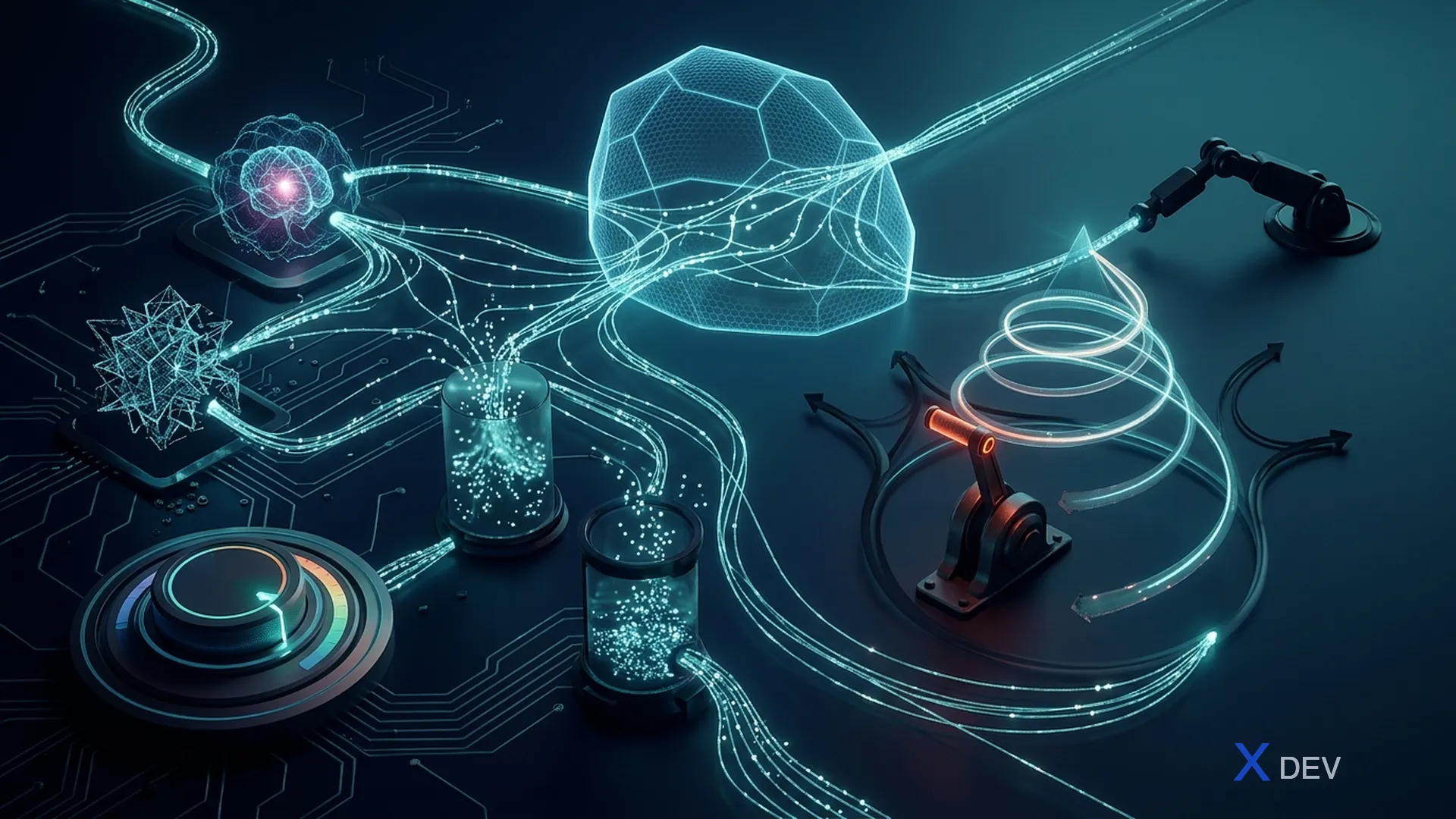
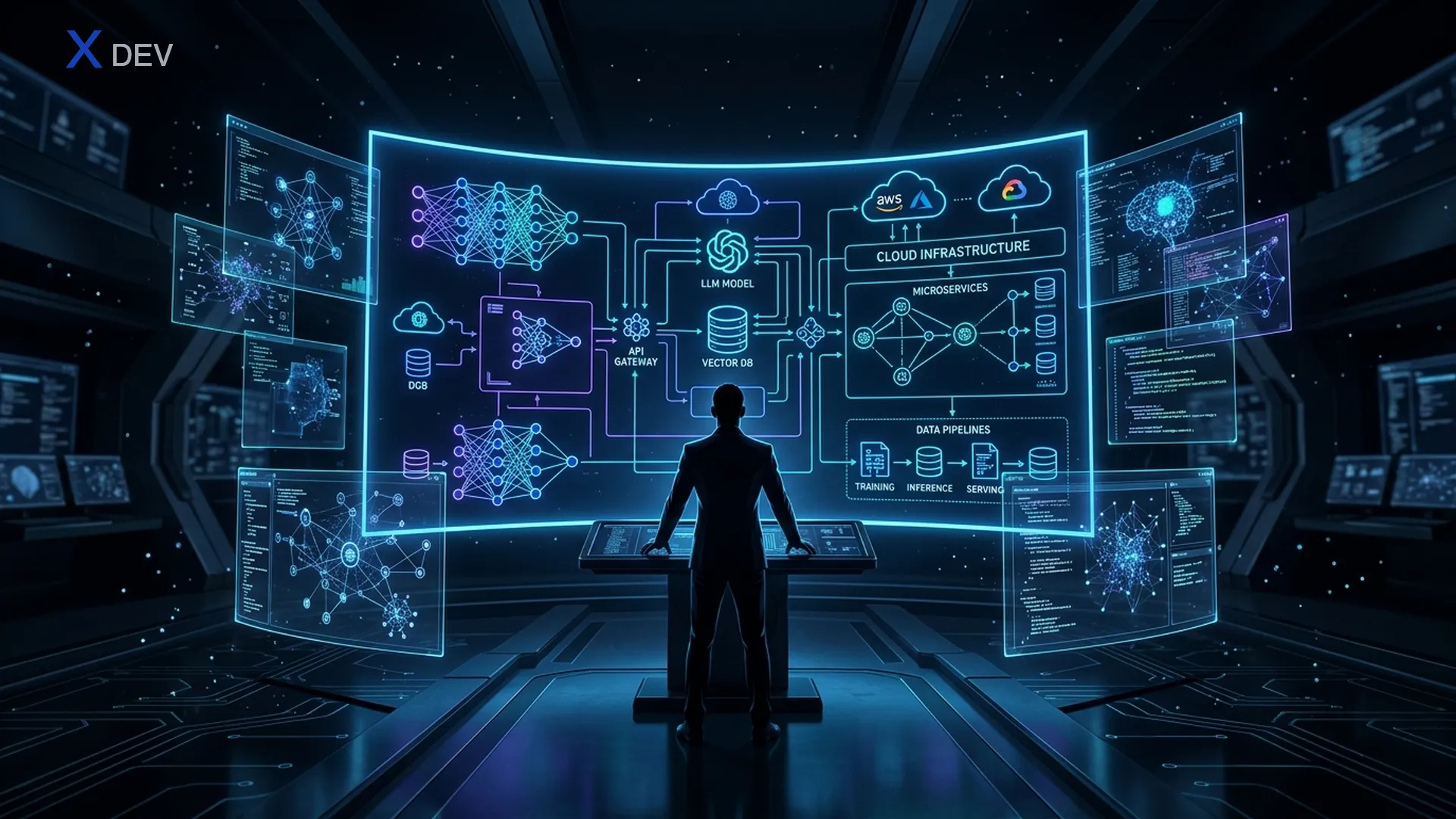
Trong vòng 2 năm qua, AI Solution Architect đã trở thành một trong những vị trí được săn đón nhất trong ngành công nghệ. Với sự bùng nổ của GenAI, LLM, và nhu cầu tích hợp AI vào mọi sản phẩm, các doanh nghiệp không chỉ cần người biết train model — họ cần người thiết kế toàn bộ hệ thống AI từ ý tưởng đến production.
Nhưng con đường đến vị trí này không đơn giản. Nó đòi hỏi sự kết hợp hiếm có giữa kỹ năng kỹ thuật sâu, tư duy hệ thống, và khả năng giao tiếp kinh doanh. Bài viết này chia sẻ lộ trình thực tế, không lý thuyết suông.
1. AI Solution Architect là ai?
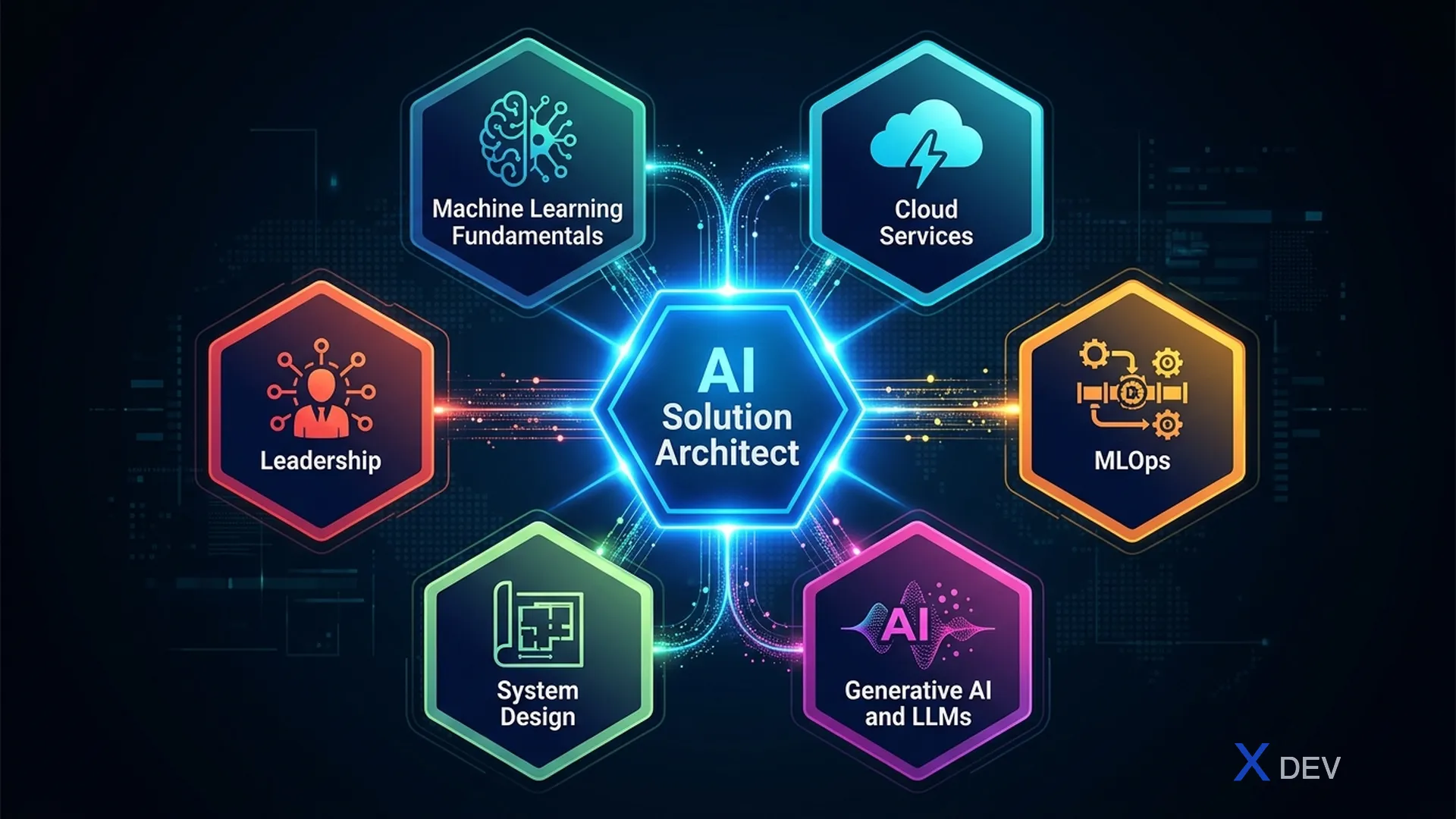
AI Solution Architect là người thiết kế kiến trúc tổng thể cho các giải pháp AI/ML trong doanh nghiệp. Họ là cầu nối giữa business stakeholders, data scientists, ML engineers, và platform teams.
Trách nhiệm chính
| Lĩnh vực | Công việc cụ thể |
|---|---|
| Discovery | Đánh giá bài toán kinh doanh, xác định có nên dùng AI không, ước lượng ROI |
| Architecture Design | Thiết kế pipeline end-to-end: data ingestion → feature engineering → training → serving → monitoring |
| Technology Selection | Chọn cloud services, frameworks, model types, vector databases, orchestration tools |
| Governance | Thiết lập MLOps, model registry, A/B testing, compliance (GDPR, AI Act) |
| Stakeholder Communication | Trình bày technical decisions cho C-level, training team, viết RFC/ADR |
So sánh với các vai trò khác
Một điều quan trọng cần hiểu ngay từ đầu: AI Solution Architect không thay thế Data Scientist hay ML Engineer — họ làm việc cùng nhau trong một tam giác cộng hưởng.
| Vai trò | Core Focus | Sản phẩm đầu ra | Horizon |
|---|---|---|---|
| Data Scientist | Nghiên cứu, thử nghiệm, prototyping | Trained model, research report, experiment results | 1-4 tuần |
| ML Engineer | Productionize models, build pipelines, API | Deployed endpoint, CI/CD pipeline, feature store | 1-3 tháng |
| AI Solution Architect | Thiết kế hệ thống, chọn công nghệ, bridge teams | Architecture blueprint, ADR, cost model | 3-12 tháng |
| Platform / Cloud Engineer | Infrastructure, K8s, security, networking | Kubernetes cluster, VPC, IAM policy | Ongoing |
Data Scientist chìm sâu vào modeling và experimentation — họ cần tự do để thử nghiệm. ML Engineer lo productionize và scale — họ cần reliability. AI Solution Architect nhìn bức tranh toàn cảnh — từ data strategy, model selection, infra design, đến deployment và cost governance. Không có team AI nào hoạt động tốt nếu thiếu vai trò này.
Khi nào doanh nghiệp cần AI Solution Architect?
Dấu hiệu nhận biết:
- Team Data Science xây được model nhưng không ai biết deploy lên production như thế nào
- Có nhiều AI initiatives nhưng mỗi team làm theo cách riêng, không có chuẩn chung
- Chi phí cloud AI vượt ngân sách mà không rõ tại sao
- Leadership muốn scale AI từ 1-2 projects lên toàn doanh nghiệp
- Bắt đầu gặp vấn đề về compliance, model bias, data governance
2. Tại sao vai trò này đang bùng nổ?
Thị trường 2025-2026
- 80% doanh nghiệp Fortune 500 đã có hoặc đang xây dựng đội AI (McKinsey 2025)
- Nhu cầu AI Architect tăng 340% từ 2023 đến 2026 trên LinkedIn
- GenAI tạo ra nhu cầu mới: RAG architecture, multi-agent systems, LLMOps, AI gateway
- 130,000+ vị trí AI architect/AI engineer mở trên toàn cầu (Indeed, Q1 2026)
- Tại Việt Nam: FPT, VNG, MoMo, MB Bank, TPBank, VinAI, VinBigdata đều đang tuyển mạnh
Tại sao thiếu người?
Đây là vị trí T-shaped cực kỳ khó kiếm: cần rộng (biết nhiều thứ) lẫn sâu (thành thạo vài mảng). Trong thực tế:
- Data Scientists giỏi model nhưng yếu về system design và cloud
- Backend Engineers giỏi system design nhưng không biết ML
- DevOps Engineers giỏi infra nhưng không hiểu ML workflow
- AI Architect cần cả ba — và thêm kỹ năng kinh doanh
Mức lương tham khảo (2026)
| Khu vực | Junior (0-2 năm) | Mid (3-5 năm) | Senior (5+ năm) |
|---|---|---|---|
| Việt Nam | $25K–40K/năm | $45K–70K/năm | $80K–120K+/năm |
| Singapore | $80K–110K/năm | $120K–160K/năm | $180K–250K+/năm |
| US (remote) | $130K–170K/năm | $180K–240K/năm | $250K–350K+/năm |
Lưu ý: Mức lương phụ thuộc vào company, industry (fintech/healthtech trả cao hơn), và portfolio. Kinh nghiệm thực tế với production AI systems quan trọng hơn số năm kinh nghiệm.
3. Lộ trình 4 giai đoạn
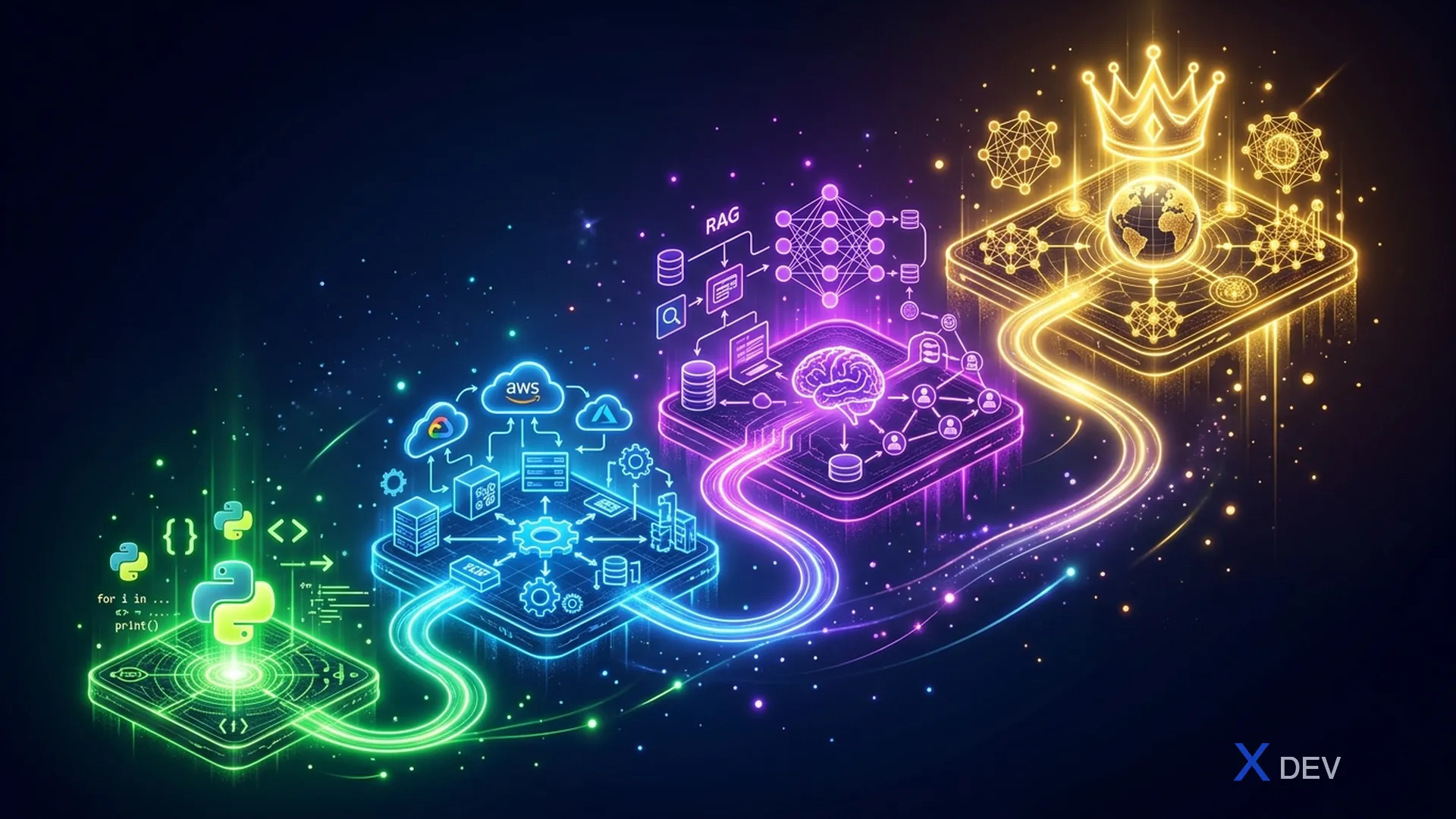
Giai đoạn 1: Nền tảng kỹ thuật (6–12 tháng)
Bạn không cần PhD, nhưng cần nền tảng vững để không bị lung lay mỗi khi công nghệ thay đổi.
Lập trình & Software Engineering
- Python thành thạo: list comprehension, generators, decorators, async/await, type hints
- Design patterns: Factory, Observer, Strategy, Repository — không phải thuộc lòng mà phải biết khi nào dùng
- Clean architecture, separation of concerns, dependency injection
- REST API với FastAPI hoặc Flask, gRPC cho internal services
- Git flow, conventional commits, code review etiquette
- Docker: Dockerfile tối ưu, multi-stage builds, .dockerignore
- Testing: unit tests với pytest, mocking, integration tests
Mốc đánh giá: Bạn có thể xây một REST API Python đầy đủ (auth, CRUD, tests, Docker) trong 1 ngày không?
Machine Learning cơ bản
Đừng chỉ dùng scikit-learn như một black box. Cần hiểu bên trong:
- Supervised Learning: Linear/Logistic Regression (hiểu được tại sao loss function là cross-entropy), Decision Trees (biết information gain là gì), Ensemble methods (Random Forest, Gradient Boosting — hiểu tại sao boosting tốt hơn bagging cho nhiều bài toán)
- Unsupervised Learning: K-Means (biết inertia và elbow method), PCA (hiểu eigenvalues và variance explained), DBSCAN (biết epsilon và min_samples ảnh hưởng thế nào)
- Model evaluation: precision/recall/F1 cho imbalanced data, AUC-ROC vs AUC-PR, RMSE vs MAE — biết khi nào dùng metric nào
- Feature engineering: scaling (standard vs minmax — khi nào dùng cái nào), encoding (one-hot vs ordinal vs target encoding — trade-offs), feature selection (correlation analysis, mutual information, recursive feature elimination)
- Validation: train/validation/test split đúng cách, cross-validation, stratified sampling, time-series split (không dùng random shuffle cho time series!)
- Overfitting/Underfitting: biết đọc learning curves và diagnose vấn đề
Deep Learning
- Neural networks: forward pass, backpropagation, gradient flow — không cần đạo hàm bằng tay nhưng phải hiểu tại sao vanishing gradient xảy ra
- CNNs: convolution, pooling, receptive field — tại sao tốt hơn MLP cho images
- RNNs, LSTMs: sequence modeling, forget gate — tại sao LSTM giải quyết được vanishing gradient hơn vanilla RNN
- Transformers: đây là bắt buộc năm 2026. Self-attention mechanism, multi-head attention, positional encoding, why transformers parallelizable hơn RNN
- Transfer learning: feature extraction vs fine-tuning — biết khi nào unfreeze bao nhiêu layers
- Frameworks: PyTorch (ưu tiên học trước — production-friendly, research standard), TensorFlow/Keras (vẫn cần biết vì nhiều legacy system)
Toán & Thống kê
- Linear algebra: matrix multiplication (hiểu được attention là matrix multiplication), SVD (nền tảng của PCA và matrix factorization), eigenvalues (nền tảng của PCA)
- Calculus: chain rule (backpropagation), gradient là gì, Jacobian matrix
- Probability & Statistics: Bayes theorem, MLE vs MAP, common distributions (Normal, Bernoulli, Poisson — biết ứng dụng thực tế), hypothesis testing (p-value, Type I/II errors — quan trọng cho A/B testing)
- Optimization: SGD, Adam, learning rate scheduling — biết tại sao Adam thường hội tụ nhanh hơn SGD
Tài nguyên đề xuất:
- fast.ai — Practical Deep Learning, miễn phí và rất thực chiến
- Andrew Ng's ML Specialization trên Coursera
- Designing Machine Learning Systems — Chip Huyen (đọc song song với học)
- The Elements of Statistical Learning (miễn phí PDF) cho phần toán
Giai đoạn 2: Cloud + MLOps + System Design (6–12 tháng)
Đây là giai đoạn tạo sự khác biệt giữa Data Scientist và Solution Architect. Nhiều người bỏ qua giai đoạn này vì "chỉ muốn làm AI" — đó là sai lầm lớn nhất.
Cloud AI Services (chọn 1–2 cloud chính, học sâu)
AWS — thị phần lớn nhất:
- SageMaker: Training Jobs (pre-built & custom containers), Endpoints (real-time & async), Pipelines (MLOps), Feature Store (online/offline), Model Registry, Clarify (bias detection)
- Bedrock: Foundation Model API, Knowledge Bases (managed RAG), Agents (function calling), Guardrails (safety)
- Infrastructure: Step Functions cho ML orchestration, Lambda cho lightweight inference, ECS/EKS cho containerized workloads, S3 cho data lake
- Networking: VPC design cho ML workloads, VPC Endpoints cho private access, PrivateLink
Google Cloud — tốt nhất cho ML:
- Vertex AI: AutoML (tabular/image/text/video), Custom Training (custom containers, distributed), Pipelines (Kubeflow-based), Model Registry, Experiments, TensorBoard, Feature Store, Matching Engine (vector search)
- BigQuery ML: CREATE MODEL SQL syntax, supported algorithms (logistic_reg, kmeans, arima_plus, boosted_tree, neural_net)
- Data: Dataflow (Apache Beam — batch/streaming), Pub/Sub, Dataproc (Spark), Cloud Composer (Airflow)
Azure — phổ biến trong enterprise:
- Azure ML Studio: designer, automated ML, pipelines, model registry
- Azure OpenAI Service: GPT-4o, DALL-E, Whisper — enterprise-grade
- Azure AI Search: hybrid search (vector + keyword) — phổ biến cho RAG
- Cognitive Services: Vision, Speech, Language, Translator
MLOps
MLOps là DNA của một AI Architect. Không biết MLOps = không phải architect.
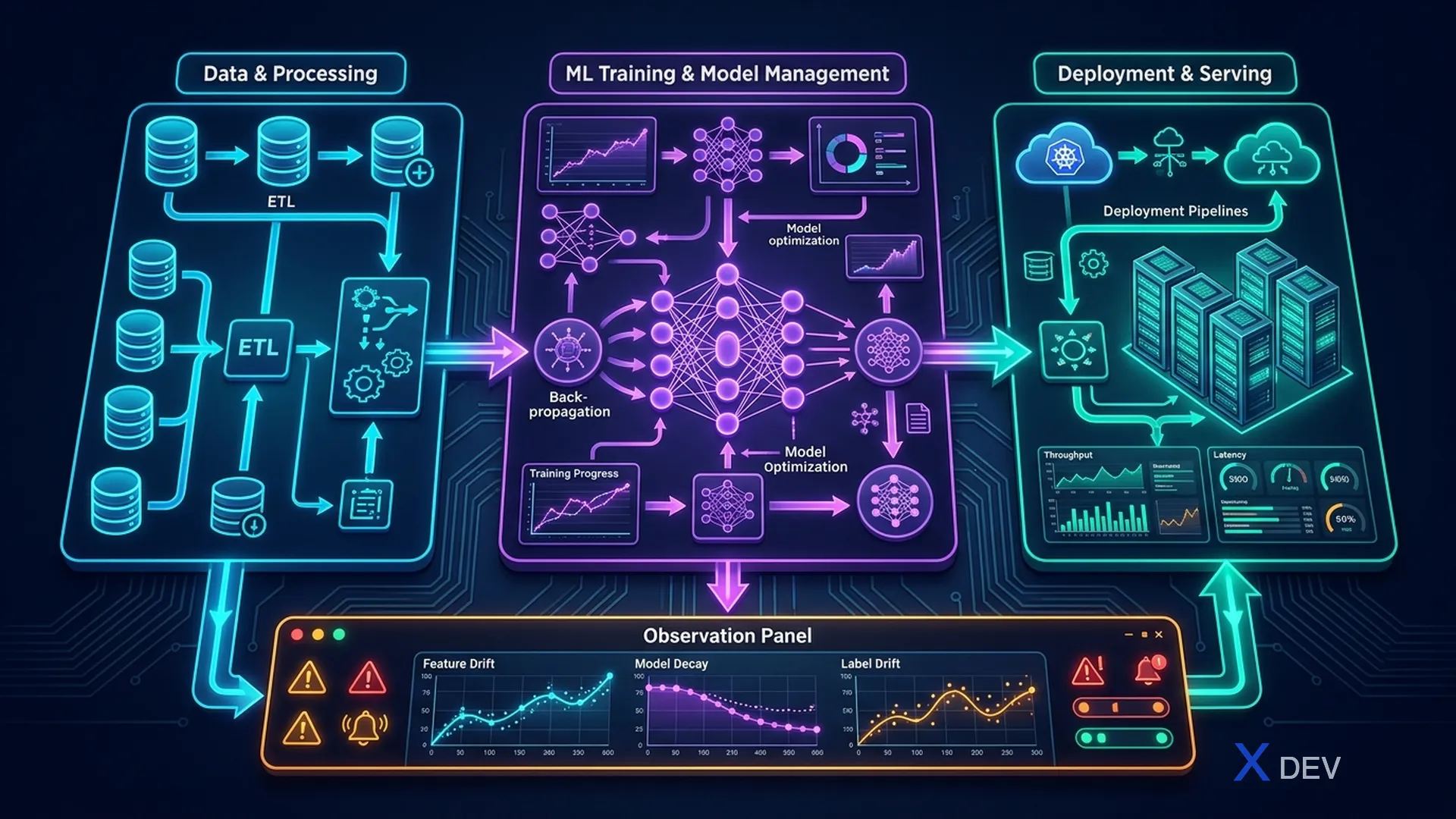
Data Pipeline:
- Ingestion: cách ingest từ databases, APIs, streaming sources vào data lake
- Validation: Great Expectations, TFX ExampleValidator — check schema, distributions, missing values tự động
- Transform: tại sao dùng tf.Transform thay vì pandas (saved transform graph cho consistency)
- Feature Store: online serving (low-latency Redis-backed) vs offline serving (big query/S3-backed)
Model Pipeline:
- Experiment tracking: MLflow Tracking, W&B Runs — log hyperparameters, metrics, artifacts mỗi run
- Versioning: DVC cho data versioning, Git cho code, MLflow Model Registry cho model versioning
- Hyperparameter tuning: Optuna, Ray Tune, Vertex AI Vizier — Bayesian optimization hiệu quả hơn grid search
- Evaluation: TFMA (TensorFlow Model Analysis) cho sliced evaluation (model performance theo từng segment)
Deployment Pipeline:
- Serving patterns: real-time endpoint vs async endpoint vs batch prediction — khi nào dùng cái nào
- Blue-Green deployment: zero-downtime deployment bằng cách switch traffic giữa hai environments
- Canary deployment: gradually roll từ 0% → 5% → 25% → 100% traffic sang model mới
- Shadow mode: run model mới song song với model cũ, compare predictions mà không ảnh hưởng users
Observability:
- Data drift: monitor input feature distributions (PSI — Population Stability Index, KS test)
- Prediction drift: monitor output label distributions thay đổi theo thời gian
- Model performance: ground truth delay là bình thường — cần strategy để collect delayed labels
- Infrastructure: latency percentiles (p50/p95/p99), throughput, error rate, GPU utilization
Tools cụ thể:
- MLflow — open source, dễ dùng, self-hosted hoặc managed (Databricks)
- Weights & Biases (W&B) — tốt nhất cho experiment tracking visualization
- Kubeflow Pipelines — Kubernetes-native, steep learning curve nhưng flexible
- Airflow — mature, huge ecosystem, dùng khi đội đã có Airflow skills
- Evidently AI — data drift monitoring, dễ tích hợp
- Grafana + Prometheus — infrastructure monitoring
System Design for AI
Đây là core skill của architect. Bạn phải trả lời được các câu hỏi sau trong 5 phút:
Serving architecture decisions:
- Real-time vs Batch: latency requirement < 200ms → real-time; can wait 1+ hours → batch; 1-10 minutes → async/streaming
- Model size vs latency: large model (7B+ params) on GPU = fast but $2-5/hour; small distilled model on CPU = slower but $0.05/hour
- Caching: nên cache predictions cho high-frequency identical inputs (e.g., product descriptions rarely change)
Data architecture decisions:
- Lambda architecture (batch + streaming) vs Kappa architecture (pure streaming) — trade-offs về complexity vs latency
- Online vs Offline features: user's real-time clickstream (online) vs user's 30-day purchase history (offline/precomputed)
- Data versioning strategy: snapshot vs event sourcing vs time-travel queries (Delta Lake/Iceberg)
Scalability decisions:
- Horizontal scaling của inference: stateless serving → dễ scale với K8s HPA
- GPU sharing: time-slicing vs MIG (Multi-Instance GPU) vs multi-process service
- Model compression trước khi deploy: quantization (INT8 giảm 4x memory), pruning, knowledge distillation
Sách bắt buộc:
- Designing Machine Learning Systems — Chip Huyen (đây là bible của nghề)
- Machine Learning Engineering — Andriy Burkov
- Fundamentals of Data Engineering — Joe Reis & Matt Housley
Giai đoạn 3: GenAI Architecture & Chuyên sâu (6–12 tháng)
Năm 2026, AI Solution Architect phải thành thạo GenAI architecture. Đây không còn là "nice to have."
LLM & Foundation Models
Hiểu đủ sâu để make informed decisions:
- Transformer architecture: self-attention O(n²) complexity là tại sao context window quan trọng và đắt, positional encoding (RoPE, ALiBi), KV cache là gì và tại sao quan trọng cho inference efficiency
- Model tiers (2026):
- Frontier: GPT-4.5, Claude 4 Opus, Gemini 2.5 Ultra — dùng cho complex reasoning, high-stakes tasks
- Workhorse: Claude 4 Sonnet, GPT-4o, Gemini 2.5 Pro — best price-performance cho 80% use cases
- Fast/Cheap: Claude 4 Haiku, Gemini 2.5 Flash, GPT-4o mini — simple classification, extraction, formatting
- Open Source: Llama 4, Qwen 3, Mistral Large — self-host để control cost và privacy
- Tokenization: cần biết token count ảnh hưởng thế nào đến cost (GPT-4o = $2.5/M input tokens, Gemini Flash = $0.075/M)
- Context window strategy: không phải lúc nào cũng cần long context — retrieval often better than stuffing context
- Structured output: JSON mode, function calling, Pydantic validation — áp dụng cho production pipelines
RAG (Retrieval-Augmented Generation)
RAG là pattern phổ biến nhất và cũng là nơi nhiều team làm sai nhất. Architect phải biết design đúng từ đầu:
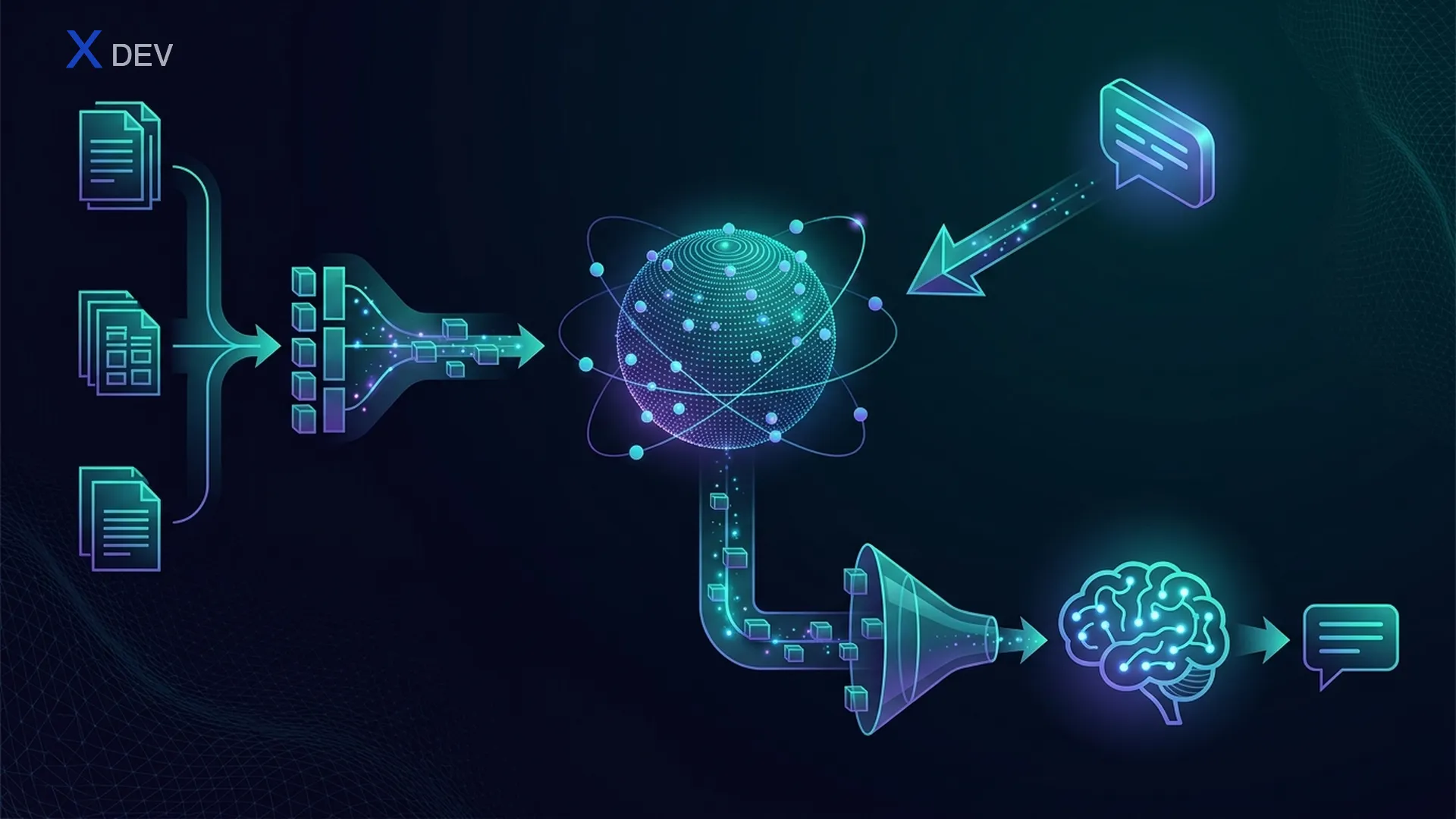
Indexing Pipeline:
- Document loading: PDF (unstructured.io, PyMuPDF), HTML (BeautifulSoup), Confluence, Notion, SharePoint
- Chunking strategies:
- Fixed-size: đơn giản nhất, không hiểu ngữ nghĩa → kém chất lượng
- Recursive character: split by headers → paragraphs → sentences (LangChain RecursiveCharacterTextSplitter)
- Semantic: dùng embedding similarity để tìm điểm split tự nhiên
- Document-aware: hiểu structure của document (PDF headings, markdown headers, tables)
- Small-to-big: index small chunks nhưng retrieve context window lớn hơn (parent chunk)
- Embedding: text-embedding-3-large (OpenAI), text-embedding-004 (Google), multilingual-e5-large (open source)
- Vector store: Pinecone (managed, fast), Weaviate (open source, hybrid search), Qdrant (Rust-based, performant), pgvector (PostgreSQL extension — dùng khi đã có Postgres), Redis (cho caching + vector search), Elasticsearch/OpenSearch (dùng khi đã có ES)
Retrieval Pipeline:
- Query preprocessing: spell correction, query expansion (generate multiple phiên bản query), query decomposition (break complex query thành sub-queries)
- Search types:
- Dense retrieval: embedding similarity (cosine/dot product) — tốt cho semantic search
- Sparse retrieval: BM25/TF-IDF — tốt cho keyword match (tên sản phẩm, mã số)
- Hybrid search: kết hợp cả hai với Reciprocal Rank Fusion → tốt nhất trong hầu hết cases
- Re-ranking: BAAI/bge-reranker, Cohere Rerank — cross-encoder re-score top-K chunks → chỉ gửi top-N vào LLM
- Metadata filtering: filter by date, document type, department — giảm search space, tăng precision
Generation Pipeline:
- Context window management: tối ưu context = quality retrieved chunks + clear system prompt + user query
- Prompt templates: consistent system prompt, document citation instruction, hallucination reduction prompts
- Streaming: stream response tokens → better UX
- Post-processing: fact extraction, source attribution, confidence scoring
Evaluation — thường bị bỏ qua nhưng cực quan trọng:
- Faithfulness: response có dựa trên retrieved chunks không? (scale 0-1)
- Answer relevance: response có trả lời đúng question không? (scale 0-1)
- Context recall: retrieved chunks có contain đủ information để trả lời không? (scale 0-1)
- Tools: RAGAS, TruLens, DeepEval — automated evaluation pipelines
- Regression testing: mỗi lần thay đổi RAG config phải chạy eval set trước khi deploy
AI Agent Architecture
Multi-agent systems = xu hướng lớn nhất 2026. Nhiều công ty đang chuyển từ RAG đơn giản sang agent systems.
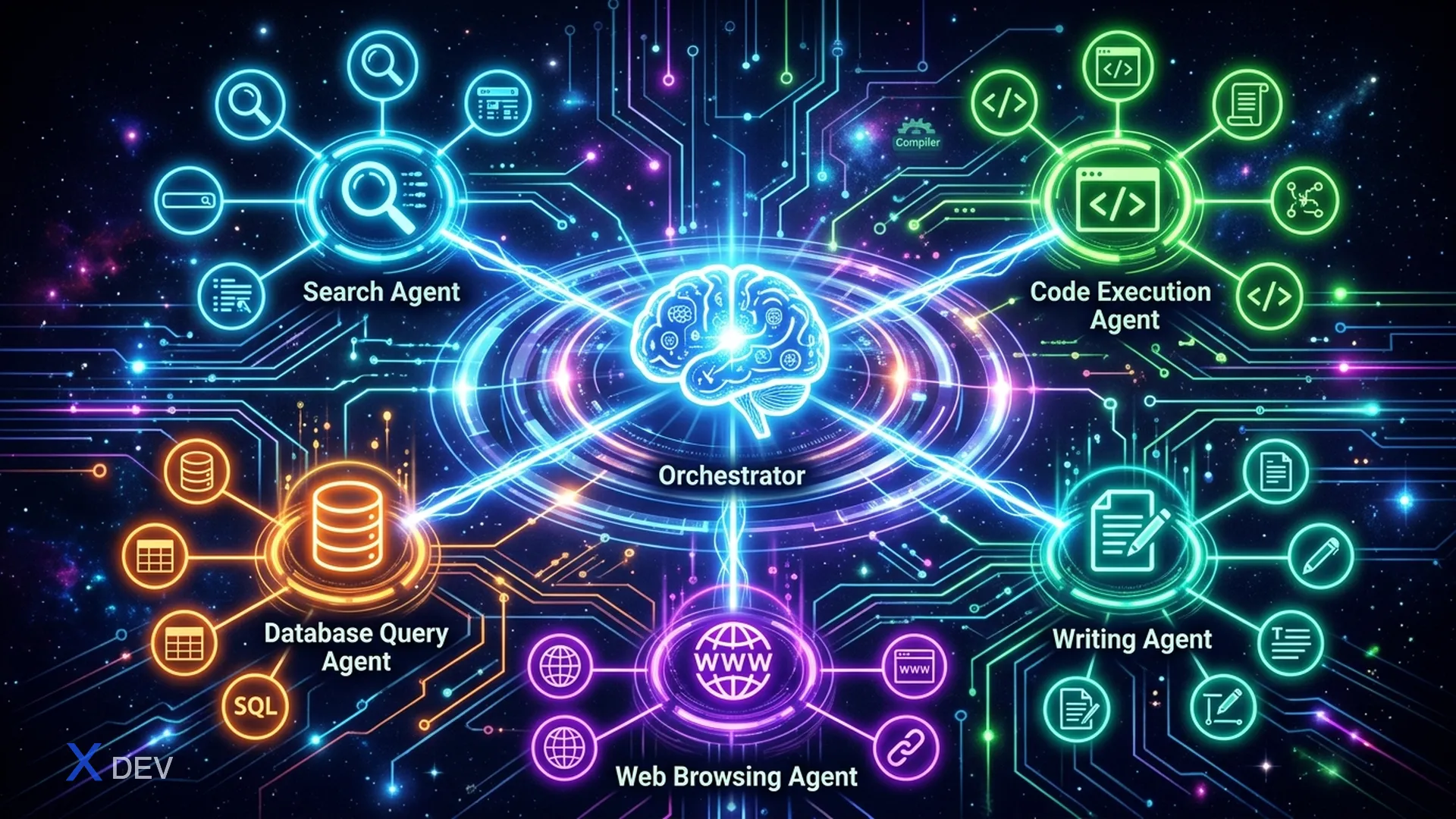
Anatomy của một AI Agent:
- Brain (LLM): reasoning, planning, decision making
- Memory:
- Short-term: conversation history trong context window
- Long-term: vector store, database — persist across sessions
- Episodic: log of past actions và outcomes
- Semantic: knowledge base về domain
- Tools: APIs, databases, code executors, web browsers, file systems
- Perception: input processors (text, images, audio, structured data)
- Action: text generation, API calls, code execution, file operations
Multi-Agent Patterns:
- Sequential: Agent A → Agent B → Agent C (pipeline, predictable, đơn giản)
- Parallel: Multiple agents chạy cùng lúc, aggregator tổng hợp kết quả (faster for independent tasks)
- Hierarchical: Orchestrator phân công cho specialist agents, collect results (phổ biến nhất cho enterprise)
- Debate/Critique: Một agent generate, một agent critique và improve (tốt cho quality-critical outputs)
Frameworks (2026):
- LangGraph — graph-based agent orchestration, điều khiển luồng chính xác, production-ready
- CrewAI — role-based agents, dễ define, tốt cho business workflows
- AutoGen — conversation-based multi-agent, research-friendly
- Amazon Bedrock Agents — managed, tích hợp với AWS services
- Vertex AI Agent Builder — managed, tích hợp với Google Cloud
Safety considerations:
- Prompt injection: user's input có thể contain instructions override system prompt → validate và sanitize
- Tool permissions: agent không nên có quyền delete hoặc write production data
- Human-in-the-loop: cho high-stakes actions (send email, make payment, deploy code), require human approval
- Sandboxing: code execution trong isolated container, timeout, resource limits
- Audit logging: log mọi tool calls và decisions để debug và compliance
AI Gateway & LLMOps
Khi scale từ 1 model lên nhiều models, cần infrastructure layer:
AI Gateway responsibilities:
- Routing: gửi simple queries đến model rẻ (Haiku), complex queries đến model mạnh (Sonnet/Opus)
- Rate limiting: đảm bảo không exceed provider rate limits, distribute requests
- Caching: semantic caching — nếu query semantically similar với query trước, return cached response (giảm 30-70% costs)
- Fallback: nếu primary model down, failover sang secondary model
- Load balancing: distribute across multiple API keys/accounts
- Cost tracking: per-team, per-feature, per-user cost attribution
LLMOps — không phải MLOps:
- Prompt versioning: treat prompts like code — version control, review process, rollback capability
- Prompt testing: automated test suite cho prompt changes (đừng chỉ "cảm giác có vẻ tốt hơn")
- Latency monitoring: TTFT (Time To First Token), TBT (Time Between Tokens), p95/p99 latency
- Quality monitoring: automated eval scores trên production traffic sample
- Cost optimization: batching requests, prompt caching (Anthropic/OpenAI), choosing right model tier
Tools ecosystem:
- LiteLLM — unified API cho 100+ LLM providers, self-hosted gateway
- Portkey — managed AI gateway, advanced routing, guardrails
- LangSmith — LangChain's observability platform (traces, evaluations, datasets)
- Langfuse — open-source LLM observability, self-hostable
- Helicone — lightweight observability, easy integration
Giai đoạn 4: Leadership & Business Impact (ongoing)
Giai đoạn này phân biệt architect với senior engineer. Kỹ năng kỹ thuật cần thiết nhưng không đủ.
Kỹ năng giao tiếp với stakeholders
Nói chuyện với C-level:
Đừng nói: "Chúng ta sẽ fine-tune một LLM với QLoRA trên 8x A100, sau đó deploy lên K8s với vLLM serving..."
Hãy nói: "Chúng ta sẽ xây hệ thống AI tự động trả lời 80% câu hỏi của customer support — giảm response time từ 4 giờ xuống 3 giây, tiết kiệm ước tính $2M/năm nhân lực. Investment: $500K build + $150K/năm vận hành. ROI dương trong 8 tháng."
Viết Architecture Decision Records (ADR):
ADR là document quan trọng nhất mà architect tạo ra. Format chuẩn:
# ADR-042: Chọn RAG thay vì fine-tuning cho Customer Support Bot

## Context
Team cần xây chatbot trả lời câu hỏi từ knowledge base 50K documents,
cập nhật 200 documents/tuần.

## Decision
Dùng RAG với pgvector + GPT-4o Turbo thay vì fine-tuning.

## Alternatives Considered
1. Fine-tuning GPT-3.5: $30K training + retraining mỗi lần KB update → reject
2. Full RAG với Pinecone: $8K/tháng operational cost → reject (quá đắt)
3. RAG với pgvector (chosen): tận dụng existing PostgreSQL → $800/tháng

## Consequences
+ Knowledge base update tức thì, không cần retrain
+ Cost thấp hơn 10x alternative B
- Cần maintain embedding pipeline
- Context window limit 128K tokens (đủ cho use case này)
Ước lượng chi phí AI:
Đây là kỹ năng không thể thiếu. Ví dụ tính nhanh:
- 100K API calls/ngày × $0.001/call (GPT-4o mini) = $100/ngày = $3K/tháng
- 1M tokens/ngày × $0.002/1K tokens = $2/ngày = $60/tháng
- GPU inference (1x A10G): $1.006/hour × 24h × 30 = $724/tháng
Nhận diện và quản lý rủi ro:
| Rủi ro | Mức độ | Mitigation |
|---|---|---|
| LLM provider outage | Cao | Multi-provider fallback (OpenAI → Anthropic → Azure OpenAI) |
| Hallucination trong critical domain | Rất cao | Grounding với RAG, human review workflow, confidence threshold |
| Data leakage qua API | Cao | Private deployment, data anonymization, legal review |
| Model bias gây discrimination | Cao | Regular bias audits, diverse eval sets, human oversight |
| Cost overrun | Trung bình | Budget alerts, model routing, caching strategy |
Tư duy kiến trúc chuyên nghiệp
Build vs Buy vs Rent framework:
- Build: khi đây là competitive advantage của doanh nghiệp, team có expertise, cần full control
- Buy: khi market đã có mature solution, TCO build > buy, time-to-market critical
- Rent (managed services): khi cần scale/down nhanh, không muốn manage infrastructure, compliance không cản trở
Ví dụ thực tế: Vector database
- Build: triển khai Qdrant trên K8s — full control, custom tuning, nhưng cần DevOps maintain
- Buy (license): Elasticsearch với ANN plugin — quen thuộc nếu team đã có ES
- Rent: Pinecone/Weaviate Cloud — zero infrastructure, but vendor lock-in, giá tăng theo scale
Evolutionary Architecture:
Thiết kế cho thay đổi, không phải cho hoàn hảo:
- Bắt đầu đơn giản: SQLite → PostgreSQL → distributed DB khi thực sự cần
- Fitness functions: automated metrics đo độ "khỏe mạnh" của architecture (test coverage, response time, cost per query)
- Strangler Fig Pattern: migrate dần từ legacy sang mới, không rewrite toàn bộ một lúc
Governance & Compliance (bắt buộc từ 2026)
EU AI Act (hiệu lực đầy đủ 2026):
- High-risk AI systems (HR, credit scoring, medical, law enforcement): cần conformity assessment, human oversight, transparency
- Limited risk (chatbots): cần disclosure rằng user đang nói chuyện với AI
- Minimal risk (spam filters): không require gì thêm
- Architect phải biết classify AI system vào đúng nhóm trước khi design
Model Cards & Datasheets:
- Model Card: intended use, performance metrics (đặc biệt trên subgroups), limitations, out-of-scope uses, ethical considerations
- Datasheet for Datasets: motivations, composition, collection process, preprocessing, uses, distribution, maintenance
- Không chỉ cho compliance — giúp team hiểu model của họ tốt hơn
4. Chứng chỉ hữu ích
Chứng chỉ không phải tất cả, nhưng giúp chứng minh kiến thức có hệ thống và pass vòng CV screening.
Ưu tiên cao (nên có ít nhất 2)
| Chứng chỉ | Focus | Thời gian ôn | Giá (USD) |
|---|---|---|---|
| AWS Solutions Architect – Professional | Cloud architecture patterns, cost optimization, security | 2–3 tháng | $300 |
| AWS Certified AI Practitioner (AIF-C01) | AI/ML trên AWS, Bedrock, SageMaker, Responsible AI | 1–2 tháng | $150 |
| Google Cloud Pro ML Engineer | Vertex AI, MLOps, BigQuery ML, data engineering | 2–3 tháng | $200 |
| CKA – Certified Kubernetes Administrator | Container orchestration cho ML workloads | 1–2 tháng | $395 |
Bổ sung
| Chứng chỉ | Focus |
|---|---|
| AWS ML Specialty | SageMaker deep dive, ML algorithm selection |
| Azure AI Engineer Associate | Azure OpenAI, Cognitive Services |
| KCNA | Kubernetes fundamentals, Cloud Native ecosystem |
| HashiCorp Terraform Associate | IaC cho ML infrastructure |
| DeepLearning.AI MLOps Specialization | MLOps best practices (Coursera, không phải exam) |
Tip thực chiến: Luyện thi ngay tại xDev.asia — Luyện thi chứng chỉ với bộ câu hỏi 50+ câu sát đề thật, giải thích chi tiết từng đáp án.
5. Portfolio thực chiến > bằng cấp
Một AI Solution Architect cần portfolio chứng minh năng lực thiết kế hệ thống, không chỉ chạy notebook Kaggle.
5 dự án nên có trong portfolio
1. RAG System production-grade
Mục tiêu: build RAG hoàn chỉnh cho một domain cụ thể (law, finance, internal docs)
- Document processing pipeline: PDF/Word → chunks → embeddings → vector store
- Hybrid search: dense (embedding) + sparse (BM25) với Reciprocal Rank Fusion
- Re-ranking với cross-encoder
- Evaluation pipeline: RAGAS metrics tự động hóa
- Streaming API với FastAPI, WebSocket
- Monitoring dashboard: latency, token usage, answer quality scores
- Tech: LangChain/LlamaIndex, pgvector/Qdrant, FastAPI, Grafana
2. MLOps Pipeline end-to-end
Mục tiêu: demo khả năng tự động hóa toàn bộ ML lifecycle
- Data validation: Great Expectations checks tự động
- Feature engineering với saved transform graph (không training-serving skew)
- Training job với experiment tracking (MLflow + W&B)
- Automated evaluation gate: model chỉ deploy nếu vượt baseline
- Canary deployment: 10% → 50% → 100% traffic shift
- Drift monitoring: alert khi feature distribution thay đổi >15%
- Tech: Kubeflow Pipelines hoặc Vertex AI Pipelines, MLflow, Docker, Kubernetes
3. Multi-Agent System cho business workflow
Mục tiêu: demo agent architecture cho real use case
Ví dụ: Research Assistant — nhận yêu cầu research, tự động search web (Tavily/Serper), đọc papers (Arxiv API), viết report, tự critique và improve
- Orchestrator agent với LangGraph StateGraph
- Specialized agents: researcher, writer, critic, fact-checker
- Tool integrations: search, code execution (E2B sandbox), document reading
- Memory: summarization của conversation history cho long sessions
- Human-in-the-loop: confirm trước khi publish/send
- Tech: LangGraph, Anthropic Claude API, Tavily, E2B, FastAPI
4. Real-time ML Serving với custom infrastructure
Mục tiêu: demo hiểu biết về serving infrastructure
- Model export: ONNX hoặc TorchScript cho framework-agnostic serving
- Triton Inference Server: model ensemble, dynamic batching, concurrent model execution
- Feature store: Redis cho online features (< 5ms lookup)
- Auto-scaling: K8s HPA based on GPU utilization / request queue depth
- A/B testing: traffic split giữa 2 model versions, statistical significance testing
- Tech: Triton, Redis, Kubernetes, Prometheus + Grafana
5. Architecture Decision Documentation
Mục tiêu: demo kỹ năng communication và tư duy trade-off
- Chọn một bài toán AI thực tế (tự đề xuất)
- Viết full ADR: context → options → decision → trade-offs → cost model
- Tạo architecture diagram (C4 model: Context → Container → Component)
- Risk assessment matrix
- Scalability analysis: estimations cho 10x, 100x load
- Format: Markdown với mermaid diagrams, publish lên GitHub/blog
6. Transition paths — từ đâu sang AI Architect?
Không ai bắt đầu từ vị trí AI Architect. Mỗi background có con đường riêng:
Từ Data Scientist
Bạn có: ML knowledge sâu, experiment design, statistics Bạn thiếu: System design, cloud architecture, production engineering
Lộ trình:
- Learn Docker + Kubernetes (1-2 tháng)
- Xây MLOps pipeline cho một model bạn đã có (2-3 tháng)
- Lấy cloud certification (AWS hoặc GCP — 2-3 tháng)
- Bắt đầu tham gia architecture discussions trong team
- Volunteer thiết kế solution cho project mới
Từ Backend/Software Engineer
Bạn có: System design, API development, databases, production experience Bạn thiếu: ML fundamentals, AI-specific patterns (RAG, agents, serving)
Lộ trình:
- Fast.ai course + Andrew Ng ML Specialization (3-4 tháng)
- Xây RAG application đơn giản end-to-end (1-2 tháng)
- Integrate ML serving vào một project bạn đã có
- Study MLOps patterns và apply vào infrastructure you already know
- AWS AI Practitioner certification để validate knowledge
Từ DevOps/Cloud Engineer
Bạn có: Infrastructure, K8s, networking, CI/CD, security Bạn thiếu: ML concepts, AI-specific tooling (MLflow, feature stores, serving)
Lộ trình:
- ML fundamentals — fast.ai hoặc Coursera (2-3 tháng)
- Set up MLflow trên cluster của bạn (2-4 tuần)
- Deploy một LLM API (vLLM hoặc Ollama) với proper monitoring
- Build out Kubeflow Pipelines hoặc Vertex AI Pipelines
- Tập trung vào MLOps tooling — đây là advantage của background DevOps
7. Những sai lầm phổ biến
❌ Chỉ tập trung vào modeling
"Tôi train được model SOTA" — tuyệt, nhưng architect cần biết deploy, scale, monitor, và maintain trong năm 3. 90% effort trong production AI là ở data engineering, MLOps, và infra. Model accuracy chỉ chiếm khoảng 10% tổng effort của một production ML system.
❌ Bỏ qua data engineering
"AI là về model" — sai. Model tốt nhất cũng vô dụng nếu data pipeline kém. Garbage in, garbage out. AI Architect giỏi biết design data platform trước khi nghĩ đến model.
❌ Không hiểu business context
Giải pháp kỹ thuật tốt nhất nhưng không giải quyết bài toán kinh doanh = phí thời gian và tiền. Trước mỗi project, hỏi: "Đo lường thành công bằng business metric nào? Nếu model này chạy tốt, business thay đổi như thế nào?"
❌ Over-engineering ngay từ đầu
"Chúng ta cần distributed training cluster với Ray trên multi-region K8s" — cho một model với 10K rows training data. Architect giỏi biết chọn giải pháp đơn giản nhất hoạt động và evolve khi thực sự cần.
❌ Bỏ qua cost từ đầu
GPU inference đắt. Claude 3.5 Opus = $75/M tokens output. Một kiến trúc gửi toàn bộ document (20K tokens) vào LLM cho mỗi request thay vì dùng RAG, với 100K requests/ngày = $150K/tháng. Architect phải làm cost model khi chọn architecture.
❌ Không test trước khi present
Trình bày architecture proposal mà chưa chạy PoC = rủi ro cao. Luôn build small PoC để validate critical assumptions trước khi commit toàn team.
❌ Học tool thay vì học concept
LangChain version 0.3 khác LangChain 0.2 rất nhiều. Nếu chỉ biết dùng tool mà không hiểu concepts bên dưới (embeddings, attention, vector similarity), bạn sẽ bị lạc lõng khi tool thay đổi.
8. Một ngày làm việc điển hình
08:30   Standup với ML Engineering team
        → Review model performance dashboard
        → Discuss latency spike hôm qua (root cause: cold start delay)
        → Align priorities tuần này

09:00   Deep work: Thiết kế RAG architecture cho Customer Support Bot v2
        → Vấn đề hiện tại: precision thấp (55%), tìm cách improve
        → Research: hybrid search vs pure dense → test cả hai
        → Estimate: hybrid search có thể tăng lên 78% theo RAGAS benchmarks
        → Draft ADR cho decision

10:30   Meeting với Product Manager & CPO (30 phút)
        → Present 3 options: RAG v2, Fine-tuning, Agent-based
        → Explain trade-offs bằng ngôn ngữ kinh doanh:
          "Fine-tuning mạnh hơn nhưng mất 3 tuần và $15K, không cập nhật
          được real-time. RAG v2 xong trong 1 tuần, $2K, cập nhật tức thì."
        → CPO chọn RAG v2 + schedule review sau 3 tháng

11:30   Code review: ML pipeline PR từ senior engineer
        → Feedback: missing data validation step (Great Expectations)
        → Model evaluation threshold quá loose (F1 > 0.6, nên là > 0.75)
        → Suggest: thêm sliced evaluation theo user segments

13:30   PoC: Test GPT-4o mini vs Gemini 2.5 Flash cho
        document classification task
        → Criteria: accuracy, latency, cost
        → GPT-4o mini: 89% acc, 450ms, $0.0003/call
        → Gemini Flash: 87% acc, 380ms, $0.00015/call
        → Decision: Gemini Flash cho volume task (2x cheaper, slightly faster)

15:00   Incident post-mortem: last week's serving latency spike
        → Root cause analysis: feature store Redis timeout cascade
        → Action items:
          1. Add circuit breaker với fallback to offline features
          2. Increase Redis connection pool size
          3. Add p99 latency SLA alert
        → Assign owners, deadlines

16:30   1:1 với junior architect
        → Review their RAG implementation
        → Explain hybrid search indexing
        → Recommend: read Matryoshka Representation Learning paper
        → Career development: suggest presenting at internal ML guild

17:00   Personal learning
        → Read: "Scaling LLM Test-Time Compute" paper (30 phút)
        → Bookmark for discussion at team reading club
9. Tài nguyên học tập
Sách (theo thứ tự đọc)
| Sách | Khi nào đọc | Tại sao |
|---|---|---|
| Designing Machine Learning Systems — Chip Huyen | Ngay từ đầu | Bible của ML system design. Đọc 2-3 lần |
| Fundamentals of Data Engineering — Joe Reis | Giai đoạn 2 | Data platform là nền tảng của AI |
| Machine Learning Engineering — Andriy Burkov | Giai đoạn 2 | Production ML từ A-Z |
| Building LLM Apps — Valentina Alto | Giai đoạn 3 | RAG, agents, LLMOps thực hành |
| Software Architecture: The Hard Parts — Neal Ford | Giai đoạn 3 | Trade-off analysis framework |
| Staff Engineer — Will Larson | Giai đoạn 4 | Technical leadership, influence without authority |
| The Staff Engineer's Path — Tanya Reilly | Giai đoạn 4 | Được dùng rộng rãi ở Big Tech |
Blogs & Newsletters
- Chip Huyen's Blog (huyenchip.com) — ML engineering insights từ Stanford/NVIDIA
- Eugene Yan's Blog (eugeneyan.com) — Applied ML, RecSys, practical advice
- Sebastian Raschka's Newsletter (magazine.sebastianraschka.com) — LLM engineering deep dives
- The Batch (deeplearning.ai/the-batch) — AI news curated by Andrew Ng
- Latent Space (latent.space) — AI engineering podcast + newsletter
Cộng đồng
- MLOps Community (mlops.community) — Slack 20K+ members, cực active
- Weights & Biases Discord — ML practitioners, research discussions
- r/MachineLearning, r/LLMDevs — Reddit communities
- Hacker News — Show HN thường có interesting AI projects
Podcasts
- Latent Space — State of AI Engineering, builder interviews
- The TWIML AI Podcast — Academic + industry AI research
- Practical AI — Applied ML use cases
- The Gradient Dissent (W&B) — ML practitioners và researchers
Conferences
- NeurIPS, ICML, ICLR — Research (theo dõi papers, không nhất thiết attend)
- MLOps World — Practitioners conference, very practical
- Weights & Biases Fully Connected — Annual ML engineering summit
- Google Cloud Next, AWS re:Invent, Microsoft Build — Cloud AI platforms
10. Thị trường Việt Nam: Cơ hội thực tế
Để không bị cảm giác "all of this applies to US companies only":
Công ty đang tuyển AI Architect tại Việt Nam (2026)
Product Companies:
- VinAI, VinBigdata — AI research + products, team world-class
- MoMo, ZaloPay — Fintech AI (fraud detection, credit scoring, recommendation)
- Tiki, Shopee VN, Lazada — E-commerce AI (personalization, demand forecasting)
- VNG, Garena — Gaming AI, content moderation
Banks & Fintech:
- MB Bank, TPBank, VPBank — AI transformation mạnh, tuyển AI architect
- FE Credit, HD Saison — Credit AI, customer analytics
Healthcare:
- VinMec, Medlatec — Medical AI, diagnostic imaging
- Các startup healthtech — Remote monitoring, diagnosis support
Outsourcing & Consulting:
- FPT Software, TMA Solutions — AI practice cho clients
- Bosch VN, LG Electronics VN — Industrial AI
- Các công ty consulting — Deloitte VN, PwC VN đang build AI practices
Con đường realistic ở Việt Nam
- Start as Data Scientist hoặc ML Engineer tại một product company
- Build MLOps skills, participate in architecture decisions
- Lead một AI project từ đầu đến cuối (6-12 tháng)
- Certify ít nhất 2 cloud certifications
- Transition to AI Architect title — hoặc move sang company lớn hơn
- Scale sang remote roles (Singapore/US) với portfolio solid
11. Kết luận
Con đường trở thành AI Solution Architect không có shortcut. Nó đòi hỏi:
- Nền tảng kỹ thuật vững — ML, DL, cloud, system design
- Kỹ năng MLOps thực chiến — pipeline, monitoring, CI/CD
- Thành thạo GenAI architecture — RAG, agents, LLMOps
- Tư duy kinh doanh — cost modeling, ROI, stakeholder communication
- Học liên tục — ngành này thay đổi mỗi 3-6 tháng
Tin tốt: bạn không cần master tất cả cùng lúc. Bắt đầu từ nền tảng, xây portfolio qua side projects, và dần mở rộng sang system design và leadership. Một portfolio với 2-3 production-grade projects thường quan trọng hơn 5 năm kinh nghiệm làm việc mà không có gì để show.
Thế giới đang thiếu người biết thiết kế hệ thống AI cho production. Nếu bạn bắt đầu hôm nay, 2 năm nữa bạn sẽ ở một vị trí rất khác biệt.
Bạn đang ở giai đoạn nào trên con đường này? Comment bên dưới để chúng mình trao đổi — mình sẽ cố gắng reply từng comment.