"Feature đã launch rồi, giờ làm gì?" — Câu này thường được hỏi sau vài tuần và không ai trả lời được. Lý do: evaluation framework không được xây từ trước.
BA giỏi định nghĩa thành công trước khi build, không phải sau khi launch.
1. Tại sao AI feature cần evaluation framework riêng?
Feature truyền thống: Số đơn xử lý, thời gian xử lý, error rate — đo được rõ ràng.
AI feature có thêm:
- Output quality drift: Model có thể degradate theo thời gian nếu data distribution thay đổi
- User trust decay: User stop using AI nếu mất tin tưởng sau vài lần sai
- Hallucination incidents: Cần monitor, không chỉ error rate
- Cost scaling: Nhiều user → chi phí API tăng không tuyến tính
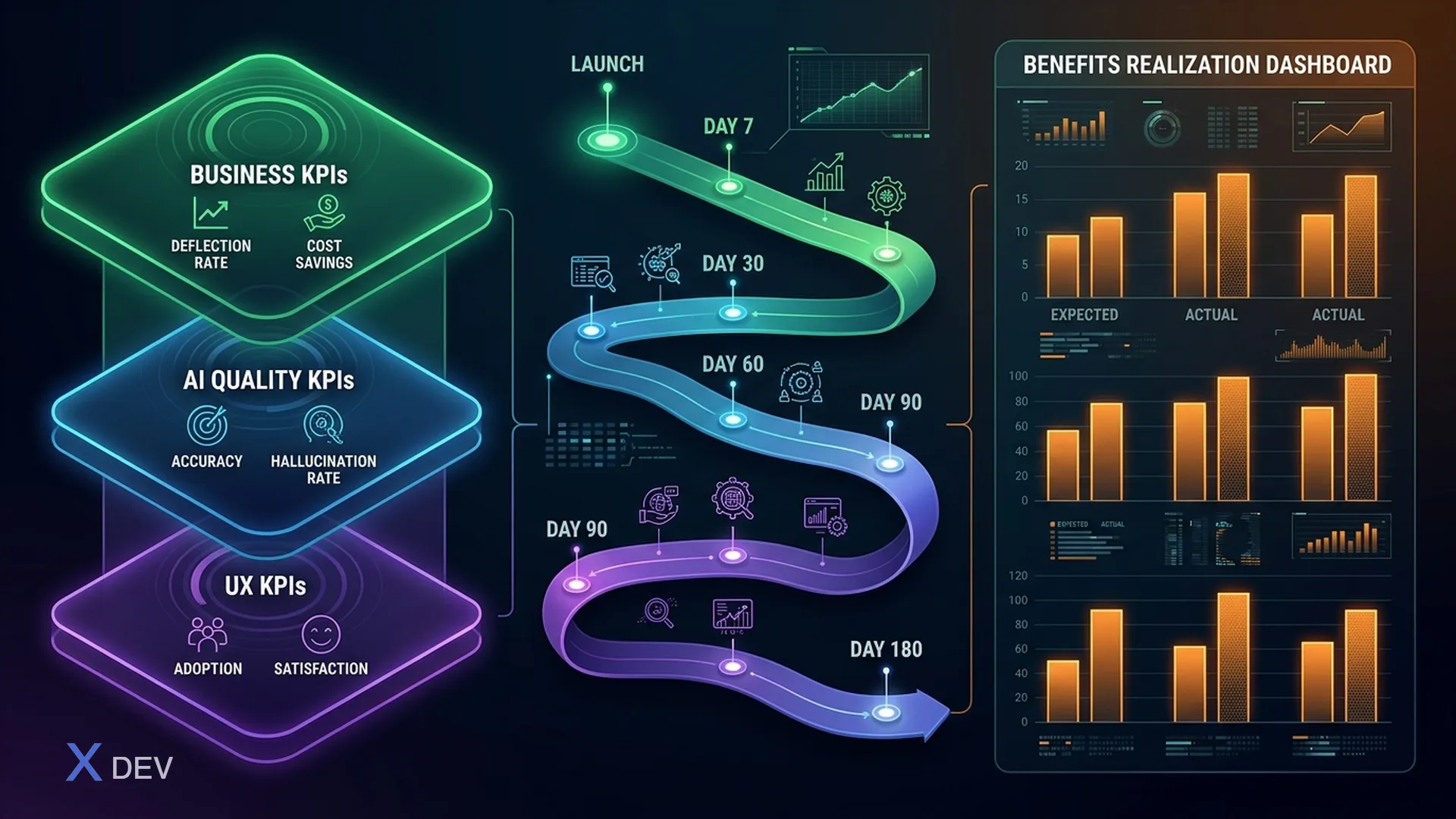
2. Ba lớp KPI cho AI feature
Layer 1: Business KPIs
Đây là lý do feature được build — phải đo được business value:
| KPI | Ví dụ (AI chatbot CSKH) | Mục tiêu |
|---|---|---|
| Deflection rate | % câu hỏi AI xử lý mà không cần agent | ≥ 60% sau 30 ngày |
| Resolution rate | % user satisfied sau AI response | ≥ 70% |
| Cost per resolution | Chi phí xử lý 1 request (API + infra) vs agent cost | < $0.5 |
| Time to resolution | Thời gian trung bình từ hỏi đến trả lời | < 30 giây |
| NPS | Net Promoter Score của feature | ≥ +10 vs baseline |
Layer 2: Technical / AI Quality KPIs
Đo chất lượng AI output, không chỉ uptime:
| KPI | Đo như thế nào | Threshold |
|---|---|---|
| Accuracy | Sampling + human review (5% traffic) | ≥ 85% |
| Hallucination rate | Fact-check sampling | ≤ 2% |
| Confidence score distribution | % response có score < threshold | Monitor weekly |
| Escalation rate | % request escalate sang human | 10–30% (tùy domain) |
| Latency p95 | 95th percentile response time | < 3 giây |
| Error rate | API errors, timeouts | < 0.5% |
Layer 3: User Experience KPIs
Đo trải nghiệm thực tế, không chỉ kỹ thuật:
| KPI | Cách thu thập | Mục tiêu |
|---|---|---|
| Task completion rate | Analytics tracking | ≥ 75% |
| Re-query rate | User hỏi lại trong 5 phút sau khi nhận response | ≤ 15% |
| Abandonment rate | User thoát giữa chừng | ≤ 20% |
| Thumb up/down rate | In-app feedback | ≥ 60% positive |
| Feature adoption | MAU dùng AI feature / total MAU | ≥ 40% sau 60 ngày |
3. Evaluation Timeline: 30/60/90/180 ngày
LAUNCH
  │
  ├── Day 7 (Health check)
  │   - Error rate bình thường?
  │   - Có incident nào cần xử lý?
  │   - Early user feedback
  │
  ├── Day 30 (Initial assessment)
  │   - So sánh KPIs với baseline pre-launch
  │   - Accuracy sampling (100 cases)
  │   - Identify top failure modes
  │
  ├── Day 60 (Optimization)
  │   - Full KPI review
  │   - A/B test results (nếu có)
  │   - Prompt tuning nếu accuracy chưa đạt
  │   - Quyết định: scale up / giữ nguyên / pivot
  │
  ├── Day 90 (Milestone review)
  │   - Business impact report cho stakeholders
  │   - ROI calculation (cost saved vs cost of AI)
  │   - Roadmap Q2 dựa trên learnings
  │
  └── Day 180 (Benefits realization review)
      - So sánh với business case gốc
      - Quyết định: continue / scale / retire
4. Benefits Realization Tracking
BA phải track xem business case gốc có thực sự được realize không:
## Benefits Realization Report: [Feature] — 90 ngày

### Business Case Summary (Pre-launch)
- Expected benefit: Giảm 40% workload agent team
- Expected cost: $X/tháng API cost
- Expected ROI: [N] tháng payback

### Actual Results
| Benefit | Expected | Actual (D90) | Status |
|---------|---------|-------------|--------|
| Deflection rate | 60% | 52% | ⚠️ Below target |
| Agent hours saved | 200h/tháng | 160h/tháng | ⚠️ Below target |
| User satisfaction | 70% | 74% | ✅ Above target |
| Monthly API cost | $500 | $620 | ⚠️ Over budget |

### Root Cause Analysis (for misses)
- Deflection rate thấp hơn do: long-tail queries chiếm 30% traffic, AI chưa handle được
- Cost over budget do: user volume +25% so với estimate

### Recommended Actions
1. Expand knowledge base cho top 20 unanswered query types
2. Implement cost cap và usage tiering
3. Revised target D180: deflection ≥ 58%
5. Dashboard BA nên request từ Data team
Đừng build dashboard sau launch. Request từ Phase 4 (trước launch):
REAL-TIME MONITORING (Operational)
☐ Error rate, uptime, latency (Engineering)
☐ Escalation rate (hàng ngày)
☐ Cost per day / per request (FinOps)

WEEKLY REVIEW
☐ Accuracy trend (sampling)
☐ Top failed query types
☐ User satisfaction scores

MONTHLY REPORT
☐ Full KPI dashboard vs targets
☐ A/B test results
☐ Feature adoption funnel
☐ Cost vs benefit summary
6. Khi KPI không đạt: Decision framework
| Situation | Action |
|---|---|
| Accuracy < threshold | Prompt tuning → nếu không cải thiện → retrain |
| User adoption thấp | User research → thường là UX vấn đề, không phải AI |
| Cost vượt budget | Model tiering (dùng model rẻ hơn cho simple cases) |
| High escalation rate | Expand AI coverage OR accept và optimize agent workflow |
| Hallucination incidents | Implement RAG hoặc fact-check layer |
| Business KPI miss | Revisit business case assumptions |
Tổng kết
Solution evaluation không phải việc của Data Analyst hay PM — BA sở hữu việc định nghĩa KPIs và đảm bảo có data để đo. Nếu không được build từ spec, không ai build.
Key practice: Trước khi sprint 1 bắt đầu, viết vào SRS một section "Success Metrics" với KPIs cụ thể, thresholds, measurement method và owner. Đây là cam kết của team với business — không phải afterthought.